
Insurance Agency Bookkeeping and Accounting Services
An agency’s ledger is not a small-business ledger. It has to carry commission by carrier, by line and by producer, agency-bill and direct-bill reconciled to what actually cleared, and a trust position that never falls out of step with the fiduciary rules of your state.
Compliance travels with the licence. Every state a producer writes in can create a withholding, registration or premium-tax question, and those obligations grow with each new appointment and every producer you add.
CrownGlobe helps independent agencies, brokers and MGAs run finance as one system — bookkeeping, commission reconciliation, producer payroll and settlements, tax readiness and CFO-level reporting on revenue per producer, per line and per carrier.
Commission Tracking & Reconciliation
Record new-business, renewal and contingent commissions by carrier, line and producer, and match every commission statement to the deposit that actually cleared the operating account.
Trust & Premium Account Handling
Keep premium funds and fiduciary receipts segregated from operating cash in line with your state’s trust-account rules, and reconcile the trust position on the same cycle as the ledger.
Producer Payroll & Settlements
Run W-2 producer payroll alongside 1099 producer settlements, including draws, splits, chargebacks and CE and licence reimbursements, without the two runs blurring at year-end.
Multi-State Licensing & Tax Compliance
Track producer appointments and non-resident licences by state, and keep payroll registrations current in every state a producer writes or a support employee sits.
Service mapping for independent agencies and brokers
We map CrownGlobe’s standard finance stack onto how an agency actually operates — producer and line-of-business cost centres, a settlement cycle that follows your commission calendar, and tax records built from the same data your books already use.
Whether you write one line from one office or run a multi-state, multi-producer operation, the same reporting spine applies: clean books, correct settlements, current filings, and numbers you can build a growth plan against.
Contact Us
Agency Bookkeeping (Per-Producer, Per-Line)
Reconciled books with an insurance-agency chart of accounts, so commission revenue, producer compensation and operating expenses are comparable producer by producer and line by line, and consolidate cleanly at the agency level.

Producer Payroll & Settlements
Settlement and payroll workflows that keep W-2 producers and 1099 producers on separate, correct tracks — draws, splits, chargebacks and CE and licence reimbursements handled through the run rather than around it.

Business Tax & Multi-State Filing Support
Business return preparation with agency-specific deductions in view — E&O premiums, licensing and CE, home-office and mileage — plus multi-state producer withholding and registration support as the appointment map grows.

Virtual CFO for Agency Growth
Cash-flow forecasting, book-of-business profitability, producer economics and valuation-ready reporting for owners planning an acquisition, a partner buy-in or a future sale.

Dashboards & Automation
Replace spreadsheet reconciliation with automated feeds from your agency management system, commission-download service and payroll platform, reporting into dashboards that refresh with the books.
Industry-specific challenges insurance agencies face
Agencies carry commission, compliance and cash-flow complexity that a service business without a fiduciary role never encounters — and most of it lives inside the AMS rather than the accounting file.
Commission recognition and contingent timing
New business, renewal, and contingent or profit-sharing commissions each behave differently in cash and in accounting terms — and contingents arrive in irregular waves after the carrier settles the year’s loss ratio. Booked as one line without accrual, a single quarter can look like a windfall the agency didn’t actually earn in it, and the number that really drives the agency’s economics disappears.
Agency-bill vs. direct-bill reconciliation
Agency-bill business runs premium through your account before it reaches the carrier; direct-bill pays commission on a lag against carrier statements. The two reconcile to entirely different sources, and most ledgers treat them the same.
Trust and premium-account discipline
State insurance departments require fiduciary funds to be segregated from operating cash. A trust position that is only reviewed at year-end is a compliance exposure long before anyone reads the file.
W-2 producer vs. 1099 producer classification
W-2 producers, 1099 producers and sub-producers each carry different pay, deduction and filing treatment under IRS and state rules. Getting the boundary wrong is expensive to unwind later, and states are increasingly narrow on it.
No per-producer, per-line view
Most agencies can see whether the office made money. Far fewer can see which producers, lines and carriers made it — which is the number that decides producer economics and where to grow next.
Multi-state producer withholding
Producers appointed in multiple states can create withholding and registration obligations beyond your home state. Agencies that add appointments faster than payroll registrations discover the gap during an audit.
AMS-to-accounting reconciliation gaps
AMS360, Applied Epic, EZLynx and Nexsure hold the policy and commission data; QuickBooks or Xero holds the ledger. Without disciplined reconciliation between the two, the numbers on the P&L drift from the numbers in the AMS.
Valuation and M&A readiness
Agency valuations turn on commission revenue by type, retention, contingent history and add-back-adjusted EBITDA. Books that were kept for tax rarely surface those numbers cleanly when a buyer or partner asks for them.
Insurance Agency Bookkeeping Services
Accurate books, correct commission settlements and current filings — delivered on the schedule your commission calendar already runs on.

Daily Bookkeeping & Bank Reconciliation
Commissions, premium receipts, producer payments and operating expenses recorded and reconciled against your operating and trust accounts, on an agency-specific chart of accounts.

Commission Reconciliation & Producer Statements
Carrier commission downloads matched line by line to the AMS and the deposit, with clean producer statements that show new business, renewal, contingent and any chargebacks separately.

Producer Payroll & 1099 Settlements
Payroll for W-2 producers and correct settlement processing for 1099 producers and sub-producers, including draws, splits, chargebacks and CE and licence reimbursements.

Per-Producer & Per-Line Financial Reporting
Profit-and-loss and cash-flow statements broken out by producer, line of business or office, so you can see where margin is actually being made and where it is leaking.

Business Tax Filing & Entity Structuring
Business return preparation with agency-specific deductions in view, and guidance on LLC and S-Corp structuring as your producer mix and profit level change.

Agency Growth & Valuation Advisory
Modelling for producer hires, book-of-business acquisitions, partner buy-ins and eventual sale — run against your own commission and retention numbers rather than industry averages.
Industry-Specific Benefits
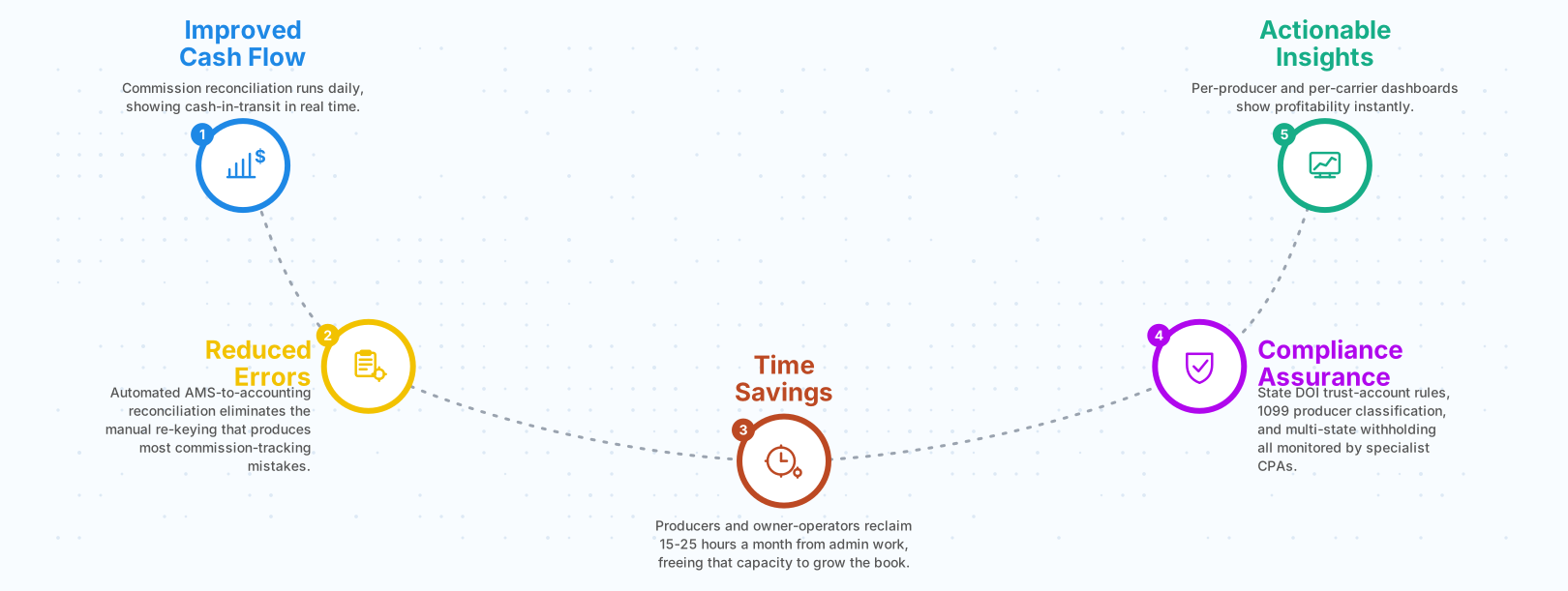
Improved Cash Flow
Commission downloads, agency-bill receipts and producer settlements are matched to actual deposits, so the cash position on your dashboard is the cash you have — not gross commission expected.
Actionable Agency KPIs
Revenue per producer, retention ratio, contingent history and EBITDA margin are reported from your own books, so hiring, splits and acquisition decisions rest on measured numbers.
Fewer Reconciliation Errors
Automated feeds from your AMS, commission-download service and payroll platform cut manual entry, which is where missed statements and duplicate settlements usually originate.
Compliance Assurance
Trust-account reconciliations, multi-state payroll registrations and producer-classification documentation are kept current through the year rather than assembled under deadline.
Time Back for Selling
Bookkeeping, commission reconciliation and filings move off the owner’s desk and off the office manager’s, so the people who quote and place business spend their week doing that.
Data-Driven Financial Strategy
Virtual CFO support and business intelligence built on the same ledger your bookkeeping runs on.
Agency KPI Dashboards
Live views of revenue per producer, retention ratio, EBITDA margin and commission-mix trend, built in Power BI from your accounting and AMS data.
Commission Waterfall Reporting
New business, renewal, contingent and profit-sharing broken out by carrier, line and producer, with month-on-month movement rather than a single blended number.
Producer & Book Profitability
Analysis of which producers and which lines are genuinely profitable once splits, chargebacks and support cost are fully allocated to them.
Valuation & M&A Packages
Lender- and buyer-ready financial packages for a book acquisition, a partner buy-in or an eventual sale, presented in the format acquirers actually expect.
Budgeting & Growth Planning
Annual budgets and producer-hire models, so growth decisions are backed by projected commission and cash impact rather than gut feel.
Case Study
Mayfair Insurance Company
Per-Producer Reporting Across a Mixed Commission Book
Mayfair Insurance Company, an independent agency writing mixed personal and commercial lines through W-2 and 1099 producers, was reconciling carrier commission statements, agency-bill receipts and producer settlements by hand every month, with producer-level economics living in a spreadsheet outside the ledger.
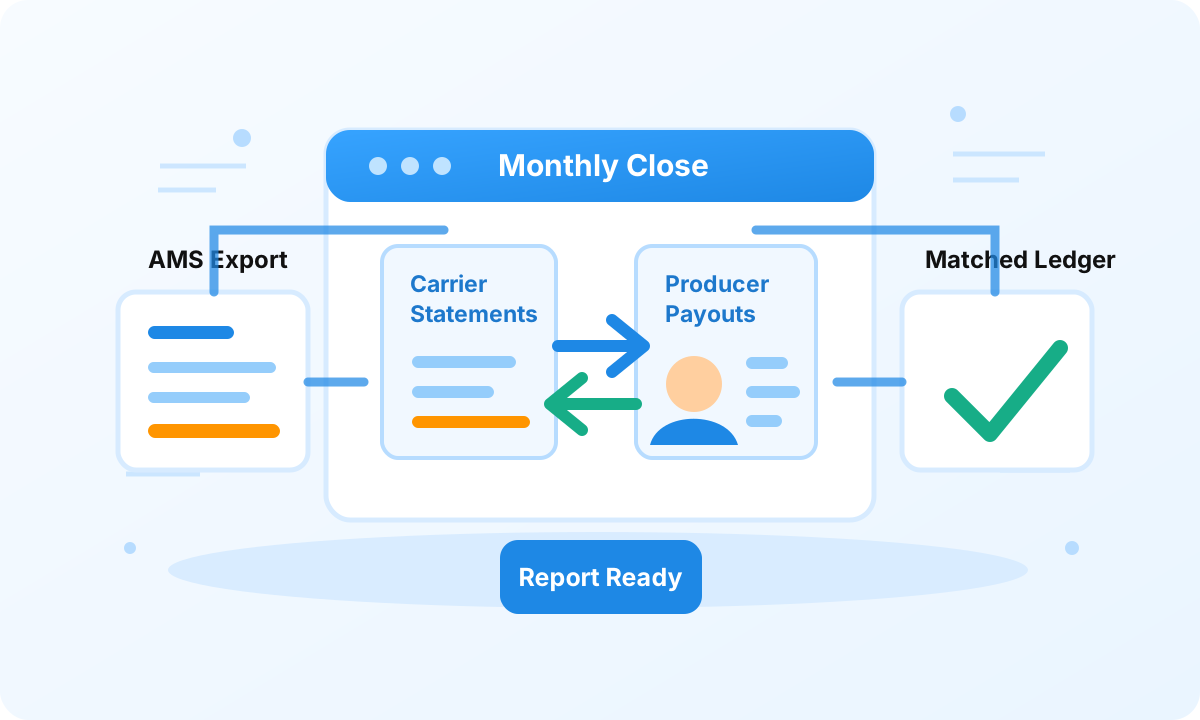
CrownGlobe rebuilt the chart of accounts around producer and line-of-business cost centres, connected the AMS commission-download and bank feeds, separated W-2 payroll from 1099 settlements, and moved contingent commission recognition onto an accrual policy tied to carrier statements. The result: cash reported at the amount actually received, revenue per producer calculated from the ledger, and a monthly close that finishes on schedule.
Technology & Automation Solutions
We work inside the systems an agency already runs, rather than asking the office to re-key data into ours.

Agency Management Systems
Policy, commission and producer data reconciled from agency management systems including AMS360, Applied Epic, EZLynx and Nexsure.

Accounting Software
QuickBooks Online and Xero, configured with an insurance-agency chart of accounts and producer or line classes from day one.

Commission Reconciliation Tools
Carrier commission downloads and reconciliation services matched line by line against direct-bill statements and agency-bill deposits.

Payroll & HR Platforms
Gusto, ADP and Rippling configured for multi-state producer withholding, W-2 and 1099 runs, and CE and licence reimbursements.

Business Intelligence
Microsoft Power BI dashboards for revenue per producer, retention ratio and EBITDA margin, refreshed alongside the monthly close.
Engagement Models
Start with Standard
$125/ Per Month
Suited to single-office agencies and independent producers that need accurate monthly bookkeeping, operating and trust-account reconciliation, monthly commission reconciliation and organised records for the year-end return.
Start with Growth
$245/ Per Month
Adds controller-level oversight for growing agencies: full commission reconciliation across carriers and lines, multi-state producer payroll coordination, contingent-commission accrual and regular per-producer profitability reporting.
Start with Virtual CFO
$345/ Per Month
Strategic CFO support for multi-office and multi-state agencies: forecasting, book-of-business and per-line profitability analysis, valuation-ready reporting, KPI dashboards and acquisition and buy-in planning.
FAQs
Answer: An agency’s ledger has to carry things a general set of books never sees: commission by carrier, by line and by producer; new-business, renewal and contingent commissions treated separately; agency-bill premium moving through a fiduciary account rather than the operating account; and producer settlements that differ by classification. A general bookkeeper can record the transactions, but usually not in a structure that supports commission reconciliation or per-producer reporting.
Answer: Statement by statement. We match the carrier’s commission download against the AMS policy record and the deposit that cleared your bank, so the books show commission actually received rather than commission expected. New-business, renewal and contingent commissions are recognised on their own lines, and any chargebacks are captured as they occur rather than surfacing at year-end.
Answer: On an accrual policy tied to carrier statements rather than only when the cheque lands, so a good loss-ratio year doesn’t distort a single quarter and the trend is visible year over year. Where the carrier’s contingent formula is uncertain until settlement, we book conservatively and true up on receipt, and document the estimate policy so it stays consistent.
Answer: They run on separate processes. W-2 producers go through payroll with withholding and employer filings; 1099 producers and sub-producers go through a settlement run with their own draws, splits, chargebacks and reimbursements. Classification itself is a legal question decided under IRS and state tests — we’ll flag the risk if the current classification looks fragile and coordinate with your employment counsel rather than opine on the position ourselves.
Answer: Through two distinct paths. Agency-bill premium is treated as a fiduciary receipt, tracked through the trust or premium account and settled to the carrier net of your commission; direct-bill commission is booked when the carrier statement is reconciled to your operating deposit. Combining them into one revenue account is the single most common cause of a P&L that never quite matches what the owner remembers earning.
Answer: Yes. We reconcile against the AMS rather than replacing it, so policy, commission and producer data continues to live where your team already works. Where the AMS has a native commission-download or reconciliation module, we use it; where a direct connection is not available, we work from the provider’s export on a set schedule.
Answer: Yes on the payroll and registration side. Producers writing or working in multiple states can create withholding and registration obligations beyond your home state, and we keep those filings current in the states you are registered in and flag where a new registration looks required. Producer-licensing and non-resident-appointment renewals themselves stay with your compliance team — we track the population, not the licences.
Answer: Through a capture process that runs during the year rather than at year-end: E&O premiums accrued monthly, licence and CE reimbursements coded as they clear producer expense claims, and home-office and mileage records reviewed each quarter. Reconstructing a year of small deductions in April is where most agency owners lose them.
Answer: Every engagement includes a monthly profit-and-loss and cash-flow statement. Growth and Virtual CFO engagements add agency-specific reporting — revenue per producer, retention ratio and commission mix — and Virtual CFO adds forecasting, book-of-business profitability and valuation-oriented views. Reporting cadence is set to your commission calendar rather than a generic month-end.
Answer: Yes, provided commissions can be attributed to a specific producer and a specific line at the point of entry. We set the chart of accounts up with producer and line-of-business classes and tag commission-download rows to them, which is what makes a real per-producer or per-line figure possible rather than a total revenue number divided by headcount.
Answer: Yes. The Standard engagement is built for independent producers and small agencies — monthly bookkeeping, commission reconciliation, operating and trust-account discipline and clean records for the year-end return, without the controller-level services a larger agency needs.
Answer: It depends on your profit level, how you pay yourself, your state’s treatment and how your producer group is structured — there is no single right answer for agencies. We model the options against your actual numbers and coordinate the filing if a change makes sense. See LLC and S-Corp setup for the mechanics.
Answer: Yes. Catch-up work is scoped separately from ongoing bookkeeping, because the effort depends on how many months are open and how much source data survives — bank feeds, carrier commission statements, AMS commission records and payroll history. See Catch up Bookkeeping.
Answer: Yes. Virtual CFO engagements produce valuation-ready packages — profit and loss, balance sheet, commission mix and retention detail, add-back-adjusted EBITDA and supporting schedules — in the format acquirers, partner-buy-in counsel and lenders typically ask for. Where a formal valuation opinion is required we coordinate with a licensed valuation professional rather than provide one ourselves.
Answer: Onboarding starts by connecting your bank, AMS and commission-download feeds and mapping the chart of accounts to an insurance-agency structure. How long that takes depends mainly on how much of a bookkeeping backlog exists and how accessible your historical carrier statements are. We scope it before you commit.
Strengthen Your Agency’s Financial Operations
The core CrownGlobe services that independent agencies pair with insurance-agency bookkeeping.
Put your agency’s books in force
Agencies run better when commission reconciles to the deposit, trust discipline is a monthly habit rather than a year-end scramble, and revenue per producer is a number you can trust. Book a free consultation and we will walk through your current setup, where the reconciliation gaps are, and what an agency-specific finance stack would look like for you.
Schedule a Free Consultation