Year-End Finalization & Annual Checkup
Make sure your books are clean and ready, for audit so that everything is compliant. Get expert year-end close services that balance your accounts, finalize your statements, and support your tax filings.
Focus on your strategy. Let us handle the details.
Why Year-End Finalization Matters
Year-end accounting requires accurate financial records, proper reconciliations, and organized reporting to ensure businesses remain compliant and prepared for audits and tax filing. Manual processes, missing entries, and incomplete account reviews can create delays, reporting errors, and unnecessary financial stress. Crownglobe’s Year-End Finalization services help businesses close their books accurately with structured workflows, automated checklists, GAAP-aligned reviews, and detailed financial cleanup to deliver organized, audit-ready financial statements with confidence.
- When the financial year comes to an end businesses have to make sure their accounts are in order. They have to record everything and make sure all the statements are accurate before they submit them. If there are mistakes it can cause a lot of trouble like delays or even fines. Many companies have a time with this process because they do it manually which means they can easily miss something or put the wrong date on things and that can lead to big problems, with their financial records.
- We help businesses organize and finalize their year-end financial records accurately, reducing the risk of reporting errors, filing delays, and compliance issues.
- Our Year-End Finalization and Annual Checkup team is like having your accounting department. We go through your books carefully to make sure they are correct according to the U.S. GAAP rules. We. Fix any mistakes, like things that have not been posted yet and we make sure everything is okay. This way your books are ready for an audit. Follow the GAAP rules. When you let us handle this you get back some time. You can be sure your financial reports are accurate, at the end of the year.
- Internal Pain Points: The company is dealing with accounts looming tax deadlines, audit anxiety, manual errors, overworked staff and incomplete cut-offs.
- Our Fix: Dedicated experts make sure every account is examined and closed properly at the end of the year with workflows and automated checklists.
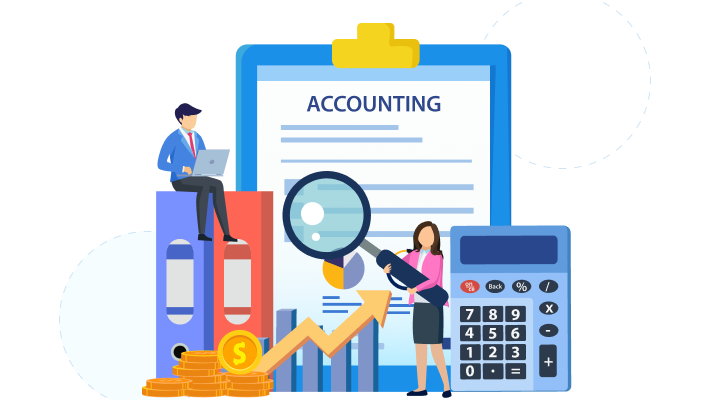
Year-End Finalization & Annual Checkup Services
We help businesses close the financial year with organized books, accurate reconciliations, and reporting systems prepared for tax filing, audits, and future planning. Our year-end process ensures your financial records are complete, compliant, and ready for informed decision-making.
Our team reviews bookkeeping records, reconciles bank and balance sheet accounts, verifies payables and receivables, and corrects uncategorized transactions or adjustment entries. We also support payroll reconciliation, financial statement preparation, and annual reporting workflows.
With tax-ready books, compliance-focused reviews, and organized closing systems, we help businesses reduce errors and improve financial clarity at year-end. Our goal is to create a smooth closing process that supports better reporting, tax preparation, and long-term financial management.
We help businesses complete year-end financial closing with accurate reconciliations, organized reporting, and tax-ready records for smoother compliance and better financial planning.

Trial Balance Review:
Thoroughly check the year-end trial balance, for inconsistencies, unreconciled balances and missing entries before closing it.

Balance Sheet Reconciliation:
Check the cash and other balance sheet accounts, like accounts and accounts payable and inventory and fixed assets and accruals against the external records. This verifies that assets and liabilities match subsidiary ledgers.

Adjusting Journal Entries:
We prepare and post final GAAP-compliant adjustments – accruals, prepayments, depreciation/amortization, and corrections – with clear audit trails.

Cut-Off Testing:
We make sure that revenues and expenses are recorded in the fiscal period by reviewing transaction dates and cutoff logs to meet accounting standards, for revenues and expenses.

Workpapers & Schedules:
Prepare schedules, like aging reports, fixed asset ledgers and loan amortization to support your numbers and make audits or tax filings easier.

Financial Statement Preparation:
We finalize the year-end statements, like the income statement and balance sheet and cash flow so they show the correct year-end position of your business. These are ready for tax returns and management review.
Benefits
Our Year End Finalization and Annual Checkup service delivers measurable benefits:

Audit-Ready Financials
With thorough reconciliations and documented adjustments, your books pass CPA review and audits smoothly.

Time Savings
Outsourcing avoids overtime crunch and overtime penalties. We hit deadlines so you avoid late-filing fees. Typical clients close books 30–50% faster.

Error Reduction
Our multi-level quality checks dramatically cut errors. Expect fewer errors when our team manages your deals, ensuring accuracy and reliable records for your annual accounts report.

Tax Preparation Ease
Accurate annual accounts help you file tax returns and estimated tax payments, which means fewer surprises.

Scalability
Need extra year-end support temporarily? Scale our resources up or down without hiring/training. Pay only for what you need.

Management Insight
Clean financial records are essential because a well-prepared annual accounts report helps executives and investors trust the accuracy of the numbers.
Year-End Finalization Process Timeline
Our year-end finalization process helps businesses close their books accurately, organize financial records, and prepare audit-ready statements with confidence. From reconciliations and closing entries to final reporting and CPA coordination, we follow a structured workflow that keeps year-end reporting accurate and compliant.
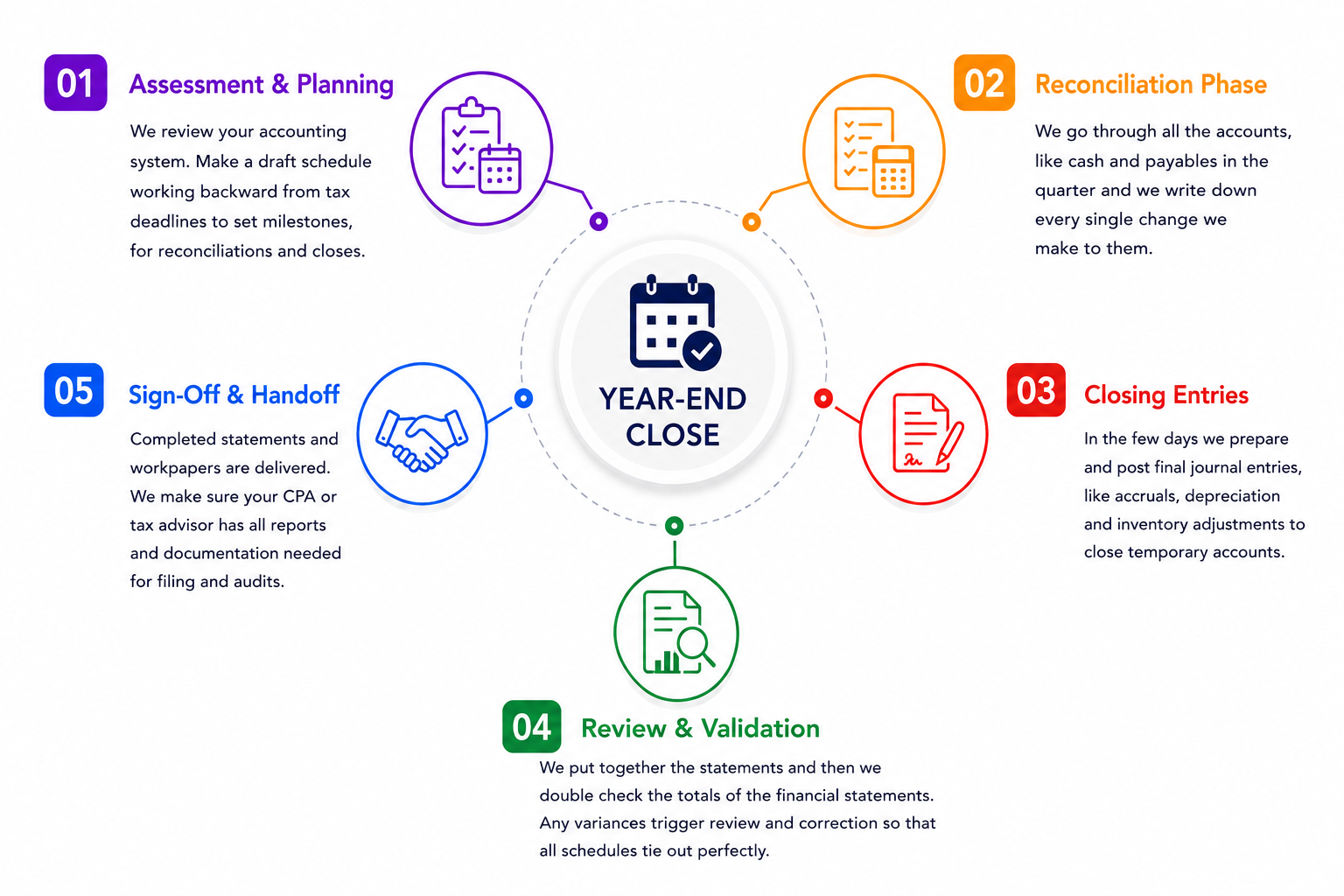
Assessment & Planning
We review your accounting system. Make a draft schedule working backward from tax deadlines to set milestones, for reconciliations and closes.
Reconciliation Phase
We go through all the accounts, like cash and payables in the quarter and we write down every single change we make to them.
Closing Entries
In the few days we prepare and post final journal entries, like accruals, depreciation and inventory adjustments to close temporary accounts.
Review & Validation
We put together the statements and then we double check the totals of the financial statements. Any variances trigger review and correction so that all schedules tie out perfectly.
Sign-Off & Handoff
Completed statements and workpapers are delivered. We make sure your CPA or tax advisor has all reports and documentation needed for filing and audits.
Case Study
TechGear Co. – Stress-Free Year-End Close
TechGear, a growing U.S. hardware startup, struggled with delayed reconciliations, manual accounting errors, and year-end reporting pressure. Their finance team was spending excessive time fixing discrepancies and preparing records before tax deadlines.
Crownglobe reviewed and reconciled all ledgers, corrected posting errors, and implemented a structured year-end close workflow to organize their financial records accurately and efficiently.
As a result, TechGear finalized its books two weeks ahead of schedule, completed tax filing on time, avoided IRS issues, and saved nearly $10K in potential penalties while recovering more than 100 hours of internal finance team workload.
FAQs
Year-end finalization means reconciling all accounts, recording any final GAAP adjustments (like depreciation, accruals, etc.), and producing the annual financial statements. It typically includes reviewing the trial balance for errors, reconciling balance sheet accounts, and making necessary journal entries so your books are clean and complete.
A year-end or annual accounts checkup ensures your financial statements accurately reflect the full year’s activity, which is critical for compliance, taxes, and business decisions. It uncovers missing entries, cutoff errors, or misclassifications that could cause audit issues or late-filing penalties. Completing this checkup prevents surprises and gives you reliable data for planning and reporting.
The year-end close process includes reconciling all major accounts (cash, receivables, payables, inventory, etc.), verifying accruals and prepayments, and posting final GAAP adjustments like depreciation and inventory write-offs. It also involves cutting off revenue and expenses to the correct period and finalizing the income statement, balance sheet, and cash flow statement for the year.
U.S. GAAP requires that revenues and expenses be recorded when earned or incurred, not necessarily when cash changes hands. This means year-end adjustments (accruals, deferrals, depreciation, etc.) are necessary to ensure your financial statements reflect the true economic activity of the year. Following GAAP at year-end avoids misstated earnings and ensures compliance with accounting standards.
A trial balance review checks that total debits equal total credits and highlights any discrepancies before closing the books. By examining the trial balance, you can spot unusual or unreconciled balances and correct errors early in the process. This step ensures that all accounts are balanced and that the foundation is solid before preparing the final statements.
Balance sheet reconciliations involve matching each asset and liability account (such as cash, inventory, accounts receivable/payable) to supporting records or statements. Performing these reconciliations at year-end verifies that your books match reality – for example, bank account reconciliations confirm cash balances. Thorough reconciliations help catch discrepancies so your reported assets and liabilities are accurate.
Adjusting journal entries update the books for items that weren’t recorded through normal transactions (e.g. accrued expenses, prepayments, depreciation, inventory adjustments). These entries ensure that the income statement and balance sheet correctly reflect all revenues earned and expenses incurred in the year. Without them, the annual results would be incomplete or misleading.
Cut-off testing checks that transactions are recorded in the correct fiscal period. For example, revenue earned in late December should be recorded in the current year, not pushed into January. By examining transaction dates and receipt dates around year-end, cut-off testing prevents period errors and ensures that income and expenses match the year to which they belong.
Outsourcing year-end closing brings in accounting experts who follow rigorous processes and up-to-date GAAP knowledge. This can significantly speed up the close, reduce errors, and ensure deadlines are met. For instance, a specialized firm can post adjustments and reconcile accounts more efficiently, freeing your team from overtime and giving you confidence that the books will be audit-ready. (See our [Bookkeeping Services] for details on outsourced close support.)
An annual accounts report (financial statements) typically includes the income statement, balance sheet, cash flow statement, and sometimes a statement of owners’ equity. These documents summarize your company’s performance and financial position for the year. Detailed notes or schedules (e.g. receivables aging, fixed asset rollforward) often accompany the statements to explain the numbers.
You should start planning your year-end close process several weeks or months in advance of the fiscal year-end. In practice, many companies begin reconciling accounts and gathering documentation early in Q4. Creating a detailed checklist and timeline ahead of time (often 2–3 months before year-end) ensures a smoother close and helps avoid last-minute issues.
Common year-end pitfalls include missing accruals or prepayments, unreconciled balance sheet accounts, and improper cutoff of revenue or expenses. Skipping small details (like clearing old reconciling items) can lead to inaccurate statements. A systematic review process and experienced oversight are key to avoiding these errors.
Having a clean year-end close means your tax preparer receives accurate financial statements, which makes tax returns much easier to complete. Accurate annual accounts ensure taxable income aligns with your records, reducing the chance of IRS discrepancies or penalties. In short, completed year-end books lead to smoother and more reliable tax filings.
Year-end closing is often performed by an organization’s accounting or finance team (controllers, accountants) under the supervision of management or a CPA. Smaller businesses frequently outsource to bookkeepers or accounting services for this work. In either case, having experienced professionals handle the closing tasks helps ensure GAAP compliance and accuracy (for example, our CFO Services teams can oversee the process).
Supporting schedules (such as accounts receivable aging, fixed asset registers, inventory detail, and loan amortization schedules) provide the backup behind the numbers in your financial statements. They make the year-end accounts transparent and audit-ready by showing how balances were calculated. Detailed schedules help auditors and stakeholders verify the numbers on the balance sheet and income statement.
Accelerate Your Business Growth
Discover our core solutions designed to streamline your financial operations and branding.
Get Started Today
Make your next year-end stress-free and accurate. Work with accounting professionals who know the requirements inside-out. Year End Finalization and Annual Checkup Services with Crownglobe ensures your books are clean, compliant, and complete.
Book a Consultation