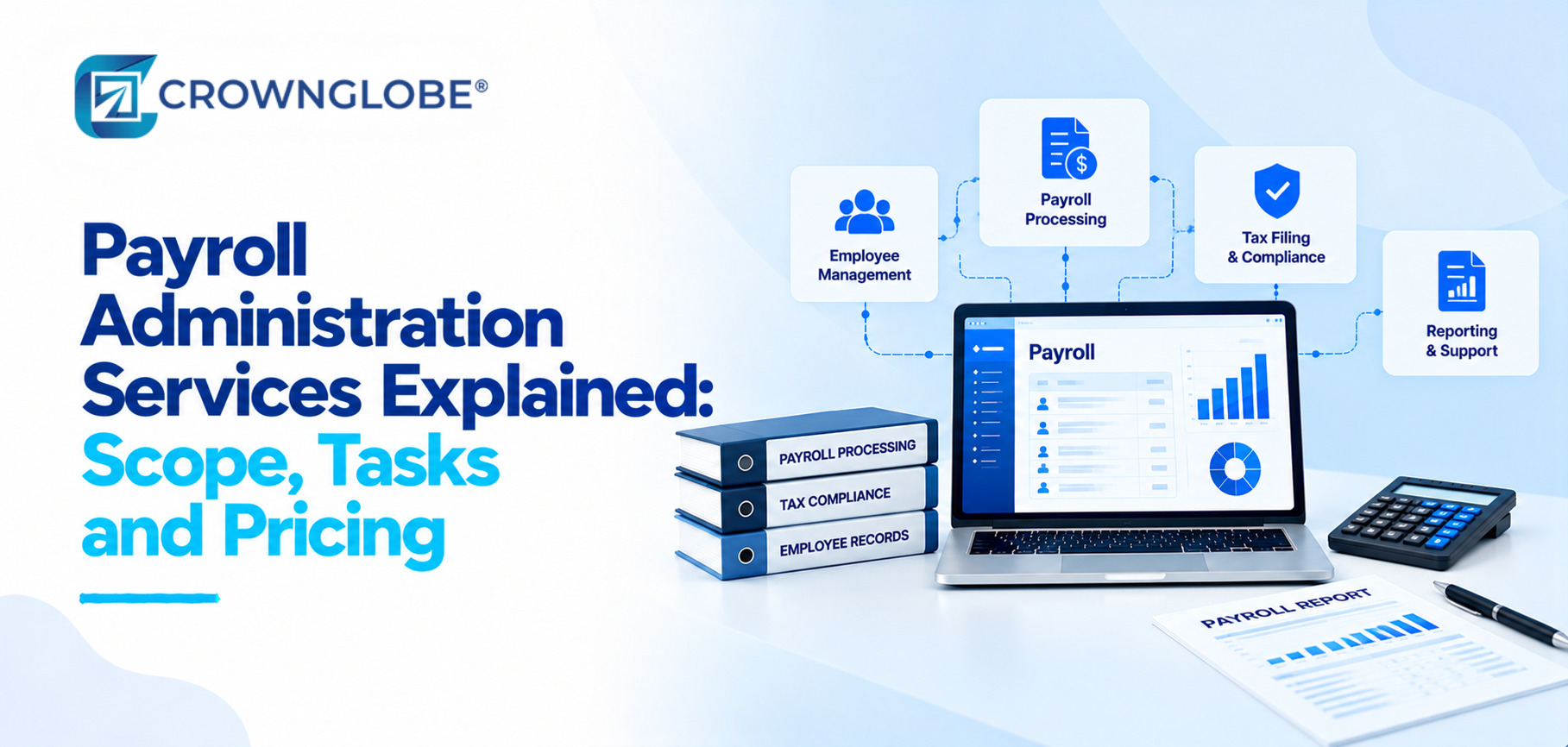
Use the twelve questions to compare a payroll administration company based on what it covers before looking at the price because a lower fee is only good if the service is limited. It can cost more if important tasks are missing or given to your team after the contract starts.
Twelve Questions That Define Payroll Administration Services
Which payroll-administration tasks are actually included?
- A strong answer
- The provider gives you a written task list covering the work the provider will perform such, as collecting approved payroll inputs calculating gross-to-net pay, applying deductions preparing payroll runs maintaining payroll records producing reports and coordinating tax-related payroll tasks specifically included in the engagement.
- A weak answer
- “We handle payroll from start to finish,” without defining what “handle” means.
That distinction matters because “full-service” can describe very different operating models. Start with a clear responsibility inventory, then compare it with CrownGlobe’s payroll processing services.
What information must we send before every payroll run?
- A strong answer
- The provider looks at the repeated inputs the person in charge, on your side and the cutoff process, which can involve approved hours, salary changes, bonuses, new hires, terminations, benefit deductions, garnishments and other changes that are allowed.
- A weak answer
- “Just send us whatever changed.”
Outsourcing administration does not remove the need for timely, complete source data. Your business still needs a reliable process for getting approved changes to the provider before payroll is finalized.
Who validates payroll changes before calculations are finalized?
- A strong answer
- The workflow shows who reviews changed data how exceptions are flagged, who answers questions and who gives final payroll approval before funding or payment activity proceeds.
- A weak answer
- “The system catches issues automatically.”
Automation lowers effort but Automation keeps ownership; a clear process shows where provider review stops and employer approval begins.
Who handles payroll tax deposits and returns and under whose authority?
- A strong answer
- The service provider makes clear what federal, state and local payroll tax responsibilities they will handle what access is required what the employer needs to look out for and how any notices are managed.
- A weak answer
- “Once you outsource payroll, taxes are our responsibility.”
Employers who use a payroll service provider still remain responsible, for employment-tax obligations according to the IRS. That makes the responsibility model more important than the sales language. See CrownGlobe’s guide to payroll expenses and payroll taxes for broader context.
What happens after the payroll run is approved?
- A strong answer
- The service provider determines the approval results and roles, which include payments or direct deposits where applicable, payroll registers, tax/deduction calculations, payroll reports, and information needed for employee reconciliation.
- A weak answer
- “Payroll is done once we submit it.”
Payroll is not concerned with making payments. It is related to accounting, reporting, cash handling, and reconciliation, ensuring that the business knows what income it earns and what it requires verification or recording.
How are corrections and non-routine events handled?
- A strong answer
- There is a procedure for off cycle payroll, payroll adjustments, bonuses, back pay changes, hires, terminations, garnishments, and other special cases. There is an explanation of what things could incur fees.
- A weak answer
- “Those situations are rare, so we handle them as they come up.”
Exception handling can sometimes provide more insight into the service model than a standard payroll processing run. Prior to any critical situations arising, learn about how changes are authorized, recorded, performed, and billed.
What payroll records and reports will we receive?
- A strong answer
- The provider shows the records and reports you will get how often you will get them and what they are for like payroll lists, tax details, labor costs or information, for accounting and checking the books.
- A weak answer
- “Everything is available in the portal.”
A portal is useful when the information inside helps your team do their actual work and covered employers have federal recordkeeping duties so payroll reporting should make those responsibilities easier not harder.
What still remains our responsibility as the employer?
- A strong answer
- The provider says this plainly. Your business still handles compensation decisions uses data gets approvals on time ensures enough money, for payroll gives proper account access and keeps track of obligations that haven't legally changed under the agreement.
- A weak answer
- You will not need to think about payroll.
A good outsourcing arrangement reduces work without creating confidence; clear retained responsibilities show a well-defined service, not a limitation.
Can the payroll administration company work with our current systems?
- A strong answer
- The provider shows how payroll, timekeeping, accounting and employee data flow through the system. Points out what stays the same and where changes or connections are required.
- A weak answer
- You have to move all your stuff to our system before we can get going.
A platform change should solve a real operating problem. The service model should come first. Technology must be chosen to support the service model not to force the business into an unnecessary migration.
How is the payroll administration service priced?
- A strong answer
- The price structure involves the basic price in addition to worker prices, pricing per pay run either the retainer or according to levels of services or customized quote depending on numbers and level of complexity.
- A weak answer
- A single headline number, with no explanation of limits add ones. Included work is what I want. Please give me the headline number in one line.
There is no one useful universal price for every payroll arrangement. Compare the fee with the work being transferred, and use CrownGlobe’s current payroll pricing page for live commercial pricing.
What is excluded or billed separately?
- A strong answer
- The provider identifies tasks before work starts like implementation, states, year-end forms, off-cycle runs, corrections, timekeeping, HR modules, integrations, garnishment work or more support.
- A weak answer
- “Anything unusual may cost extra.”
The word "needs context here; an affordable payroll service is one whose total cost still makes sense after exclusions retained internal work and likely exception charges are understood.
How will scope and price change as the business grows?
- A strong answer
- The provider can explain how things change when headcount goes up when employees work in states when pay checks happen more often when worker types shift, when reporting gets harder or when extra help is required.
- A weak answer
- “The same package should work for you indefinitely.”
Payroll complexity can increase well before a business feels large. Ask what triggers a scope or price change and whether the provider can continue supporting your industry-specific payroll needs as the business evolves.
What the Client Has to Bring
Payroll administration works best as an operating process, not a black box because payroll administration needs an internal owner timely updates of employee and pay changes, full access to agreed systems, reliable approvals and sufficient payroll funding, on time.
Conditions for success
- One named internal payroll owner who can make or obtain decisions.
- Employee, hour, compensation, deduction and status changes are submitted through an agreed process.
- Payroll approvals were completed on time by a person.
- Required system, bank, tax-account, and reporting access made available securely.
- Exceptions and one-off decisions documented instead of handled through scattered messages.
Patterns that cause failure
- No single person owns payroll questions internally.
- Late or incomplete changes repeatedly arrive after the agreed cutoff.
- The provider receives partial access but is still expected to complete the full workflow.
- Payroll is treated as a black box with no employer review or approval.
- The business assumes out-of-scope work will be absorbed without discussion.
Use a Controlled Scope Review Before Full Handoff
Before treating the handoff as fully settled test the operating model in practice by documenting task ownership, information flow, handling of missing inputs. Expected business outputs.
A practical review means setting payroll limits noting inputs and outputs running the process through a cycle or onboarding step and checking for problems before expanding the review.
Whether the responsibility map works outside the proposal document. It should expose unclear approvals, missing access, late inputs, reporting gaps, and uncertain exception ownership while there is still time to correct them.
An expensive payroll plan isn't always the choice but the problem happens when the buyer thinks the fee covers work that is actually done internally.
Compare scope, clarity, retained. Total workflow cost first, before comparing providers by their headline price.
Questions Buyers Ask About Payroll Administration
Payroll administration services support the recurring payroll cycle. Depending on the engagement, they can include payroll inputs, calculations, deductions, employee changes, pay-run preparation, records, reporting, tax-related tasks, and exceptions.
The handoff should be documented because provider scopes differ.
Payroll software is the technology used to calculate and manage payroll data. Payroll administration is the work of operating the process: collecting inputs, reviewing changes, running payroll, handling exceptions, and producing needed outputs.
Software can be used internally or within a managed service.
The arrangement controls the answer, but employers generally retain source-data, compensation, approval, funding, and oversight responsibilities.
For federal employment taxes, the IRS says employers using a payroll service provider generally remain responsible, so the responsibilities should be confirmed rather than assumed.
Pricing varies with headcount, pay frequency, jurisdictions, service level, integrations, support, and exception work.
Structures can include base-plus-worker fees, per-run charges, retainers, tiers, or custom quotes. Compare complete scope and likely add-ons, not one headline number.
It should cover the payroll work you actually need at a sensible total cost.
Ask what is included, what costs extra, what your team still does, and what changes the price.
Typical inputs can include approved hours, salary changes, bonuses, commissions, hires, terminations, deduction changes, garnishments, and other authorized changes.
Your exact list and submission process should be documented for your payroll setup.
Sources & Further Reading
- Internal Revenue Service — Publication 15 (Circular E), Employer's Tax Guide, 2026. irs.gov/publications/p15
- Internal Revenue Service — Outsourcing Payroll Duties. irs.gov/outsourcing-payroll-duties
- U.S. Department of Labor — Fair Labor Standards Act Recordkeeping Requirements. dol.gov/flsa-recordkeeping
- CrownGlobe — Payroll Processing Services for Small Businesses. crownglobe.com/services/payroll-processing
General information disclaimer: This article is for general business information and does not constitute legal, tax, payroll-compliance, or employment advice. Payroll requirements can vary by employer, worker type, jurisdiction, and service arrangement.
Confirm obligations with the appropriate government agency and qualified professional for your circumstances.
Need a Clear Payroll Administration Scope Before You Choose?
A useful payroll proposal should make four things clear: the tasks being transferred, the responsibilities your business retains, the items excluded from the fee, and how the price changes as your payroll becomes more complex.