
Insurance Agent Accounting Services
Insurance agency accounting has to explain the commission trail. Carrier statements, agency-bill premium, direct-bill deposits, renewal revenue, contingent commission and producer splits all need to reconcile back to the books without losing the story inside the AMS.
Agency owners need more than a clean bank feed. Accounting for insurance agencies has to support trust-account discipline, producer payroll, 1099 settlements, multi-state tax readiness and management reports that show revenue by carrier, line and producer.
CrownGlobe gives independent agents, brokers and MGAs one accountable finance stack — insurance agency accounting, bookkeeping, commission reconciliation, insurance back office services, tax-ready reporting and CFO-level insight for growth decisions.
Commission Accounting
Track new-business, renewal, contingent and profit-sharing commission by carrier, line and producer, then reconcile each carrier statement to the deposit that actually clears.
Trust & Premium Accounts
Keep agency-bill premium, fiduciary receipts and operating cash separated, with month-end accounting that supports trust-account review instead of burying premium movement in one ledger account.
Producer Payroll & Settlements
Account for W-2 producers, 1099 producers, draws, splits, chargebacks and reimbursements without turning payroll and producer settlements into a year-end scramble.
AMS & Tax-Ready Reporting
Connect agency management system data with QuickBooks, Xero or other accounting software so financial statements, tax records and management reports agree.
Service mapping for insurance agents and agencies
We map CrownGlobe’s accounting services to the way an agency actually earns, pays and reports: commission downloads, producer compensation, trust-account activity, agency management system exports and tax records all tied to one monthly close.
Whether you are a single producer, a growing independent agency or a broker with multiple offices, the same accounting spine applies: reconciled books, clean commission schedules, accurate settlements and reports that can support financing, valuation and growth planning.
Contact Us
Insurance Agency Accounting
A chart of accounts built around carrier revenue, producer cost centres, agency-bill movement, direct-bill deposits and the reports your agency owner or controller needs each month.

Producer Payroll & Settlements
Draws, splits, chargebacks, reimbursements, W-2 payroll and 1099 settlements accounted for in the same structure used to read producer profitability.

Business Tax Filing Support
Monthly books organised for business tax filing, entity planning and state-level payroll records, with documentation ready before year-end pressure arrives.

Virtual CFO for Agency Growth
Forecasting, valuation-ready reporting, book-of-business analysis and agency KPI dashboards for owners making hiring, acquisition, partner buy-in or producer compensation decisions.

AMS & Accounting Automation
Workflows that connect AMS360, Applied Epic, EZLynx, Nexsure, QuickBooks, Xero and Power BI so your agency is not re-keying the same commission data.
Industry-specific accounting challenges insurance agencies face
Insurance accounting is full of timing differences, fiduciary balances and system handoffs that rarely show up in a generic small-business ledger.
Commission recognition and contingent timing
New-business, renewal and contingent commission do not behave the same way. When all revenue is posted as one deposit line, the agency loses the ability to read carrier mix, producer economics and future cash expectations.
Agency-bill versus direct-bill reconciliation
Agency-bill premium creates carrier payables and fiduciary cash movement, while direct-bill commission arrives after carrier processing. The accounting file has to keep those streams separate.
Trust-account discipline
Premium funds should never blur into operating cash. Agencies need trust-account reconciliation that shows what is held, what is due to carriers and what belongs to the agency.
Producer classification and compensation
Producer payroll can include W-2 wages, 1099 settlements, recoverable draws, split commissions, chargebacks and expense reimbursements, each with a different accounting and tax trail.
AMS-to-accounting gaps
Agency management systems hold policy and commission detail, but accounting software holds cash and financial statements. If those systems do not reconcile, owners do not know which number to trust.
No per-producer, per-line view
An agency can look profitable overall while one producer group, line of business or carrier relationship is carrying the margin. Generic books usually cannot isolate that picture.
Insurance back office overload
Policy checking, loss run requests, commission statement review and accounting clean-up compete with sales and service work, which is why insurance back office outsourcing becomes attractive as the book grows.
Valuation and M&A readiness
Buyers, lenders and partner-buy-in discussions need reliable EBITDA, revenue retention, commission mix and clean supporting schedules. Those reports cannot be built quickly if the ledger was never structured for them.
Insurance Agent Accounting Services
Accounting, bookkeeping, commission reconciliation and insurance BPO support built around how independent agencies, brokers and MGAs work.

Monthly Accounting & Reconciliation
Operating accounts, trust accounts, credit cards, carrier deposits and producer payments reconciled into financial statements that match your agency activity.

Commission Reconciliation Services
Carrier statements matched to AMS records and deposits, with new, renewal, contingent and profit-sharing commissions separated for cleaner reporting.

Producer Payroll & 1099 Settlements
Producer compensation tracked through payroll, contractor settlements, splits, chargebacks and reimbursements so year-end reporting stays organized.

Agency Financial Reporting
Revenue per producer, retention, carrier mix, line-of-business margin and book profitability presented in reports owners can use to make decisions.

Tax-Ready Books & Entity Planning
Records prepared for business tax filing, LLC or S-Corp review, state payroll requirements and documentation your CPA can review without rebuilding the year.

Valuation & Growth Advisory
Virtual CFO support for agency valuation, acquisition planning, producer hiring, partner buy-ins and lender-ready reporting packages.
Industry-Specific Benefits
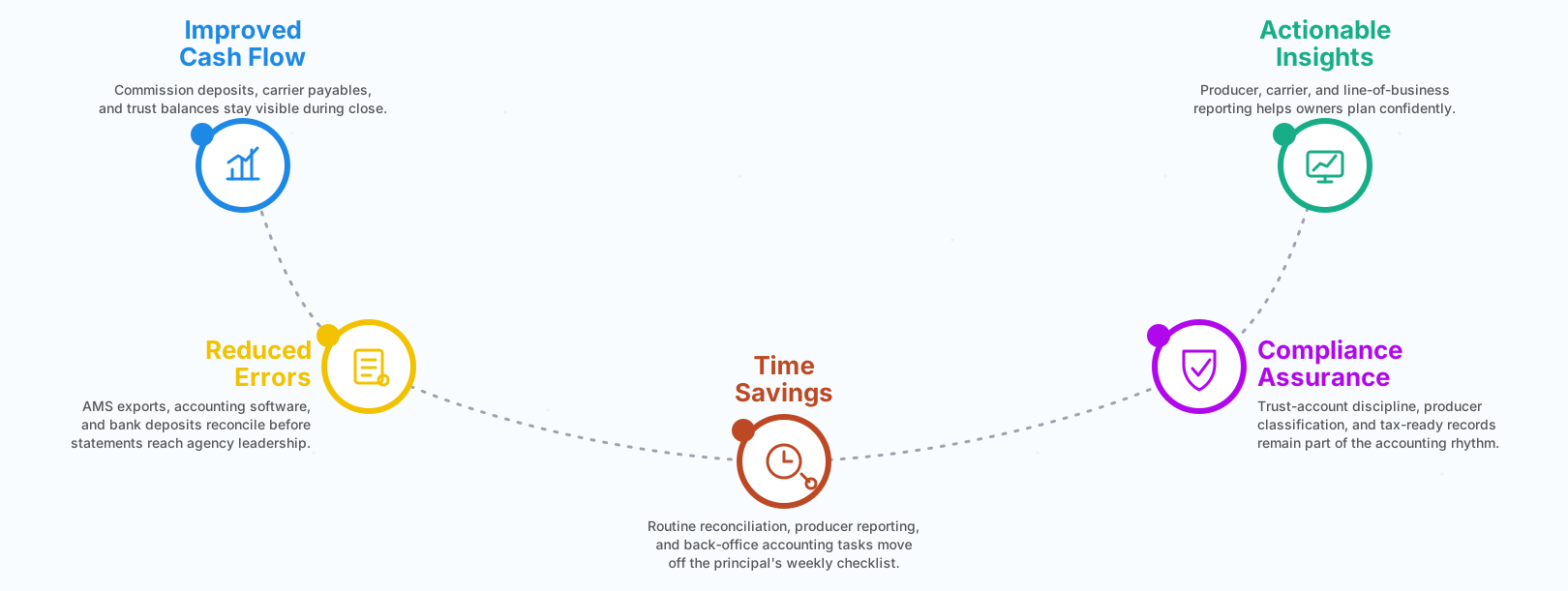
Improved Cash Flow
Commission deposits, carrier payables and trust balances stay visible during close, giving agency owners a clearer view of operating cash.
Reduced Errors
AMS exports, accounting software and bank deposits reconcile before reports reach agency leadership, reducing manual re-keying and misclassified commission activity.
Time Savings
Routine reconciliation, producer reporting and back-office accounting tasks move off the principal’s weekly checklist.
Compliance Assurance
Trust-account discipline, producer classification and tax-ready records become part of the monthly accounting rhythm.
Actionable Insights
Producer, carrier and line-of-business reporting helps owners compare growth opportunities with real margin data.
Data-Driven Financial Strategy
Virtual CFO support and business intelligence built on agency accounting data you can trust.
Agency KPI Dashboards
Power BI dashboards for revenue per producer, carrier mix, line-of-business trend, retention and monthly operating performance.
Commission Waterfall Reporting
New, renewal, contingent and profit-sharing commission shown by carrier and producer so agency leaders can see what is recurring and what is timing-driven.
Producer & Book Profitability
Reports that connect producer compensation, commission revenue, service costs and book-of-business segments into one profitability view.
Valuation-Ready Packages
Financial reporting packages built for lenders, acquirers, partner buy-ins and agency valuation discussions, with supporting schedules attached.
Budgeting & Growth Planning
Forecasts that account for hiring, carrier appointments, acquisition opportunities, renewal cycles, technology costs and producer compensation plans.
Case Study
Independent Agency Accounting Reset
Commission, Trust and Producer Reporting in One Close
An independent agency with mixed personal and commercial lines was closing its books from multiple sources: carrier commission statements, AMS exports, bank activity, producer spreadsheets and payroll records. The accounting file showed total revenue, but it did not clearly explain producer economics, trust-account position or carrier-level profitability.
CrownGlobe rebuilt the accounting workflow around agency-specific cost centres, separated commission types, connected AMS and bank activity to the monthly close, and created schedules for producer settlements and carrier payables. Leadership moved from spreadsheet-based questions to a repeatable close package that supported tax planning, producer review and growth conversations.

Technology & Automation Solutions
We work inside the insurance agency management and accounting systems your team already uses.

Agency Management Systems
Accounting workflows aligned with agency management systems including AMS360, Applied Epic, EZLynx and Nexsure.

Accounting Software
QuickBooks, Xero and insurance accounting software configured around agency revenue, producer reporting and tax-ready books.

Commission Reconciliation Tools
Carrier downloads, AMS commission records and bank deposits compared so commission reconciliation services become repeatable.

Payroll & HR Platforms
Producer payroll, contractor settlements and staff payroll coordinated through platforms such as Gusto, ADP, Paychex and QuickBooks Payroll.

Business Intelligence
Power BI dashboards that combine accounting data, AMS exports and agency KPIs for owners and controllers.
Engagement Models
Standard
$125/ Per Month
Suited to single-producer and small independent agencies that need monthly insurance accounting, bookkeeping, operating-account reconciliation, commission review and tax-ready records.
Growth
$195/ Per Month
Built for agencies with multiple producers, carriers or offices: controller review, producer settlements, AMS-to-accounting reconciliation, trust-account schedules and management reporting.
Executive
$295/ Per Month
For growing and acquisition-minded agencies: Virtual CFO support, agency KPI dashboards, valuation-ready reporting, book profitability and planning around producer compensation and growth.
FAQs
Answer: Insurance agency accounting is the finance workflow that records commission revenue, carrier payables, producer compensation, trust-account activity, operating expenses and tax-ready reports for an agency. It is different from general accounting because policy, commission and producer detail usually starts in an agency management system before it reaches the ledger.
Answer: A normal small-business ledger usually follows bank activity. Accounting for insurance agencies has to reconcile bank activity to carrier statements, AMS records, agency-bill premium, direct-bill commission, renewal revenue and producer settlements, then keep that structure useful for management reporting.
Answer: Yes. Insurance agency bookkeeping is part of the accounting workflow. Monthly bank reconciliation, expense coding, commission posting and close support sit underneath the broader accounting, reporting and advisory layer.
Answer: We compare carrier commission statements, AMS commission records and bank deposits, then separate new-business, renewal, contingent and profit-sharing commission where the source data allows it. This creates a cleaner trail for insurance commission reconciliation services and producer reporting.
Answer: Yes. CrownGlobe supports finance-side insurance back office services such as commission statement review, accounting clean-up, policy-checking support tied to billing records, reporting schedules and outsourced accounting workflows. We keep the accounting scope clear so operational tasks do not dilute financial control.
Answer: Many agencies handle premium funds in ways that require careful fiduciary accounting, and specific requirements depend on state rules and carrier arrangements. We structure the books so trust or premium-account activity is clearly separated and easy for your licensed advisor or regulator to review.
Answer: Yes. We work with exports and workflows from common agency management systems including AMS360, Applied Epic, EZLynx and Nexsure, then map the data into QuickBooks, Xero, Power BI or your preferred reporting setup.
Answer: Many agencies use QuickBooks or Xero with AMS exports, while larger or more complex agencies may add reporting tools or insurance accounting software. We help configure accounting software for insurance agencies around commission, producer, carrier and line-of-business reporting.
Answer: We keep W-2 payroll and 1099 producer settlements in separate accounting flows, then track draws, splits, chargebacks and reimbursements against the producer or producer group. Classification advice should be reviewed with your legal or tax advisor; the accounting records stay organized either way.
Answer: Yes, when the source records identify the producer, carrier and line of business. We design the chart of accounts, classes and reporting tags so revenue per producer and per line can be read from the ledger instead of rebuilt in a spreadsheet.
Answer: Yes. Virtual CFO engagements can include valuation-ready reporting packages: profit and loss, balance sheet, commission mix, retention detail, EBITDA support and schedules useful for lenders, buyers or partner buy-in discussions. We do not replace a licensed valuation professional when a formal opinion is required.
Answer: Yes. Catch-up work is scoped separately because the effort depends on how many months are open and how complete the bank, carrier statement, AMS and payroll records are. See Catch up Bookkeeping for the clean-up workflow.
Answer: Every engagement includes core financial statements. Growth and Virtual CFO engagements add agency-specific reporting such as commission reconciliation schedules, trust-account schedules, producer reporting, carrier mix, line-of-business margin and cash-flow views.
Answer: Onboarding starts with bank access, accounting software access, AMS exports, carrier statement samples and payroll records. Once source access is available, we map the chart of accounts and close process before moving into recurring monthly accounting.
Answer: Yes. The Standard engagement is built for individual agents and small agencies that need reliable insurance agent accounting, basic commission reconciliation, monthly bookkeeping and tax-ready records without a controller-level service model.
Strengthen Your Agency’s Financial Operations
Related CrownGlobe pages that support insurance agent accounting and agency finance operations.
Put your agency accounting on solid ground
Insurance agencies make better decisions when commission reconciles to cash, trust balances are visible, producer compensation is documented and management reports explain the book of business. Book a free consultation and we will review your current accounting workflow, AMS handoffs and reporting gaps.
Schedule a Free Consultation