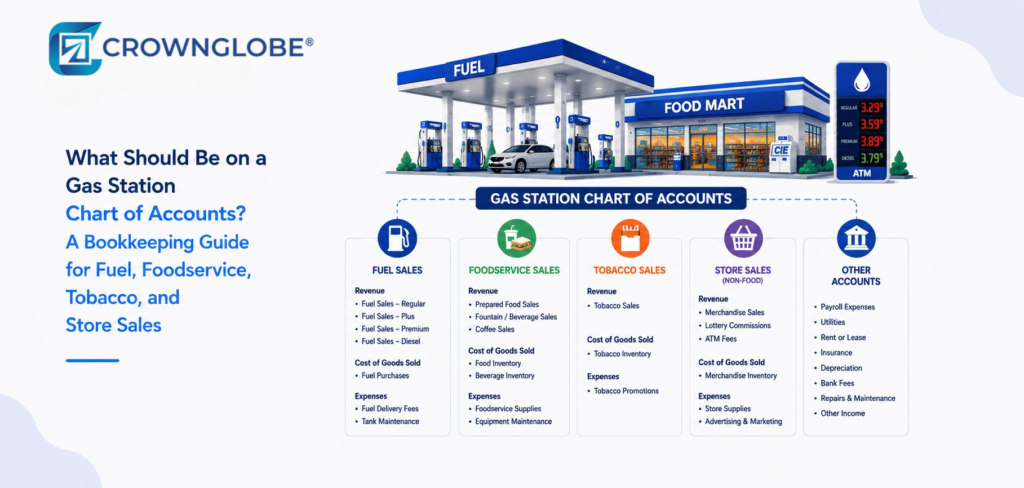
One of the most common bookkeeping issues in the fuel retail industry has nothing to do with taxes, payroll, or accounting software.
It starts with the chart of accounts.
Many gas station owners use accounting systems that aren’t designed for fuel retail or stick with inherited systems without checking if they still work for their business.
Over time, the consequences become clear.
Financial reports are harder to understand. Profitability becomes difficult to measure. Inventory visibility declines. Tax reporting becomes more complicated than it needs to be.
Whether you own a convenience store and gas station, for the time or manage a growing chain of them, a well-structured chart of accounts is a valuable financial tool.
Why the Chart of Accounts Matters
Your chart of accounts is the framework behind every financial report your business produces.
Every fuel sale, grocery purchase, payroll expense, vendor rebate, and credit card fee ultimately flows through this structure.
Important business insights are lost when the categories are too broad.
If categories are too detailed, then bookkeeping gets hard to keep, and reporting gets messy.
The goal is to make the financial system easy to understand and manage, so it is useful and simple to work with information.
This is why professional Bookkeeping and Gas Station and Convenience Stores Bookkeeping services often begin with a review of the chart of accounts to ensure it reflects how the business operates.
Snippet Answer: What Is a Chart of Accounts for a Gas Station?
A gas station chart of accounts helps organize money, like income, spending, things owned, debts and products. It lets owners see fuel sales, food profits, tobacco earnings, expenses, and taxes clearly.
Revenue Accounts Every Gas Station Should Have
Fuel retailers often make a mistake by putting all their sales into one account for revenue, from the bookkeeping of the fuel retailers.
A gas station and convenience store makes money from parts, like food and drinks and gas each having its own way of working and needing different things to run.
Fuel Sales
Fuel should always be tracked in its own revenue category.
This allows owners to monitor:
- Fuel volume
- Gross margin
- Supplier pricing trends
- Overall fuel profitability
Fuel performance should never be blended with inside store sales.
Grocery and Retail Merchandise Sales
Retail merchandise should also be separated from fuel revenue.
Examples include:
- Snacks
- Candy
- Household products
- General merchandise
Keeping these sales, separate provides a much clearer picture of store performance and profitability.
Beverage Sales
Many operators are surprised to learn how much profit beverages can generate.
This category may include:
- Soft drinks
- Energy drinks
- Bottled water
- Specialty beverages
Tracking beverage sales, on its own can really help you find ways to make money and manage your stock better with the beverage sales.
Tobacco Revenue
Tobacco continues to be an important category for many gas stations and convenience stores.
Separate reporting helps owners evaluate:
- Sales trends
- Vendor rebate programs
- Inventory turnover
- Category profitability
Prepared Food Revenue
Foodservice has become one of the fastest growing profit centers in the industry.
This category may include:
- Pizza
- Sandwiches
- Breakfast items
- Hot food programs
- Fresh deli products
Tracking foodservice separately is particularly important when evaluating the difference between gas station and convenience store profitability models.
Lottery Revenue
Lottery activity should always be tracked independently.
Many operators maintain separate accounts for:
- Lottery commissions
- Lottery cash transactions
- Lottery liabilities
Combining lottery activity with general store sales often creates confusion and reduces reporting accuracy.
Cost of Goods Sold Accounts
Revenue tells only part of the story.
A strong chart of accounts should also separate major cost categories, so profitability can be measured accurately.
Fuel Cost of Goods Sold
Fuel purchases should remain separate from all other inventory purchases.
This allows owners to calculate fuel margins with confidence.
Store Inventory Cost of Goods Sold
Separate categories often include:
- Grocery inventory
- Beverage inventory
- Tobacco inventory
- Prepared food inventory
This structure supports cleaner Financial Statements Preparation and provides a much clearer view of profitability by the department.
Inventory Accounts
Inventory is one of the largest assets on the balance sheet for many fuel retailers.
Proper categorization is essential.
Fuel Inventory
Fuel inventory is often separated into:
- Regular fuel
- Premium fuel
- Diesel fuel
Store Inventory
Store inventory may include:
- Grocery inventory
- Beverage inventory
- Tobacco inventory
- Foodservice inventory
This approach is really good for Retail Inventory Management. It helps owners find problems, like shrinkage and inventory issues.
Payroll and Labor Accounts
Labor is usually the expense that a business can actually control.
Creating payroll categories helps with better reporting and makes staffing decisions easier.
Recommended accounts include:
- Store payroll
- Management payroll
- Employee benefits
- Overtime expense
Many operators integrate payroll processing with monthly financial reporting to gain better visibility into labor costs.
Operating Expense Accounts
A well-designed chart of accounts should also capture key operating expenses separately.
Merchant Processing Fees
Credit card processing costs continue to be a significant expense for many operators.
Tracking these fees separately makes margin analysis much more meaningful.
Rent or Lease Expense
This account becomes particularly important when evaluating a convenience store and gas station for sale or analyzing location performance.
Utilities
Utility expenses should typically include:
- Electricity
- Water
- Internet
- Phone services
Repairs and Maintenance
Separate categories may include:
- Fuel equipment repairs
- Building maintenance
- POS system maintenance
Insurance
Insurance expenses should always be tracked separately and reviewed regularly.
This becomes especially important when evaluating requirements related to florida gas station and convenience store insurance.
Tax and Liability Accounts
Your chart of accounts should also support accurate compliance and reporting requirements.
Common liability accounts include:
- Sales tax payable
- Payroll tax liabilities
- Lottery liabilities
- Fuel tax liabilities
Proper classification supports cleaner Business Tax Filing and Multistate Sales Tax Filing processes.
Businesses should also ensure reporting aligns with the NAICS code for gas station and convenience store and the appropriate activity code for gas station and convenience store.
Why Generic Charts of Accounts Often Fall Short
Many accounting systems start with a generic retail template that does not fully reflect the complexity of fuel retail operations.
Common issues include:
- Fuel and store revenue combined together
- Inventory categories merged into one account
- Lottery transactions recorded incorrectly
- Foodservice revenue buried within retail sales
- Merchant processing fees not tracked separately
These challenges frequently appear during due diligence reviews involving a gas station and convenience store for sale in Pennsylvania, a gas station and convenience store for sale in Virginia, or a gas station and convenience store for sale in Florida.
Poor financial organization often creates unnecessary questions for lenders, buyers, and investors.
The same issues frequently appear when reviewing a gas station and convenience store for sale in NJ or evaluating gas stations and convenience stores for sale in other markets, where buyers expect organized financial records and department level reporting.
Using Technology to Improve Reporting
Modern accounting technology has made chart of accounts management far more efficient.
Many operators utilize:
- QuickBooks Bookkeeping
- Xero Bookkeeping
- Finance Automation
- Power BI Visualization
- Remote Accounting support
When properly implemented, these tools provide real time visibility into revenue, margins, inventory, and operating expenses.
Many owners also gain valuable insights from resources such as Power BI Dashboard Blueprint for Gas Stations: KPIs That Actually Move Cash Flow and What Banks Look for in a Gas Station Loan Renewal: KPIs, Reporting, and Your Monthly Finance Package.
When Should You Review Your Chart of Accounts?
A chart of accounts should evolve as your business grows.
Consider reviewing it when:
- Purchasing a new location
- Expanding foodservice operations
- Adding multiple stores
- Implementing new accounting software
- Preparing for financing
- Preparing for a sale
A properly structured chart of accounts should also support the financial assumptions used in a sample business plan for gas station and convenience store operations, making forecasting and growth planning far more reliable.
This applies whether you operate an independent location, a shell gas station and convenience store, a wawa convenience store and gas station, or a larger multi location operation.
How Crownglobe Helps Fuel Retailers
Crownglobe helps fuel retailers build accounting systems that support accurate reporting, stronger controls, and better decision making.
Our services include:
- Bookkeeping
- Catch Up Bookkeeping
- Outsourced Accounting
- Financial Statements Preparation
- Business Tax Filing
- Virtual CFO services
- Finance Automation
- Power BI Visualization
- Year End Finalization and Annual Checkup Services
Our objective is simple: help business owners create financial systems that provide clarity, confidence, and actionable insights.
Conclusion
A chart of accounts is far more than an accounting setup tool.
It forms the foundation of every report every tax filing, each inventory review and every profitability analysis that your business relies on.
For a gas station and convenience store separating fuel sales, food, tobacco products, lottery tickets and retail items gives a picture than a basic accounting system.
Owners who invest in building the financial framework usually get more accurate reporting, stronger financial margin visibility, better inventory control and cleaner financial statements, for their business the financial framework.
When your accounting structure is like how your business works making good decisions is a lot easier, for your business.
FAQ Section
What accounts should every gas station chart of accounts include?
At a minimum, it should include separate accounts for fuel sales, grocery sales, tobacco sales, lottery revenue, prepared food revenue, fuel inventory, store inventory, payroll, merchant processing fees, and sales tax liabilities.
Why should fuel sales and store sales be separated?
Separate tracking helps owners calculate fuel margins accurately and understand the profitability of each department within the business.
Should tobacco and lottery revenue be tracked separately?
Yes. Tobacco and lottery activities have unique inventory, reporting, and profitability considerations that are easier to manage when tracked independently.
What accounting software works best for gas stations?
Many operators use QuickBooks Bookkeeping, Xero Bookkeeping, and integrated Finance Automation solutions to improve reporting accuracy, efficiency, and visibility.
How often should a chart of accounts be reviewed?
Most businesses should review their chart of accounts annually or whenever significant operational changes occur, such as acquisitions, expansion, or major software implementations.