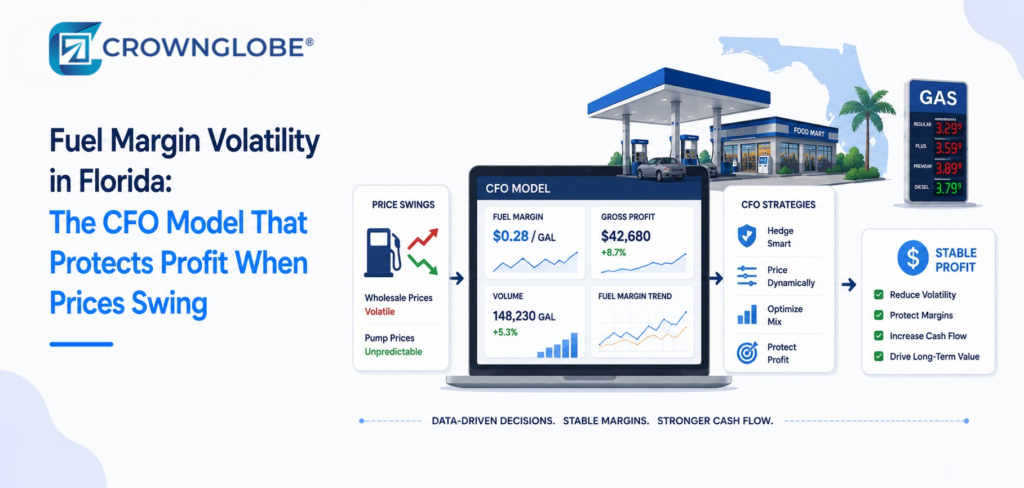
Running a gas station and convenience store in Florida is tough because fuel prices keep changing, so managing profit margins during these price swings is important, for owners.
Prices of things can change fast even many times in one week, so if you’re pricing and purchasing and reporting are not working together, you can lose money before you even know it.
Many operators focus heavily on sales volumes. But long-term profitability depends on how well you manage margins, not just how much fuel you sell, especially when understanding the difference between gas station and convenience store revenue drivers.
This is where a structured CFO approach becomes valuable. The system provides visibility and control to help protect and improve the margins of the business even when the market is really unpredictable.
Why Fuel Margin Volatility Is a Real Risk
Fuel margins are naturally tight. A few cents, per gallon of gasoline can really make a difference in the money you have to spend on Gasoline.
In Florida, volatility is driven by several factors:
- Global oil price movements
- Regional supply and transportation costs
- Competitive pricing in local markets
- Seasonal demand patterns
Running a convenience store and gas station is hard, for operators because they have to respond accurately all the time to convenience store and gas station needs.
It is really hard to keep up with changes when you do not have a picture of your money and finances.
The Hidden Problem: Delayed Financial Insight
Most gas stations and convenience stores still rely on POS reports and month-end financials.
The issue is timing. By the time you review the numbers, the margin impact has already happened.
Common gaps include:
- No daily view of fuel cost versus selling price
- Delays in adjusting pump prices
- Limited tracking of margins by supplier or delivery
- No connection between fuel data and accounting systems
Whether you operate one location or a chain of convenience stores and gas stations, this delay leads to missed opportunities and avoidable losses.
The CFO Model for Managing Fuel Margins
The Chief Financial Officer or CFO led approach is about staying ahead of the numbers rather than reacting after the fact, to the numbers.
It combines real-time visibility, structured reporting and disciplined decision-making to help us make decisions.
Daily Margin Tracking
You need a clear view of:
- Cost per gallon by delivery
- Selling price changes
- Margin per gallon
With this visibility, you can adjust pricing quickly and protect profitability.
Even small delays can affect performance, especially when evaluating a gas station and convenience store for sale in Florida or planning expansion.
Supplier and Delivery Analysis
Not all deliveries are priced the same.
A CFO approach helps you monitor:
- Price differences across suppliers
- Delivery timing and cost trends
- Variances between expected and actual margins
Over time this results in improved buying choices and tighter control, over costs.
Pricing Strategy and Competitive Positioning
Fuel pricing is not, about copying what competitors are doing. It is about balancing competitiveness with margin protection.
A structured approach looks at:
- Local pricing behavior
- Volume versus margin trade-offs
- Timing of price adjustments
This becomes especially important if you own a convenience store and gas station in a competitive market.
Using Power BI to Monitor Fuel Margins in Real Time
Manual reports cannot keep up with fuel price movement.
This is where Power BI visualization becomes essential.
A well-built dashboard allows you to:
- Track margin per gallon on a daily basis
- Compare supplier costs across deliveries
- Identify pricing gaps quickly
- Monitor trends across multiple locations
When combined with finance automation, your data updates automatically, giving you a clear and current view of performance.
Multi-Location Risk: Why Volatility Scales Quickly
If you run gas stations and convenience stores small profit gaps, at each location can quickly become a big deal.
A structured dashboard helps you:
- Benchmark margins across stores
- Identify underperforming locations
- Apply consistent pricing strategies
Managing a convenience store and gas station portfolio is really important especially when you have locations in states like Florida, Georgia and North Carolina and you are looking at a gas station and convenience store for sale, in North Carolina or Pennsylvania.
Beyond Fuel: Protecting Overall Profitability
Fuel brings customers in, but your convenience store drives profit.
To maintain overall margins, you should also monitor:
- Inside store gross margins
- Labor costs
- Card processing fees
- Vendor rebates
This is where integrated systems such as bookkeeping and financial statements preparation play an important role.
For a deeper understanding, refer to Accounting for Convenience Store Operations within Gas Stations: Managing Dual Revenue Streams.
Common Mistakes That Reduce Fuel Margins
Many operators lose margin due to avoidable issues:
- Delayed price updates after deliveries
- Lack of margin tracking at the gallon level
- Ignoring supplier pricing differences
- No real-time dashboard visibility
- Focusing too much on volume instead of margin
These challenges are common, particularly for those evaluating gas stations and convenience stores for sale without a clear financial framework.
Tax and Compliance Considerations in Florida
Fuel operations involve multiple compliance layers that cannot be overlooked.
Key areas include:
- Motor fuel tax reporting and alignment with the correct activity code for gas station and convenience store
- Sales tax on inside store items
- Payroll compliance
- Insurance considerations such as Florida gas station and convenience store insurance
Accurate reporting helps with compliance. Makes financial decisions better.
Structured tax filing and planning can improve overall profitability.
For help check out “Maximizing Tax Deductions and Credits for Retail Stores” and “Tax Planning Strategies, for Retail Stores”.
How Crownglobe Helps Gas Station Owners Manage Volatility
Crownglobe supports gas station and convenience store owners with financial systems designed for real operational needs.
This includes:
- Virtual CFO services focused on margin control
- Power BI dashboard development
- Finance automation for real-time reporting
- Bookkeeping and outsourced accounting
- Payroll processing and compliance support
- Year-end financial review and cleanup
The goal is to help you make proactive decisions by moving from reactive reporting to practical and results-driven actions.
Conclusion
The price of fuel can change a lot and that is part of the business how you deal with the fuel price changes is what determines how well your business does.
Running a gas station and convenience store successfully requires visibility, structured reporting and disciplined financial management of the gas station and convenience store.
With a CFO model you can protect your margins improve cash flow and operate confidently even when prices change.
FAQ Section
How do gas station and convenience store owners manage fuel margin volatility?
They rely on daily margin tracking, structured pricing strategies, and dashboards to monitor fuel costs and respond quickly.
What is a good fuel margin for a gas station?
Margins vary by location and market conditions, but even small differences per gallon can significantly impact overall profitability.
How often should fuel margins be reviewed?
Daily tracking is recommended due to frequent pricing changes.
Can dashboards help improve fuel margins?
Yes. Dashboards provide real-time visibility, allowing faster and more informed pricing and purchasing decisions.
What role does a CFO play in fuel margin management?
A CFO helps interpret data, refine pricing strategies, and implement systems that protect margins and improve cash flow.
How is a gas station and convenience store structured for compliance and reporting?
A gas station and convenience store is typically structured with separate tracking for fuel and in-store sales, aligned with NAICS or activity codes to ensure accurate reporting, tax compliance, and financial clarity.