Running a practice is not just about taking care of patients it is also, about taking care of the dental practice finances. At the end of the year the dental practice tax position, the dental practice compliance status and the practice financial records become very important to look at.
Dental bookkeeping and planning can help your practice close the year with clarity, confidence and control of scrambling at year-end because of reactive systems.
Why Year-End Tax Planning Matters
Dental offices do not operate like most businesses. Insurance reimbursements come in on uneven timelines, payroll represents a significant expense, and equipment investments can materially affect year-end tax planning.
That is why accounting for dentists requires a more specialized and proactive approach. Working with experienced accountants for dentists helps ensure your year-end process supports both compliance and long-term financial strength.
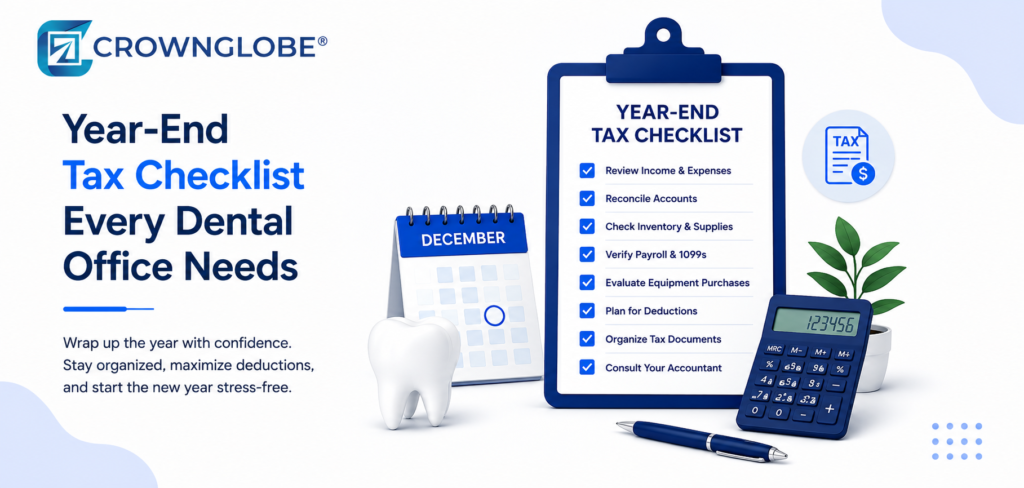
Year-End Checklist for Dental Offices
Before you close your books, make sure you:
- Finalize all dental bookkeeping records
- Reconcile bank, credit card, and loan accounts
- Review deductible expenses and identify missing entries
- Confirm payroll and tax filings are complete
- Evaluate equipment purchases and depreciation timing
- Align financial reports with your broader tax strategy
1. Review and Clean Up Your Dental Bookkeeping
Everything starts here. When your dental bookkeeping is accurate you get a picture of how your dental practice is really doing with your dental bookkeeping.
Make sure you:
- Reconcile bank and credit card accounts
- Review income and expense entries carefully
- Check accounts receivable and insurance payments
- Classify every transaction correctly
With strong bookkeeping for dentists, your year-end tax decisions are based on solid numbers. If your records are incomplete or inconsistent, even strong tax strategies can lose effectiveness.
2. Reconcile All Accounts
Before year-end, every account should tie back to your records:
- Bank accounts
- Credit cards
- Loans
- Vendor balances
When your accounts are reconciled properly, your dental office bookkeeping is accurate, reliable, and ready for reporting.
3. Review Income and Receivables
Insurance payouts and patient balances can create timing gaps in your cash flow. Look at:
- Unpaid insurance claims
- Outstanding patient bills
- How fast you’re collecting payments
This gives you a real look at how much you’ve actually earned.
4. Verify Expenses and Deductions
Year-end is the right time to review expenses carefully and make sure nothing is missed.
Check:
- Equipment and supplies
- Rent and utilities
- Payroll and benefits
- Software subscriptions, including dental accounting software
- Marketing and professional fees
Using an approach, to bookkeeping for dental practices is really important because it helps dental practices capture and document every eligible deduction correctly for their dental practices.
5. Plan Equipment Purchases and Depreciation
Thinking about buying equipment? Timing is everything.
Purchases before year-end might land you extra deductions. An experienced accountant can help you figure out depreciation options and nail the best timing.
6. Review Payroll and Compliance
Payroll can become a major compliance issue if it is not reviewed carefully.
Before year-end:
- Confirm employee classifications are correct
- Make sure payroll taxes have been filed and paid
- Review benefits and deductions for accuracy
Using payroll processing services really helps to reduce the stress of doing all the office work and it also helps to avoid making expensive mistakes with the rules.
7. Prepare Financial Statements
This is the right time to review:
- Profit and loss statements
- Balance sheets
- Cash flow reports
When you lean on professional services, these reports aren’t just for the IRS they actually help you make smarter business decisions.
8. Align Cash Flow With Tax Payments
Even if your practice is making good money, cash flow can get tight around tax time.
Solid financial management helps you:
- Set aside funds for taxes.
- Skip last-minute stress.
- Keep your practice running smooth.
Structured dental accounting services really help here.
9. Consider Outsourcing Your Accounting
Year-end is a great time to rethink how you handle finances.
Lots of practices outsource because they get:
- Better accuracy and compliance
- Expert advice
- Room to grow without worrying about the books
Combine outsourcing with good bookkeeping and you’re set for next year.
10. Use Technology for Better Visibility
People these days use tools that give them real-time information so they can see what is going on with their money.
Platforms like QuickBooks for dentists, combined with automation, help you:
- Reduce manual errors
- Improve reporting quality
- See practice performance in real time
This helps with financial management and it also supports more informed decision-making, for the financial management.
11. Conduct a Year-End Financial Review
Take a moment to look back at what you accomplished before the year ends and see how you did.
Ask yourself:
- What services made the most money?
- Where did your costs go up?
- Are your margins getting better?
With virtual CFO services, you can actually turn these answers into a plan for next year.
IRS Updates and Compliance Reminders
Tax rules keep changing. It is very important to stay updated always.
Stay on top of:
- New deduction guidelines
- Payroll tax changes
- Filing deadlines and document standards
Working with professionals who provide tax filing services helps keep your practice compliant and well-prepared.
Internal Links You Might Find Useful
A strong year-end setup could include:
- Remote accounting services for flexibility
- Bookkeeping services for dentists to keep records accurate
- Outsourced accounting services for scalability
- Financial statements preparation services for clearer reporting
- Virtual CFO services for planning
- Finance automation solutions for real-time visibility
You can also explore how accounting helps doctors in Miami scale faster and review tax benefits in the Health Savings Accounts guide.
When Your Dental Office Needs Extra Support
If year-end feels rushed or you’re unclear, about deductions and tax strategy it’s time to strengthen your support.
When financial reports are not guiding decisions and compliance requirements feel increasingly difficult to manage, moving from basic bookkeeping to structured dental accounting services becomes essential for long-term stability and growth.
Conclusion
Year-end tax preparation is not about closing the books it is about putting your tax practice in a stronger position for the year ahead, with tax preparation.
With dental bookkeeping you can improve compliance and stay in control of your finances by planning better and using structured dental accounting services.
FAQ
What should dental practices do at year-end for taxes?
Check your books, reconcile accounts, verify expenses, prep financial statements, and firm up tax strategies before you file.
Why is dental bookkeeping important at year-end?
It keeps your records solid and reliable crucial for tax reporting and staying compliant.
Should dentists outsource accounting at year-end?
Many do, to boost accuracy, cut risks, and get expert help.
What reports should a dental office review before year-end?
Profit and loss, balance sheet, and cash flow reports give you a real sense of financial health.
What software is best for dental accounting?
QuickBooks for dentists is widely used, especially when combined with automation and professional oversight.