Owning a dental practice is more than just taking care of patients it’s about running a business, and your finances matter as much as your clinical skills. How you handle your taxes affects your profits and the future of your practice.
Most dentists start out with simple dental bookkeeping, which works for a small operation. But as your practice grows, both your bookkeeping for dentists and tax responsibilities become more complex. Without a solid system, you’ll either miss out on deductions or find yourself tangled up in compliance headaches.
Maximizing deductions isn’t about pushing boundaries. It’s about having a clear, compliant system so you claim every deduction you deserve, legally and accurately.
Why Tax Deductions Really Matter
Dental practices have their own financial challenges. You deal with insurance cycles, high payroll costs, and regular investments in equipment. That’s why you need accounting for dentists that reflects the realities of your practice, supported by experienced professionals who understand these unique demands.
Bringing in dental accounting experts means your deductions fit IRS rules and your practice stays financially healthy.
Commonly Missed Dental Deductions
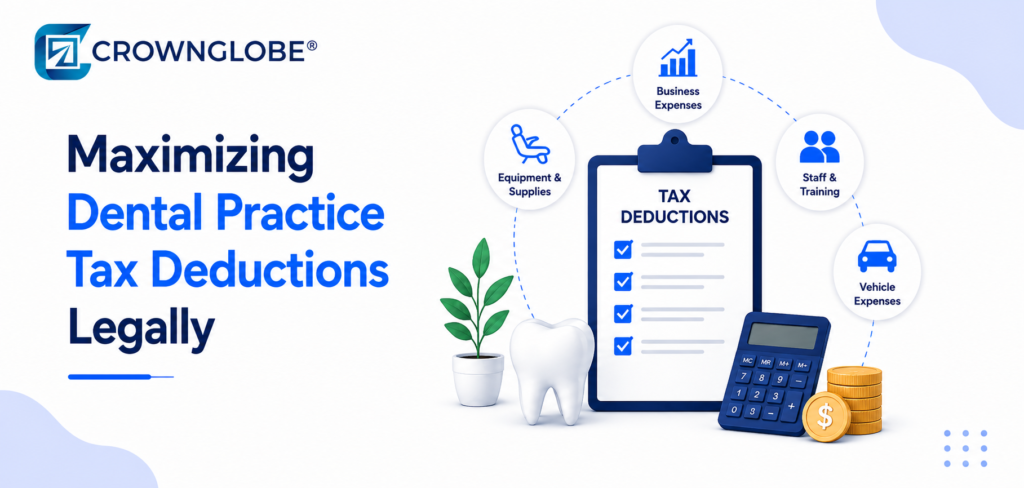
Let’s be real: plenty of dentists leave money on the table without realizing it. Here are some deductions that slip through the cracks:
- Buying or upgrading equipment
- Staff training and ongoing education
- Office supplies and regular consumables
- Software and subscriptions (yes, even dental accounting software counts)
- Marketing and patient acquisition costs
The reason? Inconsistent dental accounting and bookkeeping practices, often due to a lack of structured systems.
Snippet Block: Key Deduction Areas for Dental Practices
To get the most out of your deductions, focus on:
- Accurate dental bookkeeping services and detailed expense tracking
- Structured bookkeeping for dental practices
- Strategic equipment and depreciation planning
- Capturing payroll and employee-related costs
- Ongoing planning with experienced dental accountants
1. Build Strong Bookkeeping Habits
Everything starts with clean books. If your records are accurate, you won’t miss a thing. That means:
- Tracking transactions daily
- Categorizing expenses properly
- Reconciling accounts every month
- Making sure your financial reports are up to date
When you use professional bookkeeping services for dentists, supported by consistent dental office bookkeeping, you can identify every eligible deduction with confidence. If your bookkeeping is not done correctly, the bookkeeping can cause you to miss deductions or they can end up on the wrong line, in the bookkeeping.
2. Track Every Expense, Every Time
One of the easiest ways to maximize deductions is to track everything. With structured bookkeeping for dental offices, you ensure nothing slips through:
- No expense gets lost
- Business expenses stay apart from personal ones
- You have documentation ready if needed
It’s essential for accurate tax filing and makes your life easier.
3. Maximize Equipment and Depreciation
Dentists spend a lot of money on equipment, like chairs and imaging machines and other high-tech tools. These purchases usually qualify for depreciation deductions, letting you spread the write-off or speed it up if it works better for your situation.
A good dental accountant will help you:
- Pick the right depreciation method
- Time purchases for maximum benefit
- Match deductions to your income
4. Leverage Payroll and Employee Costs
Payroll eats up a big chunk of your budget. So grab all the payroll-related deductions you can, including:
- Salaries and wages
- Employee benefits
- Training and certifications
With accurate payroll and bookkeeping, you won’t leave anything behind and stay in the IRS’s good graces.
5. Optimize Operating Costs
The routine expenses of running your practice rent, utilities, supplies, insurance, software add up. Make sure you’re categorizing and capturing these costs with reliable accounting.
6. Use Technology for Accurate Deductions
Modern accounting tools make life easier and reduce mistakes. Platforms like QuickBooks for dentists (especially with automation) let you:
- Avoid manual errors
- Track expenses as they happen
- Improve how you report
With the right tools, dental bookkeeping made easy becomes achievable, while your deductions remain accurate and compliant.
7. Plan Ahead Don’t Wait for Tax Season
If you wait until tax season to deal with deductions you are missing out on savings. Dental accounting services turn compliance into a real financial strategy.
8. Outsource for Expertise
Many practices choose to outsource dental accounting services to gain expertise, improve compliance, and scale efficiently. It gives you access to experienced professionals, improves compliance, and scales with your practice as it grows. Paired with good internal bookkeeping, outsourcing helps you maximize deductions with less hassle.
9. Keep on IRS’s Good Side
You can only claim deductions if you do it right. Stay aligned with IRS requirements:
- Keep proper documentation
- Separate business from personal costs
- File your taxes promptly and accurately
A professional accounting team is really important because they help you follow the rules and get all the deductions you’re eligible, for.
10. Make Tax Planning Part of Your Bigger Financial Picture
Do not treat tax planning as something you only think, about one time every year. With virtual CFO services, you align deductions with your business goals, manage cash flow better, and encourage long-term growth. Tax planning goes from boring paperwork to a real strategic advantage.
Internal Linking How Accounting Drives Dental Practice Growth
A well-structured system includes:
- Remote accounting for flexibility
- Bookkeeping to keep your records tight
- Outsourced accounting for scalability
- Financial statements prep for clear reporting
- Virtual CFO services for planning
- Finance automation for real-time insight
You can dig deeper into how accounting fuels healthcare growth in “How Chicago Medical Practices Can Improve Profitability Through Better Accounting in 2026” or learn more about tax perks in “What are Health Savings Accounts (HSA)?”
When to Upgrade Your Deduction Strategy
Take a hard look at your tax game if:
- Your revenue’s growing fast
- You’re shocked by big tax bills
- You’re not clear about what’s deductible
- You only react to finances, instead of planning ahead
That’s when shifting from basic dentist bookkeeping to structured dental accounting services becomes essential for long-term growth.
Conclusion
Maximizing dental practice tax deductions isn’t about shortcuts. It’s about building a system that captures every eligible cost and keeps you compliant. With strong dental bookkeeping, structured dental accounting services, and expert guidance, you can improve cash flow, reduce tax liabilities, and make more confident financial decisions and reduce tax liabilities. Done right tax planning helps you grow sustainably in the term not just another yearly headache.
FAQ
What expenses can dental practices deduct?
Dentists can deduct equipment, payroll, rent, utilities, supplies, software, and professional fees as long as they follow the rules.
Why is dental bookkeeping important for tax deductions?
When your books are accurate, you record and categorize all expenses, making it easy to claim deductions and stay compliant.
Should dentists outsource accounting?
Many practices outsource accounting to get expertise, ensure accuracy, and scale more efficiently.
How do dental accountants help maximize deductions?
Dental accountants spot eligible deductions, make sure documentation is correct, and structure your decisions for tax efficiency.
What software is best for dental accounting?
QuickBooks for dentists is popular especially when paired with automation and professional oversight.