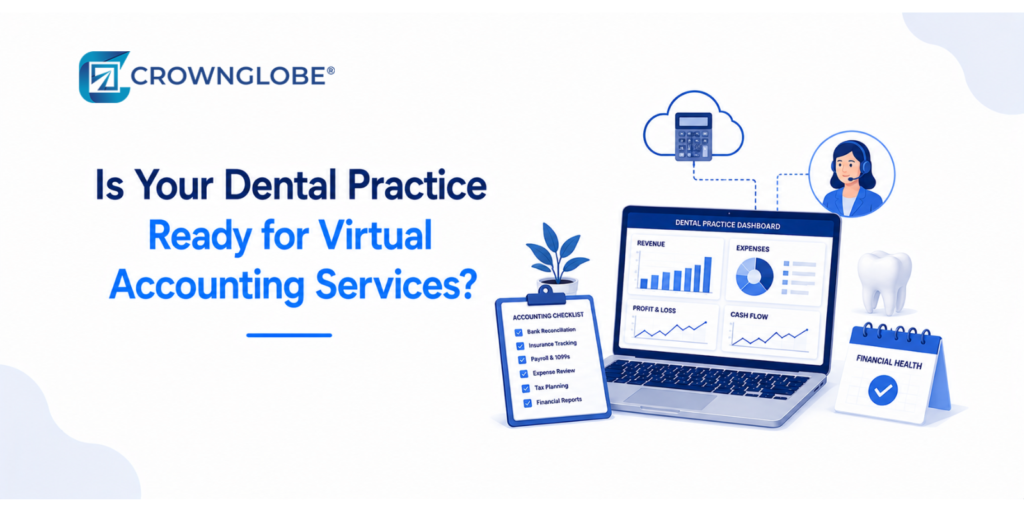
Running a dental practice is more than caring for patients it’s about building solid financial systems that keep everything on track and help you make smarter choices.
In the beginning, most dentists handle dental bookkeeping and accounting for dentists in-house. That works for a while. But as your practice grows, dental bookkeeping and financial management for dental clinics quickly turn into a juggling act. Insurance payments, payroll, compliance, more complicated reporting all start piling up.
That’s when virtual accounting really starts making sense.
What Are Virtual Accounting Services for Dental Practices?
Virtual accounting means your financial management happens remotely, using cloud-based software and professional accountants working offsite. You’re no longer limited to whoever’s available in the back office. Instead, you’ve got access to a team who handles:
- Bookkeeping tailored for dentists
- Financial reports and analysis
- Payroll and tax management
- Guidance for big picture decisions
It’s flexible and brings real expertise, which makes it easier to keep up as your practice shifts and grows.
Why More Dentists Are Choosing Virtual Accounting
Dental practices are realizing that finances aren’t as simple as “money in, money out.” Now you’re working through:
- Insurance billing cycles
- Rising payroll demands
- Major equipment upgrades
- Multiple providers under one roof
Basic dental bookkeeping alone is no longer enough to manage a growing practice effectively. You need tools and people who can make sense of your numbers fast.
Virtual accounting helps by combining strong dental accounting and bookkeeping with real-time insights and professional advice, so you’re not just guessing anymore.
How to Tell If Your Practice Is Ready
1. Your Books Are Clean, But Not Helpful
If your dental bookkeeping is tidy but leaves you wondering what to do next, you’re missing out. Virtual accounting turns reports into real insights.
2. Cash Flow Is Unpredictable
Even profitable practices run into tight spots when cash flow gets bumpy. A better system gives you clear info so you can plan ahead.
3. Compliance and Paperwork Are Stressful
Managing payroll and tax filings can be really stressful that’s where virtual teams come in to keep things organized and prevent errors.
4. You’re Preparing for Growth
Opening a new location? Adding more providers? Growth means more complexity. With virtual CFO services, you get the financial clarity to take the right steps.
5. You Need Immediate Financial Data
Today you cannot wait weeks for answers from QuickBooks and other cloud tools that provide dashboards so you can see how QuickBooks is doing in real time and make faster calls, with QuickBooks.
When’s the Right Time for Virtual Accounting?
It’s time to switch when:
- Your dental bookkeeping isn’t guiding decisions
- Cash flow keeps you guessing
- Compliance tasks eat up too much time
- You want to expand without hiring more in-house staff
- You’re tired of waiting for financial data
What’s Included with Virtual Accounting?
A strong virtual accounting setup covers dental accounting services designed for growing practices:
1. Accurate Dental Bookkeeping
You need daily tracking, clear expense categories, good reconciliation, and regular reporting. That’s how you build trust in your numbers.
2. Financial Statements and Reporting
You get profit-and-loss statements, balance sheets, cash flow analysis of the reports that matter most for making decisions.
3. Payroll and Compliance
Mistakes here lead to headaches and penalties. Virtual services make sure staff get paid the right way and all compliance boxes are checked.
4. Tax Planning and Filing
Don’t wait for tax season to get everything in order plan all year round to save time and money.
5. Strategic Financial Advice
As you grow, strategy matters more. Virtual CFO services can really help you plan for expansion increase your profits and make sure your finances are working towards your business goals.
6. Automation and Tech Integration
Modern accounting leans on automation less manual work, faster reports, and dependable data.
Virtual vs. In-House Accounting Weighing Your Options
In-house accounting has its upsides:
- Immediate answers
- Full control
But it can also mean higher costs, limited expertise, and less flexibility when you grow.
Virtual accounting gives you access to seasoned professionals, costs less, scales easily, and takes better advantage of technology. The trade-off? You’ll need to communicate with external partners. For most practices, it’s worth it.
Worried About Virtual Accounting?
“Will I lose control?”
No. You keep full access to your financial data. If anything, things get clearer.
“Is it secure?”
Yes. Top providers use secure, cloud-based tech with strong protection for your info.
“Is it just for big practices?”
No. Small practices often get the biggest boost they tap expertise without hiring a full-time team.
Connecting the Dots
A solid virtual accounting system usually includes:
- Remote accounting for flexibility
- Bookkeeping services to keep things accurate
- Outsourced accounting for scalability
- Financial statement prep for clarity
- Virtual CFO support for strategy
- Automation for real-time reporting
Want to learn more? Check out “How Professional Accounting Helps Doctors in Miami Scale Faster,” or dive into “What are Health Savings Accounts (HSA)?” for tax strategies.
When Virtual Accounting Isn’t Needed
If your practice is brand new it is an idea to spend time mastering basic bookkeeping for your practice before you add more things to it.
Conclusion
Virtual accounting is not something that makes life easier it is actually a better and more flexible way to manage your accounting practice. As you grow, sticking to just in-house systems can hold you back. With the right mix of expert support, dental bookkeeping systems, and modern technology, your financials become a foundation for growth, not just a record of what’s already happened.
FAQ Section
What is virtual accounting for dental practices?
Virtual accounting uses cloud-based tools and remote professionals to manage bookkeeping, reporting, payroll, and financial strategy.
Is virtual accounting better than in-house accounting?
For many practices, yes. It offers flexibility, expertise, and scalability without the cost of a full-time team.
How does virtual accounting improve dental bookkeeping?
It improves accuracy, provides real-time updates, and connects your data to better decision-making.
Can small dental practices use virtual accounting services?
Yes. Smaller practices often benefit significantly by accessing expertise without hiring internally.
What software is used in virtual dental accounting?
Tools like QuickBooks for dentists, automation platforms, and dashboards such as Power BI are commonly used.