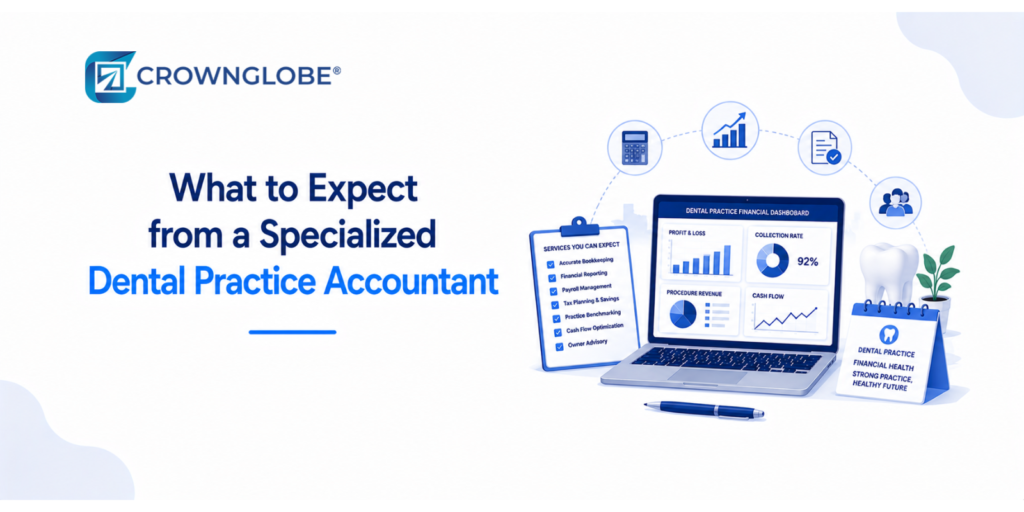
Running a dental practice today goes far beyond clinical care. Your financial systems play a direct role in how stable, compliant, and profitable your practice becomes.
Most practices begin with basic dental bookkeeping, which works well in the early stages. As your business operations grow managing your money becomes really complicated with things like insurance payments, payroll, for your employees and daily expenses.
This is where specialized dental accountants begin to add real value.
Why Dental Practices Need Specialized Accounting
Dental practices do not operate like typical businesses. Revenue depends on insurance timing, staffing costs are significant, and equipment investments are ongoing.
That is why accounting for dentists requires a specialized approach.
Working with specialist accountants for dentists ensures your financial systems align with how your practice actually operates.
What a Specialized Dental Accountant Actually Does
A specialized accountant does more than maintain records. These people help you build a system that supports better decisions, about money and the financial system.
Core Responsibilities
- Maintain accurate dental accounting and bookkeeping
- Prepare clear and actionable financial reports
- Monitor cash flow and identify risks early
- Support tax planning and compliance
- Guide cost control and profitability
Dental bookkeeping services keep your records organized and a dedicated accountant makes sure those numbers are working for your dental bookkeeping services.
The Difference Between Bookkeeping and Accounting
This distinction matters more than most practice owners expect.
- Dental bookkeeping records your daily financial activity
- Dental accounting turns that data into insight you can act on
Snippet Block: Bookkeeping vs Accounting
- Bookkeeping shows what happened
- Accounting explains why it happened
- Accounting helps you decide what to do next
Both are essential, but they serve very different purposes in your practice.
What You Should Expect from Dental Accounting Services
When you work with experienced accounting services for dental practices, you should expect more than basic compliance.
1. Accurate and Structured Financial Records
Everything starts with clean, reliable records.
With proper dental office bookkeeping and structured bookkeeping for dental practices, you gain:
- Consistent transaction tracking
- Organized expense categorization
- Regular reconciliation
- Timely reporting
This is where professional Bookkeeping services become essential to maintaining a strong foundation.
2. Clear Financial Reporting
Your reports should not feel overwhelming or unclear. They should help you make decisions.
You should expect:
- Profit and loss statements
- Balance sheets
- Cash flow reports
With structured Financial statements preparation services, your reports become a practical tool rather than just a requirement.
3. Cash Flow Visibility and Planning
Cash flow is one of the most common pressure points in dental practices.
A specialized accountant helps you:
- Understand delays from insurance reimbursements
- Plan ahead for payroll and operating costs
- Avoid unexpected cash shortages
This is a critical part of effective financial management for dental clinics.
4. Ongoing Tax Planning and Compliance
Tax planning should be part of your year-round strategy, not just a seasonal task.
You should expect:
- Timely filing through structured tax filling services
- Guidance on deductions and expense timing
- Support with ongoing compliance requirements
You should think of all tax strategies as advice that needs to be adjusted to fit your own tax situation.
5. Payroll Management and Compliance
Payroll is often one of your largest and most sensitive expenses.
With reliable payroll processing services, you gain:
- Accurate and timely employee payments
- Compliance with payroll tax requirements
- Clear visibility into labor costs
6. Scalable Support as You Grow
As your practice evolves, your financial needs will change.
A strong accounting partner provides:
- Flexible Outsourced accounting services
- Strategic input through virtual CFO services
- Efficiency through Finance Automation solutions
This allows your financial systems to grow alongside your practice.
Snippet Block: What You Should Expect from a Dental Accountant
A specialized dental accountant should help you:
- Maintain accurate dental bookkeeping
- Improve cash flow visibility
- Stay compliant with tax and payroll requirements
- Identify gaps in profitability
- Support growth and expansion decisions
Technology and Tools You Should See
Modern dental accounting is supported by the right technology.
This typically includes:
- Cloud-based accounting platforms
- Tools like QuickBooks for dentists
- Automated reporting systems
- Dashboards powered by Power BI Visualization
These tools improve both accuracy and speed, while giving you better financial visibility.
When to Consider Outsourced Dental Accounting
Many practices choose to outsource dental accounting services instead of building an in-house team.
This approach offers:
- Access to experienced professionals
- Lower operational costs
- Scalable support
When combined with structured bookkeeping for dental practices, it creates a dependable and efficient financial system.
Common Misconceptions About Dental Accountants
“They only handle taxes”
In reality, modern dental accounting services extend well beyond tax filing and compliance.
“Bookkeeping is enough”
Basic dentist bookkeeping is important, but it does not provide the insights needed for growth.
“Software replaces accountants”
Even the best dental accounting software cannot replace expert interpretation and guidance.
Internal Financial Metrics You Should Track
A well-structured financial system often includes:
- Professional bookkeeping services for dentists for accurate records
- Outsourced accounting services for dental practices for scalable support
- Financial statements preparation services for reporting clarity
- Virtual CFO services for dental practices for financial strategy
- Finance automation solutions for real-time visibility
These insights rely on strong dental accounting and bookkeeping working together.
Internal Linking Opportunities (Natural Integration)
A well-structured financial system often includes:
- Professional Bookkeeping services for dentists for accurate records
- Outsourced accounting services for dental practices for scalable support
- Financial statements preparation services for reporting clarity
- Virtual CFO services for financial strategy
- Finance Automation solutions for real-time visibility
You can also explore how accounting supports healthcare growth in “How Professional Accounting Helps Doctors in Miami Scale Faster”
or understand tax advantages in “What are Health Savings Accounts (HSA)?”
When Your Practice Is Ready for Specialized Support
You should consider working with a specialized accountant when:
- Your revenue is steadily growing
- Financial decisions feel unclear
- Cash flow becomes inconsistent
- Reports are not guiding your actions
- You are planning expansion
At this stage, moving beyond basic dental bookkeeping services becomes essential.
Conclusion
A specialized dental practice accountant helps you move from basic recordkeeping to financial clarity. As your practice grows, relying only on dental bookkeeping can limit your ability to make confident decisions. With the right dental accounting services, your financial systems support growth, not just compliance.
FAQ Section
What does a dental accountant do?
A dental accountant manages financial records, improves cash flow visibility, ensures compliance, and provides insights to support business decisions.
Do dentists need specialized accountants?
Yes. Dental practices have unique financial structures that require industry-specific expertise.
What is the difference between dental bookkeeping and accounting?
Dental bookkeeping records transactions, while accounting analyzes and interprets that data for decision-making.
Should dental practices outsource accounting?
Many practices choose to outsource accounting services for dental practices to gain expertise and scalability.
What software is used in dental accounting?
Tools like QuickBooks for dentists, along with automation and reporting platforms, are commonly used.