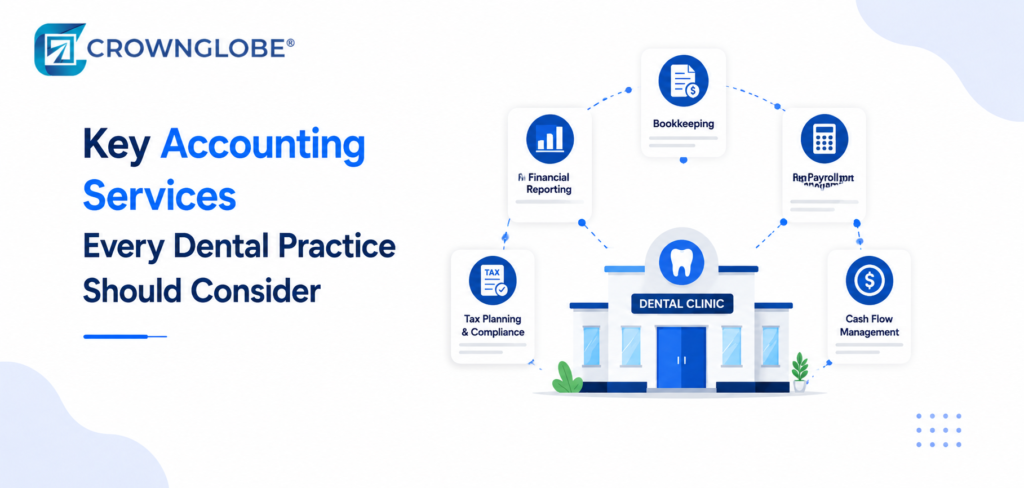
Running a dental office involves more than clinical work. Your financial systems play a direct role in how stable and profitable your practice becomes.
Most practices begin with dental bookkeeping, which works well in the early stages. As operations grow, things get more complicated, with insurance reimbursements, payroll costs, equipment investments and following the rules.
At that point, tracking transactions alone is not enough. You need structured dental accounting services that provide clarity, control, and better decision-making.
Why Dentists Need Specialized Accounting
Dental practices operate differently from most businesses. Revenue depends on insurance cycles; staffing costs are significant, and capital investments are ongoing.
This is why accounting for dentists requires a specialized approach.
Working with dental accountants ensures your financial systems reflect how your practice actually operates, not just general accounting standards.
Must-Have Accounting Services for Dental Practices
1. Dental Bookkeeping
Dental bookkeeping forms the foundation of your financial system. If your records are not correct, then the records will not be trustworthy. You cannot rely on the records. Effective bookkeeping for dentists means tracking transactions categorizing expenses of reconciling accounts and keeping monthly reports, for dentists. This supports strong dental practice for bookkeeping and better financial decision-making.
2. Preparing Financial Statements
I need to see clear financial reports, like profit and loss statements and balance sheets, and cash flow summaries to understand the money situation. These reports are really helpful because they show you how things are going and help you make decisions about performance and trends.
3. Payroll Processing and Staffing Costs
Payroll is one of your expenses and having a good payroll system, in place helps you pay people correctly and follow tax rules.
4. Tax Filing and Compliance
Dental practices must stay aligned with IRS requirements. This includes filing, on time correct expense classification, planning for estimated taxes, and a year-end review. Having strong tax support really helps you stay on top of things. Find ways to do things more efficiently with your taxes.
5. Outsourced Accounting Services
Many dental practices find that outsourcing accounting is a really good way to go. Choosing to outsource dental accounting services gives you access to experienced professionals, reduces hiring costs, and scales with your growth. Combined with reliable bookkeeping, this creates a flexible and dependable financial system.
Essential Accounting Services Checklist
- Accurate dental office bookkeeping
- Consistent financial reporting
- Payroll and tax compliance
- Clear cash flow visibility
- Strategic financial guidance
Use this list to make sure your financial systems cover compliance and give you room to grow.
Advanced Financial Services for Growing Practices
Virtual CFO Services
When your medical practice gets bigger, making decisions about money becomes a lot more complicated. A virtual Chief Financial Officer helps you plan your cash flow to evaluate expansion to improve your profitability and build a long-term strategy for your business.
Finance Automation and Reporting
Modern practices really gain from automation. For example, tools such as QuickBooks help dentists cut down on mistakes. They also make reporting. They give dentists a clear picture of their finances right away. This helps them make choices. QuickBooks, for dentists, is one tool that makes a big difference.
Financial Dashboards and Power BI Visualization
Dashboards help you track metrics, monitor trends and identify issues early with dashboards. This turns your data into insights that you can actually use to make good decisions with your financial data.
Key Metrics to Track
A great accounting system keeps track of:
- Production versus collections
- Profit margins
- Payroll percentage
- Overhead costs
- Cash flow timing
These insights depend on strong dental accounting and bookkeeping systems working together.
Common Mistakes Dentists Make
- Just sticking with basic bookkeeping, which doesn’t help you grow.
- Ignoring financial reports, so decisions happen in the dark.
- Waiting too long to upgrade financial support, making scaling harder.
- Lacking structure, which can turn great revenue into messy results.
Compliance and IRS Considerations
Maintaining compliance means I must manage payroll, classify expenses properly, and review my finances regularly.
A structured dental accounting system helps ensure compliance while supporting long-term stability for the office.
Internal Linking Opportunities
A solid financial system usually means:
- Professional bookkeeping services for dentists to maintain accurate financial records
- Outsourced accounting services for dental practices for scalable support
- Financial statement prep for clear reporting
- Virtual CFO services for big-picture planning
- Finance automation for real-time visibility
Check out articles like How Professional Accounting Helps Doctors in Miami Scale Faster or What Are Health Savings Accounts (HSA)? for more on healthcare accounting and tax benefits.
When to Upgrade Your Accounting Services
If your revenue is growing fast and you are feeling overwhelmed by choices or you are unclear about profit, it is time for more than basic bookkeeping, with your financial system always reacting and patching holes. Move toward structured accounting to keep up.
Final Thoughts
Getting your accounting right does more than keep you compliant. It gives you clarity and control over your financial decisions. As your practice grows, relying only on dental bookkeeping can limit your ability to scale effectively. By combining a strong foundation with structured dental accounting services, you build a financial system that supports long-term success.
FAQ
What accounting services do dental practices need?
Bookkeeping, financial reporting, payroll, tax compliance, and strategic planning.
Why is dental bookkeeping important?
It keeps your records straight for reporting, compliance, and smart decisions.
Should dental practices outsource accounting?
Most do it’s easier and gives you expert help without hiring full-time staff.
What’s the difference between bookkeeping and accounting?
Bookkeeping records the data; accounting turns it into information you can use.
What software do dental practices use?
QuickBooks for dentists is popular, along with automation and reporting tools.