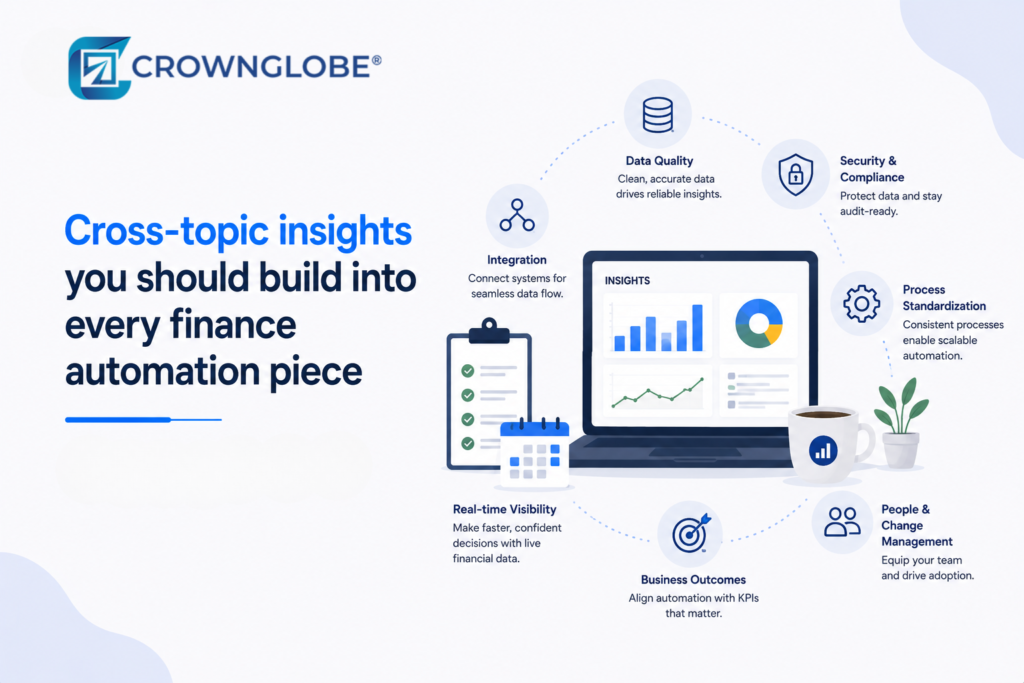
Finance leaders and business owners agree that finance automation is a must. The big challenge now is figuring out which workflows to automate. They want to build systems that make things more efficient not create separate processes. Automating finance tasks is key.
Many businesses, such, as restaurants and dental practices face the financial challenges when it comes to running their operations:
- Delayed month end close
- POS reconciliation errors
- Multi state payroll complexity
- Missing vendor invoices
- Duplicate data entry
- Inconsistent reporting formats
- Limited visibility across multiple locations
Finance teams in New Jersey, Pennsylvania, Virginia, Texas, Florida, Illinois, Georgia, Tennessee, Iowa, Arkansas or the Carolinas have a lot of work to do. They need to give reports very quickly. At the time finance teams have to follow all the rules in a very strict regulatory environment. Finance teams are, under a lot of pressure to do all of this.
Modern finance automation solutions and tools help small and medium-sized businesses switch from spreadsheet-based accounting, to structured, scalable and reliable financial operations using finance automation.
At the same time, many companies still misunderstand what automation in finance should truly accomplish.
Finance Automation Is About More Than Saving Time
One of the most common misconceptions about automated finance systems is that their only purpose is reducing labor hours.
In reality, strong finance process automation improves much more than efficiency. It supports:
- Financial accuracy
- Reporting consistency
- Audit readiness
- Cash flow visibility
- Faster decision making
- Compliance management
- Multi entity coordination
For example, businesses using process automation in finance and accounting often reduce month-end bottlenecks because tasks like reconciliations, transaction matching and document collection happen continuously throughout the month instead of piling up at the end, with robotic process automation.
This is super important for businesses, in states because payroll tax rules sales tax needs and contractor report requirements are different.
Many companies investing in Finance Automation are also integrating automated reporting in finance with Power BI dashboards to give leadership teams near real time visibility into margins, labor costs, and cash flow performance.
The Best Automation Strategies Start With Operational Friction
The most successful automation finance initiatives usually begin by addressing repetitive bottlenecks that create ongoing stress for accounting teams. Strong process automation in finance focuses first on repetitive, high volume workflows that slow down reporting accuracy and create avoidable manual work.
Common Finance Bottlenecks Worth Automating
Bank and Credit Card Reconciliations
Manual reconciliations can consume a significant amount of accounting time every month. Businesses following best practices for automating reconciliations in finance often reduce reconciliation time substantially while improving reporting accuracy and reducing human error.
Accounts Payable Processing
Invoice collection, coding, approvals, and payment tracking are all strong candidates for robotic process automation finance workflows. Automating these steps helps reduce delays, missed invoices, and inconsistent approval procedures.
Payroll Processing
Multi location payroll creates serious compliance risks for many SMBs. Using payroll automation with accounting and payroll processing services can help businesses reduce filing errors, missed deadlines and payroll inconsistencies, with payroll automation.
Financial Reporting
Many business owners still wait weeks for usable financial reports. Automated reporting workflows connected to Power BI Visualization tools help leadership teams access cleaner, more actionable financial data much faster.
Multi Entity Consolidation
Franchises and multi location businesses often struggle with inconsistent reporting between locations. Standardized automation in finance and accounting helps create cleaner consolidated reporting structures and more reliable performance tracking.
Why Multi-State Businesses Need Smarter Compliance Automation
Companies that are expanding into Florida, Texas, Georgia, North Carolina, South Carolina, Virginia and Tennessee often do not realize how complicated state financial compliance, for these businesses can become.
Payroll tax requirements and sales tax rules and things like contractor classifications and 1099 reporting obligations for payroll tax requirements are different, in places and can be hard to manage by hand.
Finance workflow automation helps reduce these risks by:
- Centralizing documentation
- Standardizing approvals
- Tracking filing deadlines
- Automating payroll calculations
- Monitoring vendor classifications
The IRS is taking a look at how businesses classify contractors and follow digital reporting rules and companies that still use lots of spreadsheets and separate systems are more likely to make mistakes and have compliance problems, with the IRS.
Many medium sized businesses are combining virtual Chief Financial Officer support with intelligent automation, in finance to improve financial visibility and strengthen compliance processes for their financial operations.
Restaurants and Franchises Often See the Fastest ROI
Restaurant operators and franchise businesses frequently experience some of the most time consuming accounting challenges because they manage:
- Daily POS reconciliations
- Inventory fluctuations
- High vendor invoice volume
- Labor intensive payroll
- Multi location reporting
- Tip tracking
- Sales tax complexity
Businesses that use Restaurant bookkeeping systems with finance automation tools can really reduce the amount of work they have to do and make their reports look the same everywhere.
Franchise bookkeeping operations benefit from automation because franchise owners need to see reliable performance from one franchise location to another.
Many growing businesses are also combining remote accounting support with automated workflows to create scalable finance operations without building large in house accounting departments.
Automation Should Improve Visibility, Not Add Complexity
Companies should first establish financial processes and build consistent finance workflows before implementing finance automation tools to automate your finances successfully.
Automation works best when:
- Chart of accounts structures are standardized
- Approval workflows are documented
- Reporting expectations are clearly defined
- Reconciliation procedures are consistent
- Financial ownership responsibilities are understood
Without process discipline, automation can simply accelerate bad data and reporting inconsistencies.
Businesses investing in bookkeeping and Financial statements preparation should first ensure their accounting foundation is stable before layering advanced automation on top.
AI and Intelligent Automation Are Reshaping Finance Operations
AI driven finance automation solutions are evolving rapidly and becoming more practical for SMBs.
Today, businesses are increasingly using:
- Intelligent invoice extraction
- AI based expense categorization
- Predictive cash flow forecasting
- Automated anomaly detection
- Generative reporting summaries
- Document automation for finance
Still, AI should support financial oversight, not replace professional judgment.
Human expertise continues to matter when it comes to:
- Tax strategy
- Cash flow planning
- Financial interpretation
- Audit preparation
- Regulatory decisions
- Exception management
This is where accounting and virtual CFO guidance really help businesses. They want automation efficiency without losing oversight and strategic insight. Automated accounting, finance and auditing work best, with financial leaders who review exceptions, interpret trends and guide strategic decisions with outsourced accounting and virtual CFO guidance.
Industry Specific Automation Matters More Than Generic Solutions
Every industry has needs when it comes to operations and reporting, so finance automation priorities should be based on those specific industry needs.
Real Estate Businesses
Real estate bookkeeping often requires project-based accounting, escrow tracking, and property level profitability reporting.
Hotels and Hospitality
Hotel bookkeeping workflows typically involve occupancy reporting, vendor management, payroll complexity, and revenue segmentation.
IT and AI Companies
IT and AI companies often struggle with bookkeeping tasks like recognizing subscription revenue, managing contractors, and analyzing project profits.
Gas Stations and Convenience Stores
Gas station and convenience stores bookkeeping usually depends on POS integrations and inventory reconciliation automation to get the numbers right, for the gas station and convenience stores.
Dental Practices
Dental bookkeeping commonly involves insurance payment tracking, recurring patient billing, and payroll management.
Industry specific automation workflows generally perform better than generic accounting setups because they are built around the operational realities of each business model.
The Future of Finance Automation for SMBs
The next phase of finance automation will focus less on isolated tools and more on fully connected financial ecosystems.
Businesses are increasingly looking for:
- Real time reporting
- Automated close workflows
- Integrated AP and AR systems
- Cloud based dashboards
- Compliance monitoring
- Multi location visibility
- Predictive financial analytics
Finance leaders who modernize early put their businesses in a position, for long-term scalability, faster decision-making and better operational control.
Meanwhile companies still using spreadsheets and waiting to record their finances may find it harder to keep up as rules, for compliance and business complexity to keep growing.
For medium-sized businesses, in New Jersey, Pennsylvania, Virginia, Texas, Florida, Georgia, Illinois, Tennessee, Iowa, Arkansas and the Carolinas finance automation support smarter growth and better financial decisions.
FAQ
What is finance automation?
Finance automation refers to the use of software and digital workflows to automate repetitive accounting and financial tasks such as reconciliations, invoice processing, payroll, reporting, and compliance tracking.
What processes should businesses automate first?
Most SMBs should start by automating:
- Bank reconciliations
- Accounts payable
- Payroll workflows
- Financial reporting
- Expense management
- Document collection
Does finance automation replace accountants?
No. Finance automation reduces repetitive manual work, but accounting professionals are still essential for financial analysis, compliance oversight, tax planning, and strategic decision making.
What industries benefit the most from finance automation?
Restaurants, franchises, hospitality businesses, real estate firms, IT companies, gas stations, dental practices, and multi location businesses often see strong operational and reporting improvements from automation.
How does automation help with multi-state compliance?
Automation improves payroll tracking, sales tax management, contractor reporting, filing deadline monitoring, and centralized documentation across multiple states and jurisdictions.
What is robotic process automation in finance?
Robotic process automation in finance uses software bots to handle repetitive tasks such as invoice matching, reconciliations, transaction processing, and data entry.
Can small businesses afford finance automation?
Yes. Many finance automation solutions are scalable and cost effective for SMBs, especially when paired with remote accounting and outsourced accounting support.