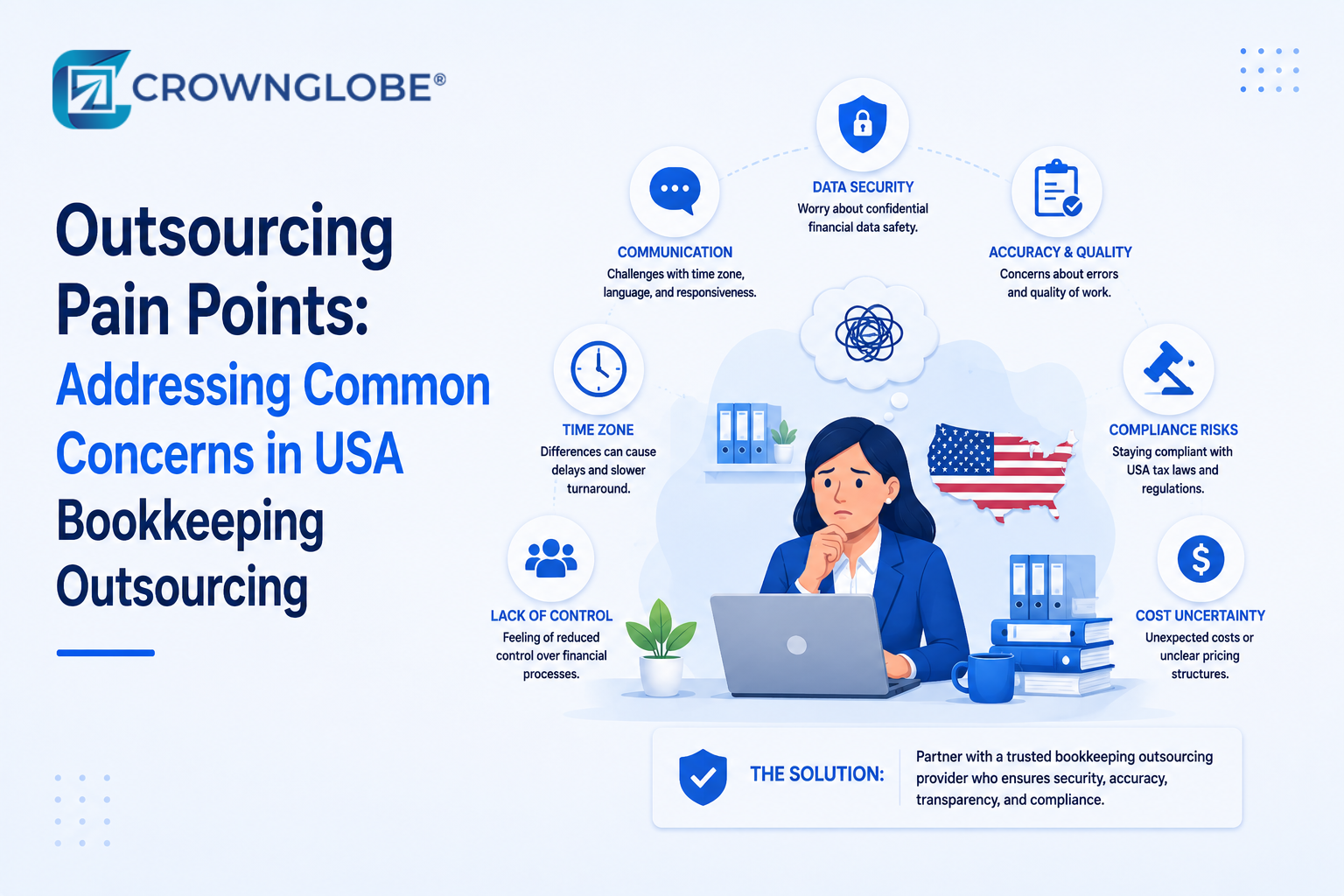
Bookkeeping outsourcing can reduce internal workload, improve close discipline, and give a business access to a deeper accounting bench. It can also create anxiety around data security, quality, communication, compliance, cost, and control if those points are left vague.
The right way to evaluate a provider is not to ask whether those risks exist. They do. The right question is whether the provider can explain, in writing, how each risk is controlled before your books, payroll support, reconciliations, or reporting routines move outside your office.
Eight Bookkeeping Outsourcing Pain Points to Test
How will my financial data be protected?
- A strong answer
- Role-based access, two-factor authentication, restricted device use, defined user provisioning, and a clear process for removing access when a person leaves the engagement.
- A weak answer
- General reassurance that data is safe, with no explanation of access control, logging, retention, or incident response.
Who reviews the bookkeeping work before I see it?
- A strong answer
- A named reviewer or review layer, with specific checks for reconciliations, unusual transactions, coding consistency, and month-end completeness.
- A weak answer
- "The team checks the work." That is not a control unless someone can describe what is checked and who signs off.
How will communication work across time zones?
- A strong answer
- Defined overlap hours, a named account manager, response-time expectations, and a weekly rhythm for open items, approvals, and escalations.
- A weak answer
- A shared inbox, no owner, and a promise to respond "as soon as possible." That shifts coordination cost back to you.
How do you stay current with U.S. rules and compliance?
- A strong answer
- Clear boundaries between bookkeeping, payroll support, sales tax support, tax preparation, and advisory work, plus documented review for U.S. reporting requirements relevant to your scope.
- A weak answer
- Broad claims about knowing U.S. rules without naming what is included, what is excluded, and when your CPA or tax preparer must be involved.
What visibility do I keep over the books?
- A strong answer
- Transparent status reporting, open queries, reconciliations available for review, and no hidden workpapers that only the provider understands.
- A weak answer
- "We will handle everything." Outsourcing execution should not mean outsourcing visibility or ownership.
What exactly is included in the fee?
- A strong answer
- A written scope listing monthly bookkeeping tasks, exclusions, cleanup work, software costs, payroll support, sales tax support, reporting cadence, and change-order triggers.
- A weak answer
- A low monthly number with phrases like "basic bookkeeping" or "as needed" left undefined.
What does the first month look like?
- A strong answer
- A transition plan with system access, document collection, catch-up review, opening balances, first close, training, and decision points scheduled week by week.
- A weak answer
- "Send us access and we will begin." Month one is where most outsourcing pain is either controlled or created.
What happens if we outgrow the service or leave?
- A strong answer
- Exit terms, file handover, documentation, ownership of workpapers, access removal, and support during transition are all stated before the engagement begins.
- A weak answer
- Vague exit language or a suggestion to decide later. Later is when you have the least leverage.
What the Client Has to Bring
A bookkeeping provider can improve execution, but it cannot supply decisions, approvals, or internal ownership for you. Good outsourcing works when both sides know their responsibilities.
Conditions for success
- A named internal owner for questions and approvals
- Complete access to source documents, bank feeds, and accounting systems
- Fast decisions on coding rules, reporting preferences, and exceptions
- Defined close dates and response expectations
- A CPA or tax preparer involved when tax judgment is required
Patterns that cause failure
- No single point of contact inside the business
- Missing statements, receipts, invoices, or payroll records
- Approvals delayed until month end
- Expecting cleanup, bookkeeping, payroll, and tax work under one undefined fee
- Treating outsourced bookkeeping as a black box
How CrownGlobe Addresses Common Outsourcing Concerns
Structure a Pilot Before You Commit
A pilot reduces the biggest fear in outsourcing: not knowing how the provider will behave when information is missing, timing is tight, or something needs correction.
Pick one process
Choose one entity, one month, or one bookkeeping routine that matters but can be contained.
Define success
Write down the deliverables, due date, query handling, review standard, and reporting format.
Watch the handoffs
Evaluate how clearly the provider asks questions, flags missing information, and escalates blockers.
Review together
Decide what changes before full scope: access, cadence, reports, close dates, or responsibilities.
The pilot is not just a test of bookkeeping accuracy. It tests security habits, review discipline, responsiveness, documentation, and whether the provider is comfortable saying what it needs from you.
The clients who get the best result from bookkeeping outsourcing are not the ones who ignore the concerns. They are the ones who ask the hard questions early, document the answers, and start with a scope everyone can measure.CrownGlobe Client Services
Bookkeeping outsourcing and transition support, CrownGlobe
Questions Businesses Ask Before Outsourcing Bookkeeping
The biggest risk is not location. It is unclear ownership: nobody knows who reviews the work, who answers questions, who approves decisions, or what happens when information is missing.
Ask for role-based access, two-factor authentication, device controls, access logs, onboarding and offboarding procedures, and a written process for handling security incidents.
It should not. A good provider takes over execution while keeping you informed through reconciliations, open-item lists, close calendars, reports, and documented decisions.
Usually no. Start with a defined pilot or a contained scope, then expand once the handoffs, review process, communication rhythm, and reporting outputs are working.
Include monthly tasks, exclusions, cleanup responsibilities, software access, reporting cadence, review steps, response expectations, fee triggers, and exit handover terms.
Sources & further reading
- CrownGlobe information security controls. crownglobe.com/information-security
- CrownGlobe transition process. crownglobe.com/transition-process
- CrownGlobe outsourced accounting services. crownglobe.com/services/outsourced-accounting
- Your CPA, tax preparer, and internal finance policies for tax, payroll, and compliance decisions.
This guide is written from CrownGlobe's perspective as a bookkeeping and outsourced accounting provider. Use it as a practical buyer checklist, and take independent professional advice for tax, legal, privacy, or contract questions.
Want Bookkeeping Outsourcing With Fewer Surprises?
Bring us the concerns in this guide. We will answer them directly, define the scope, and show you how the transition would work before you commit.