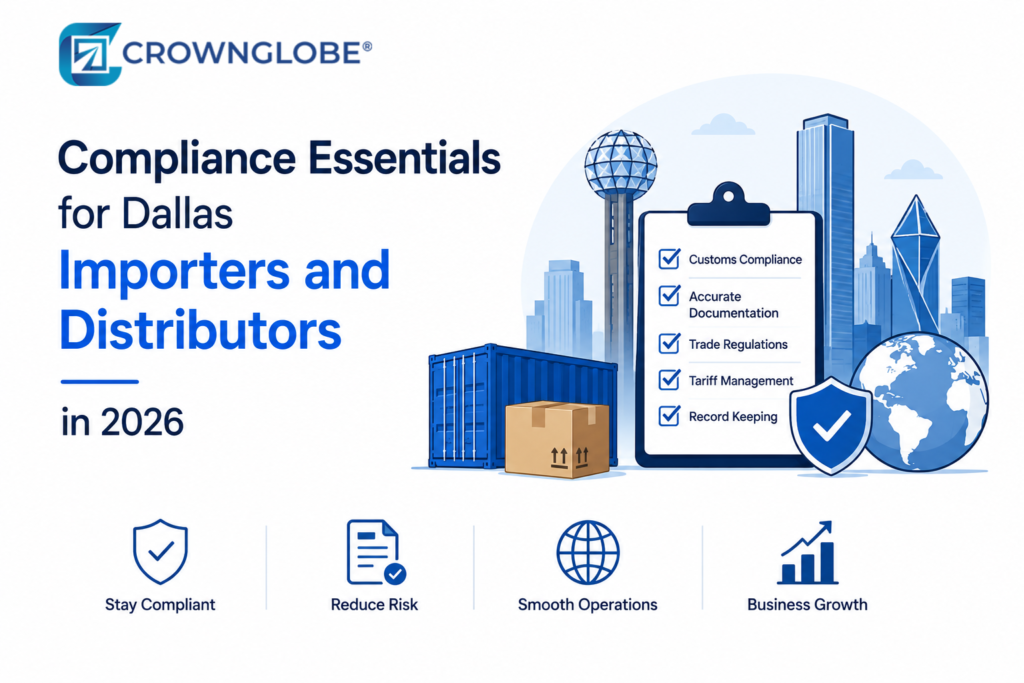
Dallas has rapidly become one of the most active logistics and distribution hubs in the United States. With its central geographic location, strong transportation network, international airport, proximity to the Port of Houston, and growing infrastructure support, the Dallas Fort Worth region has become a strategic gateway for trade.
Importers, wholesalers, and distributors operating in this region manage large-scale movement of goods, complex supply chains, and cross-border transactions. But with opportunity comes a responsibility that many don’t realize until it becomes a problem:
Compliance is no longer optional. It is mandatory.
Regulatory agencies including the IRS, CBP, BIS, TABC, USDA, and the Texas Comptroller have all increased enforcement activity. Dallas businesses involved in importing, distributing, reselling, or handling specialized products now face:
- Heavy penalties
- Shipment delays
- Seizures
- Audits
- Trade restrictions
- Tax liabilities
- Criminal exposure for serious violations
This guide outlines the essential compliance areas Dallas importers and distributors must master in 2026 to operate confidently, legally, and profitably.
1. Understand CBP Compliance Requirements for Imports
The U.S. Customs and Border Protection (CBP) oversees all goods coming into the United States. Any importer operating in Dallas must understand the following obligations:
Importer of Record (IOR) Responsibilities
The IOR must:
- Ensure goods comply with all U.S. laws
- Provide accurate product classification
- Pay customs duties, taxes, and fees
- Maintain records for at least five years
- Ensure proper valuation
- Respond to CBP requests or audits
If your business imports anything into Dallas, you are responsible not your shipping agent.
Incorrect classification is one of the most common issues for importers.
Dallas importers must ensure:
- Dallas distributors importing goods from high risk countries may unintentionally violate anti-dumping laws.
- Products commonly flagged.
2. Master HS Codes, Tariffs, and Product Classification
Wrong HS Code =
- Incorrect duty rates
- Miscalculated taxes
- Penalties
- Shipment holds
- CBP investigations
- Correct HS classification • Correct duty rates • Country-of-origin documentation • Incoterms compliance • Proper tariff treatment
- This is especially crucial for businesses importing:
- Machinery • Electronics • Textiles • Medical goods • Food items • Alcohol • Auto parts
3. Comply With Anti Dumping and Countervailing Duties (AD/CVD)
- Steel
- Aluminum
- Solar products
- Electronics
- Chemicals
- Furniture
- Tires
Penalties for AD/CVD violations can reach hundreds of thousands of dollars. Proper screening is essential.
4. Maintain Required Documentation for All Imports
Every importer must maintain:
- Commercial invoices
- Packing lists
- Bill of lading
- Certificate of origin
- Customs entry summaries
- Broker communications
- Duty payment confirmations
Missing documentation leads to:
- Most Dallas distributors must collect and remit sales tax.
Mismanaging sales tax can lead to:
- All importers and distributors with nexus in Texas owe franchise tax unless exempt.
- Most distributors qualify for a COGS deduction , significantly reducing tax liability.
- Businesses that fail to optimize this calculation are often overpaying.
Depending on product type, Dallas distributors must comply with:
- For Alcohol importation and distribution
- Violations lead to product seizures, legal action, and fines.
- Importers have complex financial transactions that attract IRS attention.
Businesses using annual bookkeeping instead of monthly accounting typically trigger IRS notices because:
- Importers and distributors face high exposure to.
- Without these systems, losses are guaranteed.
- Audits
- Cargo holds
- Expensive delays
- In 2026, CBP is using AI driven systems to flag incomplete records faster than ever.
5. Texas Sales Tax Compliance for Distributors
Obligations include
- Nexus determination
- Taxability analysis
- Tracking exempt sales
- Maintaining resale certificates
- Filing monthly or quarterly
- Correct reporting of multi-location shipments
Common mistakes
- Not collecting sales tax on taxable items
- Invalid resale certificates
- Not charging the appropriate local rate
- Incorrectly categorizing shipping charges
- Missing marketplace facilitator rules
- Large penalties
- Accrued liability
- Loss of license
- State-level audits
6. Texas Franchise Tax Compliance
Key franchise tax components
- Margin calculation method
- Total revenue reporting
- COGS eligibility
- Compensation methodology
- EZ computation method
7. FDA, USDA, TABC, and EPA Regulations
FDA
For:
- Supplements
- Food
- Medical devices
- Cosmetics
USDA
For:
- Meat
- Produce
- Agricultural products
TABC
EPA
- For:
- Chemicals
- Hazardous materials
- Industrial products
8. IRS and Financial Compliance Requirements
Key IRS compliance areas
- Accurate COGS
- Proper revenue recognition
- Correct inventory accounting
- Depreciation rules
- International transaction reporting
- Transfer pricing rules (if applicable)
- COGS is miscalculated
- Inventory valuation is incorrect
- Deductions are improper
- Tax filings include errors
9. Internal Controls for Fraud and Loss Prevention
- Inventory theft
- Employee fraud
- Vendor manipulation
- Underreporting
- Overbilling
Robust internal controls include:
- Segregation of duties
- Inventory cycle counts
- Vendor approval workflows
- Procurement controls
- Automated accounting
- POS reconciliation
- Document review
10. Supply Chain Risk and Compliance Monitoring
Global supply chains continue to shift. Dallas distributors must monitor:
- Tariff changes
- Global sanctions
- Supplier compliance
- Forced labor restrictions
- Country-of-origin changes
- Trade policy adjustments
- A single misclassified shipment can disrupt an entire supply chain.
11. Mandatory Record Retention Rules
Importers must maintain all records for five years under CBP requirements.
- This includes:
- Incorrect product classification and missing documentation.
- Monthly or quarterly, depending on volume.
- Valuation errors, missing documents, and suspicious product codes.
- Import entries
- Broker correspondence
- Payment records
- Certificates of origin
- Inspection results
- Compliance documentation
- Failure to produce records during an audit results in penalties.
- If you read this “Costly Bookkeeping Errors That Dallas Companies Must Avoid in 2026”.
Conclusion
Dallas importers and distributors face a demanding regulatory environment. But compliance is not a burden it is a competitive advantage. When your business stays compliant:
- Shipments flow faster
- Penalties disappear
- Margins improve
- Cash flow stabilizes
- Your brand gains credibility
Crownglobe supports Dallas importers and distributors with monthly accounting, compliance controls, sales tax management, and advisory tailored to the requirements of the 2026 trade environment.