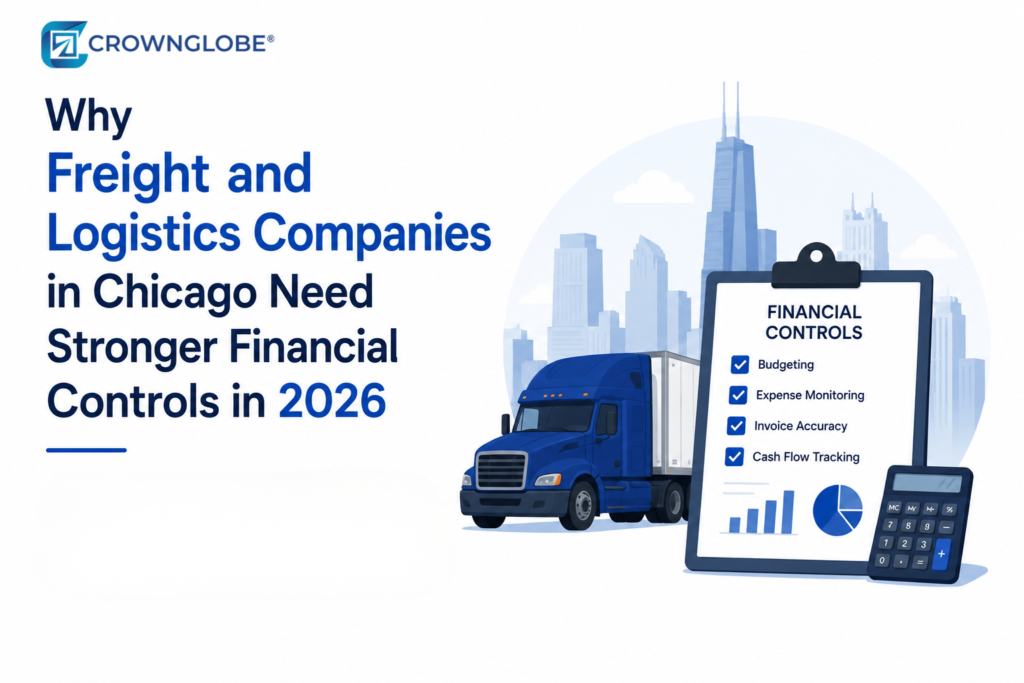
Chicago freight, trucking, logistics, and warehousing companies face rising operating costs, compliance pressures, thin margins, and increased IRS scrutiny in 2026. This guide explains why stronger financial controls are essential, how accounting weaknesses hurt profitability, and what systems logistics operators must implement immediately.
Chicago freight and logistics companies need stronger financial controls in 2026 to manage fuel volatility, payroll complexity, equipment costs, compliance risks, multi-location operations, and razor thin margins. Clean accounting systems and tighter controls dramatically increase profitability and reduce risk.
Introduction
Chicago is one of the busiest logistics hubs in North America.
With O’Hare International Airport, massive rail networks, distribution centers across Joliet, Bolingbrook, Aurora, and the South Suburbs, and truck routes connecting the Midwest to both coasts, Chicago’s freight and logistics ecosystem is vital and brutally competitive.
But here’s the unfiltered reality:
Most Chicago logistics operators lose money because their financial controls are outdated not because of weak demand.
- Margins are thin.
- Costs are rising.
- Compliance is tightening.
- Cash flow is unstable.
- IRS audits are increasing.
Without strong accounting systems and internal financial controls, even high-volume logistics companies experience profit loss, unnoticed leaks, and operational instability.
why stronger financial controls are no longer optional
1. Fuel Volatility Requires Real Time Financial Tracking
Fuel is the largest and most unpredictable cost for freight operators.
Without strong financial controls
- Fluctuations are missed
- Overbilling or underbilling occurs
- Fuel surcharge calculations are incorrect
- Profitability per route becomes unclear
- Cash flow drains unexpectedly
Strong accounting systems allow
- Real-time fuel cost allocation
- Route-level profitability analysis
- Accurate surcharge invoicing
- Forecasting based on fuel patterns
- Integration with fleet cards and fuel apps
Fuel costs can wipe out an entire quarter unless monitored correctly.
2. Poor Dispatch to Accounting Integration Creates Profit Leakage
Many Chicago trucking and logistics companies still use old dispatch systems that do not integrate with accounting.
This causes
- Invoices missing
- Loads not billed
- Duplicate loads recorded
- Dispatcher errors going undetected
- Cost misallocation
- Late payment cycles
- Incorrect driver settlements
Financial controls fix this by
- Connecting dispatch systems to accounting
- Automating invoice creation
- Matching loads to expenses
- Tracking profit per trip
What doesn’t get billed doesn’t get paid.
3. Equipment Costs Are Often Misstated or Unmonitored
Trucks, trailers, forklifts, warehouse machinery these assets consume massive cash.
Without proper accounting
- Depreciation is wrong or missing
- Repairs vs capital improvements are misclassified
- Loan amortization is recorded incorrectly
- Assets remain on books after disposal
- Maintenance expenses spike unnoticed
- Replacement planning is impossible
Strong financial controls provide
- Accurate asset registers
- Depreciation schedules
- Preventive maintenance cost tracking
- Loan reconciliation
- Profitability impact per vehicle
This directly impacts tax liability and long-term profitability.
4. Payroll and Driver Settlements Are High Risk Without Controls
Chicago logistics payroll complexity includes
- W-2 employees
- 1099 contractors
- Owner operators
- Mileage pay
- Hourly pay
- Load based pay
- Bonuses & incentives
- Per diem allowances
- Overtime calculations
- Multi state travel exposure
- Paid leave rules
Without proper controls
- Drivers get over or underpaid
- Overtime errors occur
- Employer taxes are misreported
- 1099 classifications trigger audits
- Settlements don’t match load payments
- Multi state payroll becomes inaccurate
Strong systems must include
- Digital driver settlement tracking
- Mileage & ELD integration
- Payroll automation
- Audit ready classification documentation
Payroll errors are the #1 cause of IRS and state penalties for freight companies.
5. Cash Flow Instability Is Common in Chicago Logistics
This industry operates with delayed cash cycles
- Brokers pay in 30–45 days
- Shippers often delay payment
- Fuel costs are immediate
- Repairs are unexpected
- Payroll is weekly or biweekly
Without strong financial controls
- Companies rely on emergency loans
- Can’t time fuel purchases well
- Miss early payment discounts
- Hit overdrafts
- Damage credit scores
- Lose opportunities for expansion
With proper accounting
- 13-week cash forecasting
- AP/AR scheduling
- Broker and shipper aging reports
- Dedicated reserve planning
- Fuel and maintenance budgeting
Cash flow clarity determines whether trucking companies survive or fail.
6. Billing Errors and Slow Receivables Destroy Profit
Chicago freight companies lose thousands due to billing inefficiencies.
Common issues
- Missing paperwork
- Incorrect accessorial charges
- Lost PODs
- Unsent invoices
- Wrong load rates
- Unbilled detention/layover fees
- Delayed invoicing
- Weak collections follow up
Financial controls improve
- Load to invoice accuracy
- Collections workflow
- AR tracking by broker / shipper
- Automated reminders
- Invoice reconciliation
Fast & accurate billing = healthier cash flow.
7. Weak Compliance Tracking Increases IRS & DOT Exposure
Trucking companies face multiple regulatory bodies
- IRS
- IDOR
- FMCSA
- DOT
- IFTA
- IRP
- Workers’ compensation auditors
- Insurance carriers
Without financial controls
- IFTA filings become incorrect
- Mileage logs don’t match fuel receipts
- Payroll audits become costly
- Insurance audits reveal discrepancies
- DOT non compliance threatens operating authority
Strong internal controls ensure
- Clean documentation
- Accurate mileage + fuel reconciliation
- Correct payroll & settlement records
- Timely tax filings
- Proper asset tracking
Compliance issues = expensive downtime and penalties.
8. Multi Location & Multi State Operations Require Sophisticated Accounting
- Chicago logistics companies often operate across:
- Illinois • Indiana • Wisconsin • Michigan • Missouri • Iowa • Nationwide lanes
- This creates complexity in:
- Fuel tax • Mileage allocation • Revenue recognition • Payroll • State tax planning • Carrier compliance
- Proper systems must support multi state reporting seamlessly.
9. Inventory & Warehouse Operations Need Cost Controls Too
For 3PLs (third party logistics providers), warehouses deal with
- Pallet storage
- Cross-docking
- Pick & pack fees
- Labor allocation
- Space utilization
- Warehouse equipment costs
Without controls, profitability varies wildly month to month.
Financial controls ensure
- Correct pricing
- Accurate job costing
- Warehouse labor efficiency
- Client level profitability
- Equipment ROI tracking
3PLs thrive with precision not assumptions.
10. Strong Financial Controls Support Scaling & Acquisition
Logistics companies seeking to
- Add trucks
- Hire more drivers
- Expand warehouses
- Enter new lanes
- Acquire smaller carriers
- Pursue SBA or equipment financing
…require clean financial statements and internal controls.
Benefits of strong accounting
- Better lender terms
- Stronger negotiating power with brokers
- More predictable margins
- Higher business valuation
- Better tax planning
- Improved operational performance
Financial controls are not just protective they are strategic.
If You Read This
- “Why Clean Financial Reporting Prevents Cash Flow Crises”.
- “What Chicago Manufacturing Businesses Need to Know About Cost Accounting”.
- “Common Bookkeeping Errors Chicago Companies Must Avoid”.
- “How AI Is Changing Accounting for Chicago Businesses in 2026”.
- “IRS Enforcement Is Increasing What Chicago Business Owners Should Do”.
Frequently Asked Questions
1. What is the biggest financial mistake logistics companies make?
Weak dispatch to accounting integration and poor billing reconciliation.
2. Should trucking companies use monthly accounting?
Yes weekly revenue and fuel movement require monthly financial statements at minimum.
3. What accounting software works best?
QuickBooks Online, Xero, or Sage Intacct combined with trucking systems like Trucking Office, Tailwind, DAT, or Axon.
4. How can freight companies stabilize cash flow?
Cash flow forecasting, AR management, strategic fuel planning, and accurate load reconciliation.
5. Does IRS audit logistics companies more often?
Yes due to 1099 contractor issues, fuel deductions, and high volume expenses.