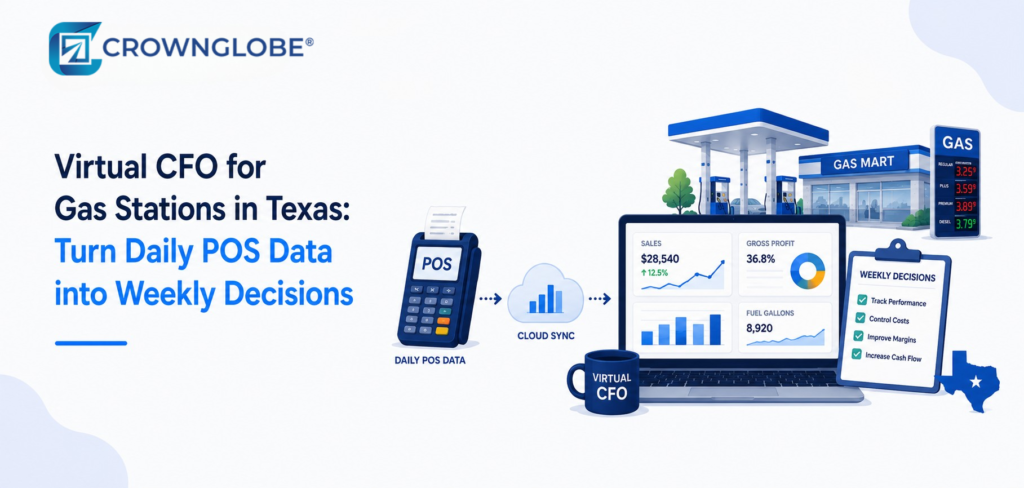
Running a gas station and convenience store in Texas today goes far beyond selling fuel and convenience items. Whether you operate a convenience store and gas station or manage multiple locations, the financial complexity has increased significantly. You are managing tight fuel margins, rising card processing costs, labor challenges, and compliance across multiple revenue streams.
Most operators already have POS systems generating daily reports. The issue is not the lack of data. It is the lack of clear, timely decisions built from that data.
This is where a virtual CFO makes a meaningful difference. Instead of waiting for month-end reports, you gain the ability to make informed weekly decisions that directly improve profitability.
Why Daily POS Data Is Not Enough
Gas stations and convenience stores generate a constant stream of transactions every single day, whether you run a single gas station and convenience store or oversee multiple sites.
Fuel sales, inside store purchases, lottery, tobacco, vendor rebates, and card payments all move through your systems.
But in practice, many owners run into the same challenges:
- Reports are detailed but not decision-focused
- There is no consistent weekly financial visibility
- Cash and fuel variances often go unnoticed
- Margins are only understood after the month is over
Whether you operate one store or many convenience stores and gas stations relying on POS reports can create blind spots.
A virtual CFO closes that gap by turning raw data into structured, decision-ready financial insights.
What a Virtual CFO Actually Does for Gas Stations
A virtual CFO is not just another reporting layer. It is a structured financial system designed around how your business operates.
For gas stations and convenience stores, this typically includes:
1. Weekly Financial Reporting
Instead of waiting until the end of the month, you receive clear weekly insights such as:
- Fuel margin per gallon
- Inside store gross profit
- Labor percentage
- Card fee impact
- Cash over or short trends
This level of visibility allows you to act quickly, not react late.
2. Data Integration and Automation
Your Point Of Sale system, fuel data, accounting software and bank feeds are all connected into one system using finance automation tools.
This helps reduce work makes reporting more accurate and gets reports done faster.
Many operators using remote accounting services notice immediate improvements in both data reliability and reporting timelines.
Turning POS Data into Weekly Decisions
The real value lies in how the data is used.
A virtual CFO helps convert daily transactions into clear, practical decisions.
Fuel Margin Optimization
Fuel pricing changes frequently, especially in states like Texas and Florida.
A CFO tracks:
- Cost per gallon
- Selling price trends
- Supplier pricing patterns
With this insight, you can adjust pricing with confidence and protect your margins.
This becomes even more important when evaluating a gas station and convenience store for sale in Houston TX or even a gas station and convenience store for sale in Florida, where margin sensitivity can directly impact valuation.
Labor Cost Control
Labor remains one of the most controllable expenses in your operation.
With the right dashboard, you can monitor:
- Sales per labor hour
- Overtime patterns
- Shift efficiency
When combined with payroll processing systems, this allows you to align staffing with actual demand instead of guesswork.
Cash and Shrinkage Monitoring
Cash discrepancies are a common issue across gas stations and convenience stores.
Weekly exception tracking helps you:
- Identify missing or delayed deposits
- Detect internal control gaps
- Reduce financial leakage
This becomes especially important for operators managing multiple locations across states like New Jersey, Pennsylvania, and Virginia.
Power BI Dashboards for Real-Time Visibility
Modern CFO services extend well beyond static reports.
With Power BI visualization, your financial data is presented through clear, interactive dashboards.
You can easily monitor:
- Performance by location
- Product category margins
- Vendor rebate tracking
- Multi-store comparisons
This level of visibility is essential if you are managing a chain of convenience stores and gas stations.
Multi-State Complexity: Why CFO Support Matters
As your operations expand across states such as Texas, Florida, or North Carolina, complexity increases significantly, especially if you are owning a convenience store and gas station across multiple jurisdictions.
You need to manage:
- Different sales tax rules
- Motor fuel tax compliance
- Payroll regulations
- Insurance requirements such as florida gas station and convenience store insurance
A virtual CFO helps ensure compliance while keeping your financial performance optimized.
Bookkeeping Is Not Enough
Traditional bookkeeping is, about writing down the money that comes in and goes out of a business, which is basically recording transactions.
But running a gas station and convenience store requires a more structured financial approach.
This includes:
- A proper chart of accounts aligned with NAICS code for gas station and convenience store or the appropriate activity code for gas station and convenience store
- Daily sales reconciliation
- Inventory tracking
- Vendor rebate accounting
This is why specialized gas station and convenience stores bookkeeping services are critical.
For a deeper look at managing multiple revenue streams, see Accounting for Convenience Store Operations within Gas Stations: Managing Dual Revenue Streams.
Weekly CFO Process for Gas Stations
Consistency comes from having an repeatable process that you can do over and over with the same results, for consistency.
Step 1: Data Collection
POS, fuel systems, and banking data are captured automatically
Step 2: Reconciliation
Sales, deposits and fuel deliveries are. Confirmed.
Step 3: KPI Calculation
Margins, labor ratios, and variances are calculated
Step 4: Dashboard Update
Power BI dashboards are refreshed with current data
Step 5: Weekly Review
You receive insights along with practical recommendations
This structured workflow supports scalable financial management and consistent decision-making
Common Mistakes Gas Station Owners Make
Many operators, including those exploring a convenience store and gas station for sale or comparing the difference between gas station and convenience store business models, run into similar issues:
- Relying only on high-level POS summaries
- Overlooking fuel variance and shrinkage
- Not properly tracking vendor rebates
- Delayed or inconsistent financial reporting
- Lack of benchmarking across locations
Avoiding these pitfalls can significantly improve profitability.
When You Need a Virtual CFO
You should consider bringing in CFO support if:
- You operate multiple locations
- You are expanding into new states
- You are planning to buy or sell a gas station and convenience store or evaluating gas stations and convenience stores for sale
- You lack clear visibility into cash flow
- You want to scale your operations with confidence
Many operators reviewing gas stations and convenience stores for sale rely on CFO insights before making investment decisions.
Tax and Compliance Considerations
Gas station operations involve multiple layers of compliance.
Key Areas
- Sales tax on inside store sales
- Motor fuel tax reporting
- Payroll compliance
- IRS reporting requirements
Well-structured tax filing and planning strategies can reduce unnecessary liabilities.
For further guidance, refer to Maximizing Tax Deductions and Credits for Retail Stores and Tax Planning Strategies for Retail Stores.
How Crownglobe Supports Gas Station Owners
Crownglobe delivers integrated financial solutions designed specifically for this industry:
- Bookkeeping and outsourced accounting
- Financial statements preparation
- Virtual CFO services
- Finance automation
- Power BI dashboards
- Payroll processing
- Year-end finalization and financial checkups
The focus is, on helping you make decisions from data that increase profitability.
Conclusion
Operating a gas station and a convenience store is a business where timing matters, for owners who manage convenience stores and gas stations in many places.
Your success with the data depends on how accurately you can turn the daily data into the weekly decisions, with the data.
A virtual CFO gives you that clarity.
Instead of reacting to issues after they occur, you begin managing your business with confidence and control.
FAQ Section
What does a virtual CFO do for a gas station and convenience store?
A virtual CFO provides structured financial reporting, dashboards, forecasting, and strategic guidance to help improve profitability and control costs.
How often should financial reports be reviewed?
Weekly reporting is ideal for gas stations because fuel pricing, sales, and expenses change daily.
Can a virtual CFO help with multi-location gas stations?
Yes. A virtual CFO provides consolidated reporting, benchmarking, and performance comparison across all locations.
Is bookkeeping enough for gas station businesses?
No. Bookkeeping records transactions, but CFO services provide deeper analysis, insights, and decision support.
What tools are used for gas station financial dashboards?
Most modern setups use Power BI or similar tools integrated with POS systems and accounting software.
How is a gas station and convenience store structured for accounting purposes?
A gas station and convenience store is typically structured with separate revenue streams for fuel and in-store sales, each requiring proper classification under NAICS or activity codes for accurate reporting and compliance.