Over the past two years, Miami small businesses and individuals have seen a sharp rise in IRS warning letters. Restaurants in Little Havana, contractors in Doral, real estate agents in Brickell, trucking companies near the Miami Airport, ecommerce brands, medical clinics, salons, and even high earning W2 professionals across Coral Gables are receiving IRS notices at a record pace.
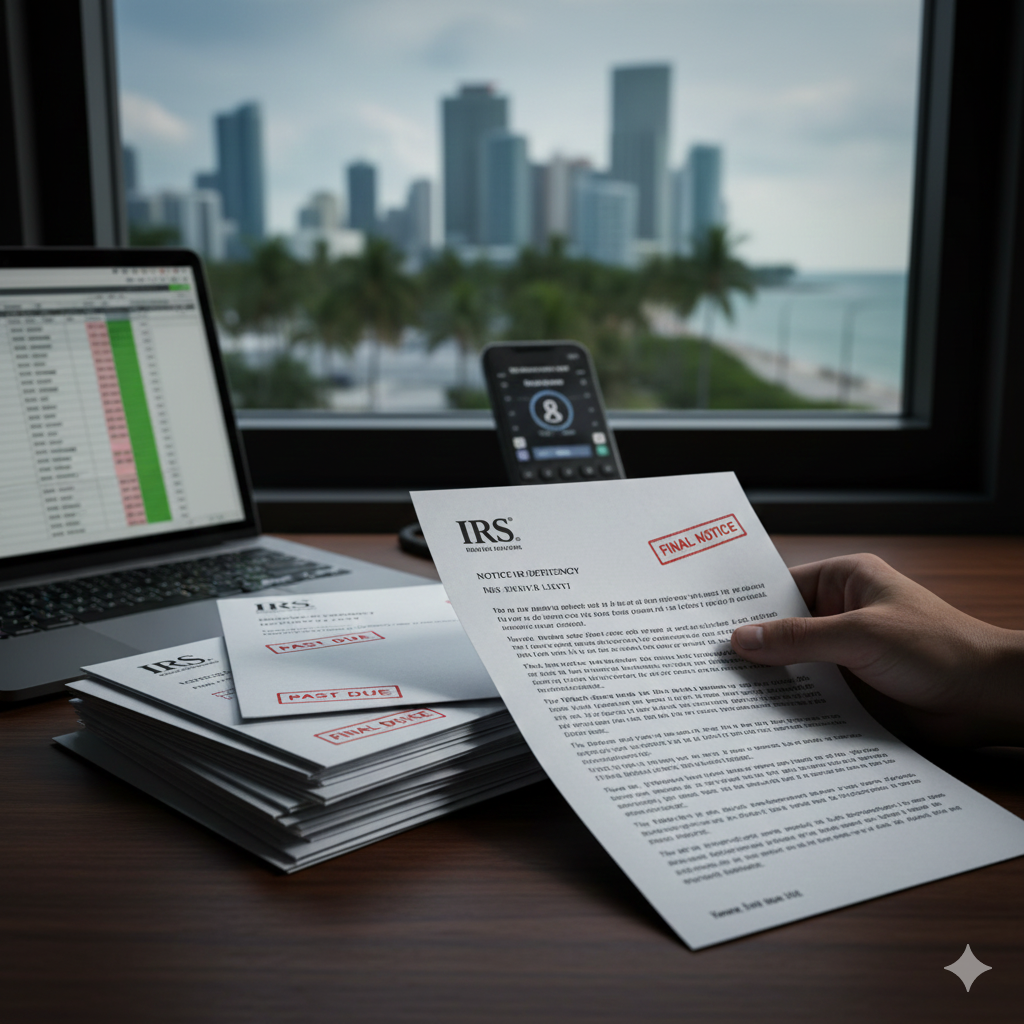
The IRS is becoming more aggressive with enforcement, data matching, and compliance checks.
If you received a letter recently, you are not alone.
As someone who has spent more than ten years writing for CPAs, accountants, and CFOs nationwide, I can confirm a growing trend.
Miami has become a high priority enforcement region for the IRS due to rapid business growth, tourism driven sales, cash activity, real estate transactions, and high income professionals.
This guide breaks down why IRS notices are increasing, what each IRS letter means, the warning signs, how to respond safely, and how to protect yourself in 2026 and beyond.
Why IRS Warning Letters Are Increasing in Miami
There are several reasons Miami is experiencing a surge in IRS notices.
1. Increased IRS Funding and Enforcement Staff
The IRS has hired thousands of new employees, auditors, and automated enforcement specialists.
- Miami has been marked as a region requiring higher monitoring due to:
- High business formation rates
- Cash intensive industries
- Real estate activity
- Foreign investment
- High volume of inconsistent filings
- More enforcement staff equals more letters.
- The IRS has upgraded its computer systems.
- Any mismatch triggers a letter instantly.
- The IRS targets industries with higher error rates.
- Cash flow makes these businesses a top priority for compliance checks.
- must now report business transactions to the IRS.
- Many Miami businesses did not include these amounts in their tax filings, triggering warnings.
- Miami’s real estate boom has attracted IRS attention.
- Real estate markets with high activity always get more IRS scrutiny.
2. Automated Systems Are Flagging More Errors
- These systems now automatically match:
- Bank records
- 1099 forms
- W2 forms
- 1099 K payment app records
- Brokerage statements
- Foreign asset reports
- Payroll filings
- Sales tax filings
- Federal and state filings inconsistencies
3. Growth in Cash Intensive Miami Industries
- These industries are very common in Miami:
- Restaurants
- Construction
- Trucking and transportation
- Retail shops
- Airbnb and rental properties
- Beauty salons
- Car rental companies
- Nightclubs and bars
4. Rise in 1099 K Reporting and Payment App Monitoring
- Platforms like:
- PayPal
- Stripe
- Square
- Zelle
- Venmo
- Cash App
5. Real Estate Market Activity in Miami Is Being Monitored
- Agents, investors, wholesalers, developers, contractors, and flippers are receiving notices for:
- Unreported capital gains
- Incorrect 1099 S filings
- Missing depreciation
- Incorrect cost basis
- Rental income mismatches
6. Sales Tax and Payroll Mismatches
- The IRS compares federal tax filings against:
- Florida state business registrations
- Payroll reports
- Sales tax returns
- Corporate filings
- If numbers do not match, a warning letter is issued.
Most Common IRS Warning Letters Miami Businesses Receive
Understanding the letter you received is essential.
Here are the most common notices Miami businesses face.
1. CP2000 Underreported Income Notice
This notice means the IRS found income that was not reported on your tax return.
- It often comes from:
- 1099 K payment processors
- 1099 NEC contractor payments
- Brokerage accounts
- Missing W2s
- Missing 1099 INT or 1099 DIV
- Rental income
- Real estate sale mismatches
- The IRS will calculate additional tax owed unless you dispute it correctly.
- This letter means the IRS believes you owe tax.
- You must respond quickly to avoid interest and penalties.
- These come in a sequence.
- Ignoring these letters is dangerous.
2. CP14 Unpaid Taxes Notice
- This can result from:
- Incorrect filing
- Incorrect payroll deposits
- Misapplied payments
- IRS errors
- Underpayment due to missed forms
3. CP501, CP503, CP504 Collection Notices
- CP501: First reminder
- CP503: Second reminder
- CP504: Intent to Levy Notice
- Once you receive CP504, the IRS can take:
- Bank balances
- Future refunds
- Wages
- Business assets
4. Letter 5071C Identity Verification
The IRS may think your return is fraudulent.
This requires identity verification immediately.
5. Letter 12C Missing Documentation
- The IRS wants clarification or additional documents such as:
- Proof of deductions
- W2 copies
- 1099 forms
- Business expense statements
- Health insurance forms
- Dependent verification
- This must be handled carefully with proper records.
- The IRS computer matched your tax documents with something missing.
- Payroll notices escalate quickly if ignored.
- Audits require professional representation immediately.
6. Notice CP2000 AUR Automated Underreporter
7. Payroll and Employment Tax Notices
- Many Miami businesses receive:
- Deposit requirement notices
- Late payroll filings
- EFTPS mismatches
- Form 941 or 940 issues
- Incorrect W2 or 1099 filings
8. Notice of Audit or Examination
- Though less common, audits are increasing in:
- Real estate
- Hospitality
- Construction
- Retail
- Import export
- Medical practices
What to Do When You Receive an IRS Warning Letter in Miami
Most Miami business owners panic when a notice arrives. But the worst thing you can do is ignore it. Here is the correct approach.
Step 1: Do Not Ignore the Letter
Every IRS notice has a deadline.
- Missing it leads to:
- Penalties
- Interest
- Wage garnishments
- Bank levies
- Property liens
- Call your accountant immediately.
- Do not confuse the notice with something else.
- The IRS evaluates the accuracy of your numbers.
- Most notices result from mismatches.
- Often the IRS is wrong, but you must prove it.
- Poorly written responses trigger escalations.
- Do not try to pay everything at once if it will damage your cash flow.
- IRS notices are highly technical.
- Trying to handle this yourself is risky.
- Any of these increase IRS letter frequency.
Step 2: Identify Exactly What the IRS Wants
- Every letter lists:
- The problem
- The tax year involved
- The documents needed
- The response timeline
- The consequences
Step 3: Gather All Relevant Documents
- You may need:
- Bank statements
- Invoices
- 1099 forms
- Brokerage statements
- Payroll reports
- Sales tax filings
- Receipts
- Contracts
- Depreciation schedules
- Accounting records
Step 4: Compare IRS Records With Your Books
- You must verify:
- Income
- Deductions
- Payroll
- Sales tax
- Depreciation
- Foreign income
- Real estate sale details
- Merchant processing statements
Step 5: Respond Professionally and Clearly
- Each response must include:
- A written explanation
- Supporting documents
- Correct IRS form references
- Signed declaration
- Clear mailing or fax submission
Step 6: Set Up a Payment Plan if You Owe
- If you truly owe taxes, the IRS allows:
- Monthly installment plans
- Short term payment plans
- Hardship arrangements
- Temporary relief
- Penalty abatement
Step 7: Have a Professional Handle Your Case
- A professional accountant can:
- Prevent penalties
- Remove incorrect assessments
- Fix payroll mismatches
- Amend tax returns
- Represent you before the IRS
- Protect you from aggressive collection action
Why Miami Businesses Are More Vulnerable to IRS Notices
- Many Miami businesses operate in industries with high IRS scrutiny:
- Restaurants
- Cafes
- Hotels
- Bars
- Real estate agents
- Investment professionals
- Contractors
- Trucking companies
- Import export agents
- Retail stores
- Cleaning services
- These industries face:
- High cash flow
- Multiple revenue channels
- Seasonal spikes
- Heavy tips and payroll
- Vendor inconsistencies
How to Protect Your Business From Future IRS Notices
Here is the most important part.
IRS letters are preventable with the right financial system.
- Maintain professional bookkeeping Accurate books eliminate most IRS mismatches.
- Keep receipts and documentation The IRS only accepts what you can prove.
- File taxes on time Late filings trigger automatic penalties.
- Use an accountant familiar with Miami industries Local industry knowledge matters.
- Conduct annual tax planning Tax planning prevents errors and reduces notice probability.
- If you read this “Why Your Small Business Is Still Cash Flow Negative and How Proper Accounting Fixes It” .
- Most letters come from mismatched income, missing documents, payroll errors, or incorrect tax filings.
- 2. Reconcile every account monthly
- This includes:
- Bank
- Credit card
- Merchant accounts
- Loan accounts
- Payroll systems
- 3. File payroll taxes correctly
- Miami businesses often get payroll notices because of:
- Incorrect EIN use
- Late deposits
- Misclassified contractors
- Wrong W2 totals
- Wrong 941 filings
- Payroll compliance is essential.
Conclusion
IRS warning letters are rising across Miami because of improved IRS technology, increased enforcement, and mismatches between tax filings and payment processors. These notices can be intimidating, but they are manageable with the right strategy, documentation, and professional support.
Whether you run a restaurant, real estate agency, shipping business, medical office, retail store, or service based company, the key to avoiding IRS trouble is accurate bookkeeping, payroll compliance, and proactive tax planning.
Crownglobe continues to help Miami businesses stay compliant, reduce IRS risk, and protect themselves with proper accounting systems that eliminate errors before they become warning letters.