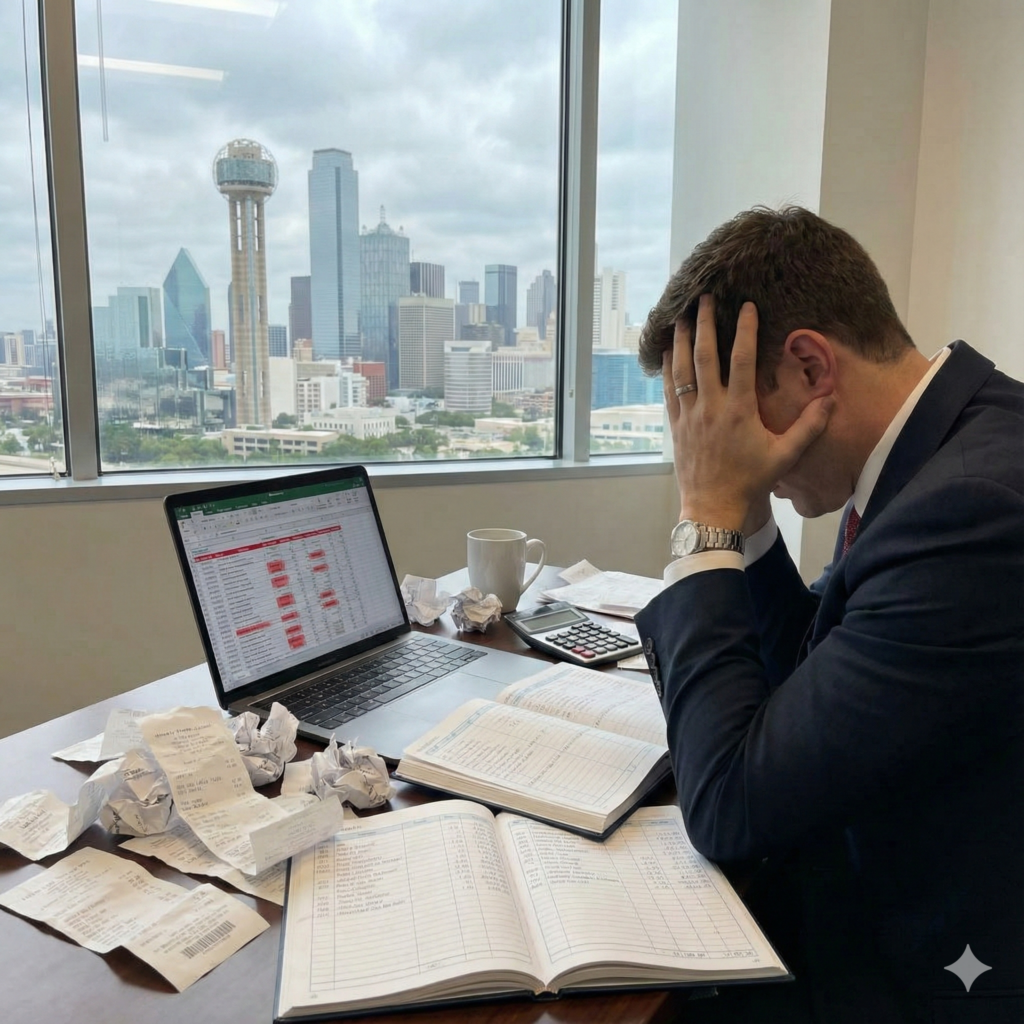
Dallas companies are growing faster than ever. With new startups launching daily, established companies scaling into new markets, and expanding investment across North Texas, business owners face more operational complexity than at any point in the last decade.
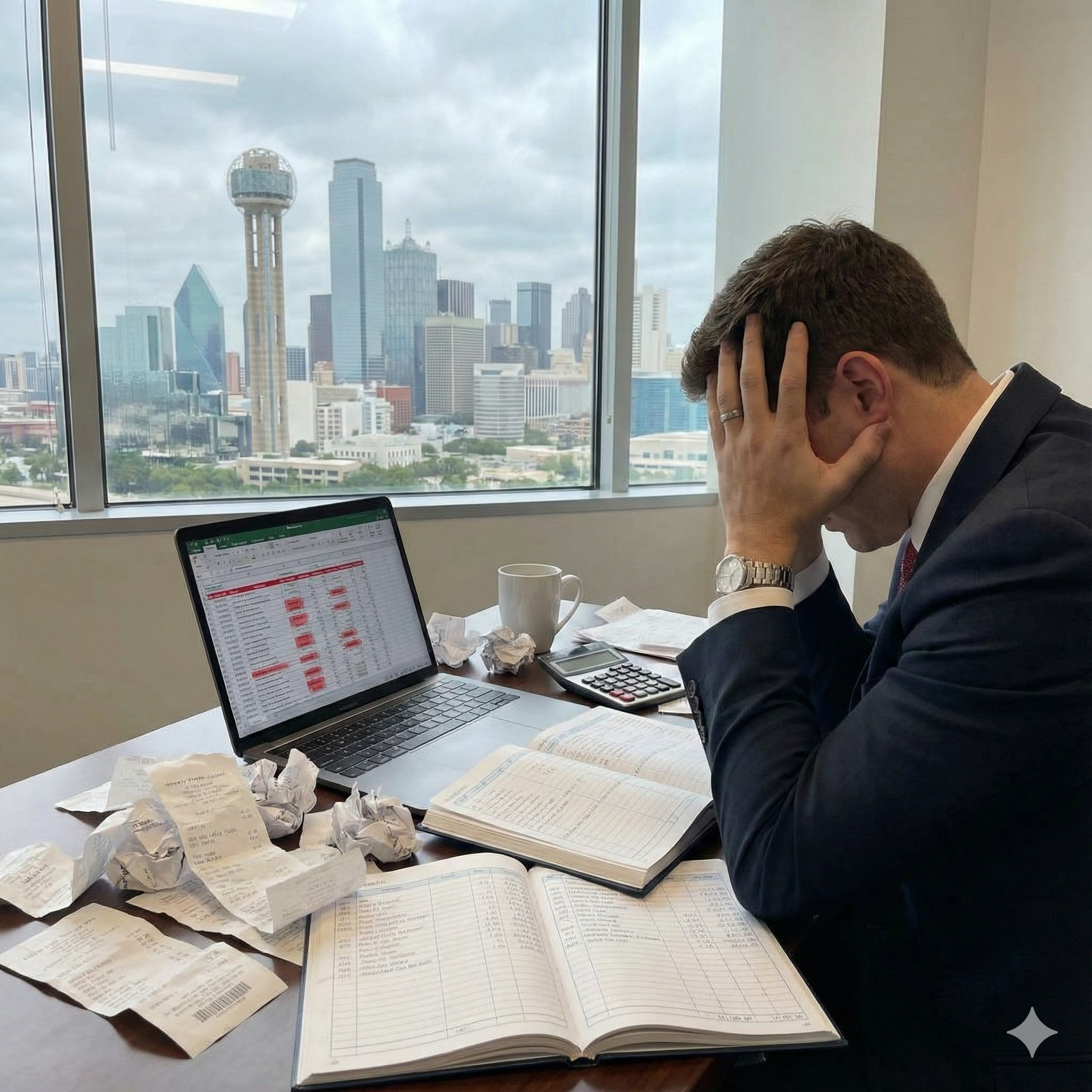
- But with growth comes a hidden threat that destroys profits quietly:
- The real danger is simple bookkeeping errors that snowball into:
- The reality is harsh: Most Dallas companies are losing money because their books are wrong, not because their business is weak.
Bad bookkeeping.
- Not outdated accounting.
- Not tax mistakes.
- Not even IRS penalties.
- Cash flow shortages
- Incorrect tax filings
- Missed deductions
- IRS notices
- Payroll errors
- Inaccurate financial decisions
- Vendor disputes
- Overstated or understated income
- Incorrect profitability insights
This guide reveals the most costly bookkeeping mistakes Dallas business owners must avoid in 2026 and how to fix them before they cause irreversible financial damage.
1. Not Reconciling Accounts Monthly
This is the biggest bookkeeping mistake Dallas businesses make.
- If your accounts are not reconciled every month, everything else becomes inaccurate:
- Reconciliation must be monthly.
- Annual reconciliation is a disaster waiting to happen.
- This is extremely common in Dallas small businesses.
- Owners often use:
- The IRS specifically targets businesses with commingled expenses.
- Texas sales tax is extremely strict.
- Dallas businesses often:
- This leads to:
- Dallas businesses face major cash flow issues because AR and AP are not tracked properly.
- Without consistent AR/AP management, your financial reports are meaningless.
- Expenses must be categorized correctly to:
- Incorrect categorization = lost money.
- Dallas is full of service and retail businesses using:
- Dallas businesses rely heavily on driving due to the city’s size and layout.
- Common missed mileages:
- The IRS requires documentation for:
- This is a cash flow killer.
- Annual bookkeeping leads to:
- Businesses operating this way are flying blind.
- QuickBooks, Xero, and Wave are powerful tools but only when used correctly.
- Most owner-managed books contain:
- Internal controls prevent:
- Dallas companies often have multiple revenue streams:
- Profit is meaningless if cash flow is weak.
- Dallas businesses often fail because:
- Cash flow must be managed monthly.
- Wrong payroll entries lead to:
- Failing to reconcile accounts monthly.
- Profit and loss
- Cash flow
- Payroll
- Sales tax
- Financial reporting
- Vendor balances
- Owner draws
- Loan balances
Signs your business is not reconciling properly
- Bank balances don’t match QuickBooks
- Credit card accounts show unexplained differences
- Merchant deposits don’t match sales reports
- Payroll liabilities do not match filings
2. Mixing Personal and Business Expenses
- Business cards for personal spending • Personal cards for business spending
- Both are harmful.
Why it is dangerous
- Deductions get disallowed
- Tax filings become inaccurate
- IRS flags inconsistencies
- Owner draws and distributions get messy
- Cash flow becomes unreliable
3. Incorrect Sales Tax Classification for Texas
- Charge sales tax when they shouldn’t
- Fail to charge sales tax when required
- Apply wrong local sales tax rates
- Misclassify tax-exempt sales
- Fail to track multi-jurisdiction sales
- Audits • Penalties • Back tax assessments • Interest charges
- Sales tax errors are one of the biggest financial risks for Dallas businesses today.
4. Not Tracking Accounts Receivable and Accounts Payable Accurately
Consequences
- Customers are not invoiced on time
- Payments are missed
- Vendors go unpaid
- Late fees accumulate
- Cash flow becomes unpredictable
5. Incorrect Categorization of Expenses
- Maximize deductions • Prepare accurate tax returns • Track profitability per project or department • Manage budgets • Reduce IRS risk
- Dallas businesses often categorize:
- Contractors as payroll
- Supplies as assets
- Meals incorrectly
- Software as miscellaneous
- Equipment as expenses instead of depreciable assets
6. Not Recording Merchant Fees Properly
- Square • Stripe • Shopify • Clover • Toast • PayPal
- Many owners mistakenly record deposited amounts only, forgetting merchant fees.
- This leads to:
- Overstated revenue • Understated expenses • Incorrect profit margins • Tax filing errors
- Merchant fee tracking must be precise.
7. Failing to Track Mileage and Business Use of Vehicles
- Sales calls • Meetings • Vendor visits • Deliveries • Networking • Property tours • On-site work
- IRS vehicle deductions are enormous but only when tracked correctly.
8. Not Maintaining Proper Documentation
- Meals • Travel • Assets • Contractors • Home office • Subscriptions • Supplies
- Missing documentation leads to disallowed deductions.
- The burden of proof is always on the business owner.
9. Annual Bookkeeping Instead of Monthly Bookkeeping
- Missed tax savings
- IRS penalties
- Overstated income
- Understated expenses
- Vendor issues
- Payroll mistakes
- Late financial decisions
- Bad budgeting
10. DIY Bookkeeping Without an Accountant
- Double entries • Missing invoices • Wrong classifications • Incorrect bank rules • Reconciliation gaps • Undetected errors
- DIY bookkeeping ends up costing more because cleanup fees are expensive.
11. Lack of Internal Controls
- Fraud • Theft • Inventory shrinkage • Vendor manipulation • Incorrect billing • Misuse of company cards
- Without internal controls, businesses lose money silently.
12. Not Separating Income Streams
- Service income • Online sales • In-store sales • Subscription revenue • Rental income • Commission income • Distribution income
- Each one requires separate accounting to:
- Understand profitability • Track margins • File taxes correctly • Identify growth opportunities
- Combining them destroys financial clarity.
13. Ignoring Cash Flow Accounting
- Payments are collected late
- Expenses hit too quickly
- Inventory is not controlled
- Payroll timing is misaligned
- Invoices are forgotten
- Tax payments are not planned
14. Incorrect Payroll Recording
- Tax penalties • Incorrect liability balances • Wrong W-2s • Employee disputes • Payroll tax amendments
- Payroll must sync with accounting perfectly.
- If you read this “IRS Activity Is Rising Nationwide and Dallas Business Owners Need To Protect Themselves Immediately in 2026”.
Conclusion
Bookkeeping errors are silent profit killers. Dallas companies lose thousands every year simply because their financial records are inaccurate. The solution is not more software it is smarter, consistent, and professionally managed bookkeeping.
With accurate books, your Dallas business will:
- Strengthen cash flow
- Avoid IRS penalties
- Improve profit margins
- Reduce tax liability
- Make better financial decisions
Crownglobe ensures Dallas businesses stay compliant, accurate, and financially strong with monthly bookkeeping and proactive financial management.