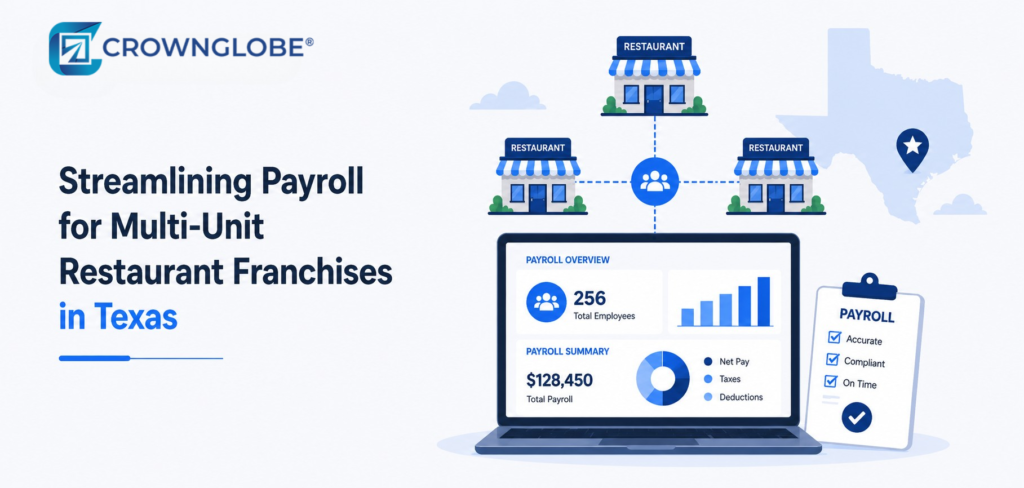
Managing payroll for a single restaurant is already a detailed process. As your franchise expands across multiple locations in Texas, that complexity grows quickly.
At that stage, payroll is no longer just administrative. It affects how well you follow the rules how much money you have and how happy your team is.
Many franchise owners focus on revenue growth. They often do not notice payroll inefficiencies in their business until these inefficiencies start to affect the margins of their franchise business the accuracy of their reporting or their compliance, with rules.
Franchise accounting needs an approach with consistent bookkeeping, across all locations so that payroll works with the financial system.
Let’s go through the problems and what you need to simplify payroll across many franchise locations.
Why Payroll Becomes Complex in Multi-Unit Franchises
Multiple Locations, Multiple Variables
Each franchise location does things in its way because of the different people who work there and the different costs they have to deal with.
You may see:
- Different employee hours across locations
- Variations in tip structures and reporting
- Location-specific labor costs
- Inconsistent payroll practices
Without standardization, these differences begin to create reporting gaps and compliance exposure.
The Hidden Impact
When payroll is not properly streamlined, the impact builds over time:
- Labor costs become harder to manage
- Financial reporting loses consistency
- Compliance risks increase
- Decision-making slows down
A basic bookkeeping franchise system may capture payroll expenses, but it rarely provides the level of control needed to manage them effectively.
The Role of Payroll in Franchise Accounting
Payroll Is Not Just an Expense
Payroll directly influences several critical areas of your business:
- Profit margins
- Cash flow timing
- Tax obligations
- Employee retention
In a multi-unit environment, payroll data needs to flow into a structured franchise accounting system to maintain accuracy and visibility across locations.
Where Most Systems Fall Short
Many franchise owners still rely on separate systems for:
- Payroll
- POS operations
- Accounting
When these systems are not connected it often results in problems:
- Duplicate data entry
- Reporting inconsistencies
- Delayed financial insights
This is where integrated franchise bookkeeping becomes essential.
Common Payroll Challenges in Texas Restaurant Franchises
Tip Reporting and Wage Compliance
Restaurant payroll has its own level of complexity due to tipped employees.
You need to manage:
- Accurate tip allocation
- Minimum wage compliance
- Proper reporting for tax purposes
Even small mistakes can cause problems with rules over time.
Overtime and Labor Law Complexity
Texas follows the overtime regulations, but it gets really complicated when you have many locations to keep track of Texas overtime regulations.
Without a centralized system:
- Overtime calculations may vary
- Labor costs may increase without visibility
- Compliance risks may go unnoticed
Multi-Location Payroll Processing
Handling payroll separately for each location often leads to inefficiencies:
- Inconsistent processes
- Errors in employee data
- Delays in reporting
A centralized payroll structure helps bring consistency and control.
The Solution: Centralized and Integrated Payroll Systems
What a Structured System Looks Like
An effective payroll system for franchise operations should:
- Integrate with POS and accounting systems
- Standardize processes across locations
- Automate calculations and reporting
- Provide real-time visibility into labor costs
This is where franchise accounting services begin to deliver real operational value.
Benefits of Integration
When payroll is integrated into your accounting franchise system:
- Data flows seamlessly between systems
- Manual errors are significantly reduced
- Reporting becomes faster and more reliable
Many businesses are now moving toward bookkeeping software for franchise businesses, including some of the best bookkeeping software for franchise operations, that supports payroll integration and consolidated reporting.
Real-Time Labor Cost Visibility
Why It Matters
Labor is a big expense, for you and it is hard to manage labor when you do not have a clear picture of what is going on with labor.
What You Should Track
- Labor cost as a percentage of sales
- Overtime trends
- Location-level payroll expenses
- Employee productivity
The Fix
Using Power BI visualization for financial reporting alongside integrated payroll systems gives you real-time insight into labor costs.
This allows payroll to support decisions, not just record history.
Automation and Efficiency in Payroll Processing
Reducing Manual Work
Manual payroll processes often lead to:
- Data entry errors
- Delays in processing
- Increased administrative effort
The Automation Advantage
With finance automation solutions for franchise businesses, you can:
- Automate payroll calculations
- Sync data across systems
- Reduce reliance on manual inputs
Many operators are now evaluating the best bookkeeping software for multiple franchise units to improve both payroll efficiency and reporting.
Compliance and Risk Management
The Risk Area
Payroll compliance involves:
- Wage laws
- Tax filings
- Employee classifications
Errors in these areas can cause penalties or disrupt operations.
How to Stay Compliant
A system with tax help, for franchise businesses makes sure everything runs smoothly:
- Accurate filings
- Timely reporting
- Reduced compliance risk
This is where specialized accounting services bring consistency and confidence.
Standardizing Payroll Across Franchise Units
Why Standardization Matters
Consistency across locations allows you to:
- Compare performance accurately
- Control labor costs
- Maintain compliance
The Approach
Standardization typically includes:
- Uniform payroll policies
- Centralized systems
- Consistent reporting formats
This aligns payroll with your broader franchise business bookkeeping structure.
How Payroll Fits into Your Overall Financial Strategy
Payroll works best when it is fully integrated into your financial system.
A complete structure often includes:
- Bookkeeping services for franchise businesses for daily tracking
- Payroll processing systems for restaurant franchises
- Financial statements preparation for accurate reporting
- Outsourced accounting for multi-unit franchises
- Virtual CFO services for financial planning
These components work together to create a system that helps with growth and also helps with control.
You can look at our guide to franchise accounting systems to get a better understanding of it.
Final Thoughts
Running a restaurant franchise is tough. One of the hardest things to get right is payroll.
For multi-unit franchises in Texas, the real challenge is not just processing payroll. It is managing it with consistency, visibility, and alignment to your overall financial strategy.
With the right franchise accounting framework, supported by automation, integrated systems, and strong franchise bookkeeping, payroll becomes more efficient and far more useful for decision-making.
The goal is straightforward.
Accurate payroll. Clear visibility. Strong control.
FAQ
How do I manage payroll for multiple restaurant locations
You need a centralized payroll system that integrates with accounting and POS systems, ensuring consistency and accuracy across all locations.
What are the biggest payroll challenges for restaurant franchises
Tip reporting, overtime tracking, multi-location coordination, and compliance with labor laws are the most common challenges.
How can payroll errors affect my franchise
Payroll errors can lead to compliance issues, employee dissatisfaction, and inaccurate financial reporting.
What software is best for franchise payroll management
Integrated systems that combine payroll, accounting, and reporting functions work best for multi-unit franchises.
Do I need outsourced payroll services for my franchise
Outsourced payroll services help ensure accuracy, compliance, and efficiency, especially as your franchise grows.