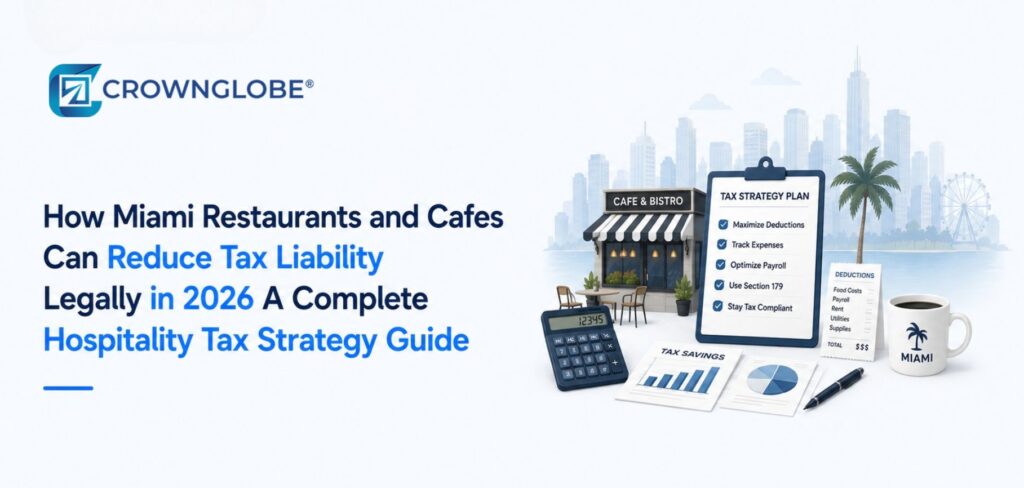
Running a restaurant or cafe in Miami is one of the toughest but most rewarding business ventures in the country. Miami’s food and beverage scene is world class. Customers expect great food, fast service, creative menus, and exceptional experiences. But behind the scenes, restaurant owners face high food costs, unpredictable seasons, staffing issues, labor laws, rising rent, and serious cash flow pressure.
And just when you think the workload is enough, tax season arrives.
Miami restaurants and cafes consistently pay more taxes than they should. Not because they are mismanaging their business, but because they are not aware of the hospitality specific deductions, payroll strategies, depreciation rules, and IRS approved tax planning tools designed for their industry.
If there is any business that needs tax strategy more than others, it is hospitality.
As a writer with more than ten years of experience helping small businesses, especially restaurants, clean up their books and reduce tax liability, I can say this with confidence.
A well structured tax plan can save Miami restaurants anywhere from ten thousand to one hundred thousand dollars a year.
- This guide breaks down everything you need to know to reduce your tax burden legally and effectively in 2026.
- Before we get into strategies, let us understand why restaurants face higher taxes than other types of businesses.
- Thin margins Restaurants operate on razor thin profit margins. Even small tax mistakes amplify quickly.
- High transaction volume Daily transactions create bookkeeping errors that lead to inaccurate tax reporting.
- Tip and payroll complexity Tipped employees, overtime, shift pay, and tip pool rules add major complexity.
- Frequent equipment purchases Restaurants buy equipment regularly but fail to depreciate or deduct it properly.
- Vendor related deductions often missed Invoices, food waste, spoilage, refunds, and supplier charges frequently go undocumented.
- Lack of monthly bookkeeping Many restaurant owners only review numbers at year end when it is too late to save taxes.
- Miami specific challenges Tourist seasons, seasonal staffing, promotions, and event based spikes make financial planning harder.
- When you combine all these issues, restaurants end up paying far more than they should.
- Let us break down every major tax saving tool your restaurant can use right now.
Why Restaurants in Miami Overpay in Taxes
Legal Tax Saving Strategies for Miami Restaurants and Cafes in 2026
1. Claim Food and Beverage Purchases Correctly Under COGS
Food, beverages, condiments, packaging, and ingredients are deductible as cost of goods sold. But many Miami restaurants fail in these areas:
- Missing vendor invoices • Incorrect categorization • Not tracking waste • Not tracking spoilage • Not matching POS data to purchases
- When COGS is calculated correctly, taxable income drops significantly.
Key Tip
Use a bookkeeping system that matches inventory, vendor invoices, and daily sales. Crownglobe specializes in this for Miami restaurants.
2. Deduct Kitchen Equipment Immediately Using Bonus Depreciation and Section 179
Restaurants buy equipment constantly:
- Freezers • Refrigerators • Prep tables • Fryers • Ovens • Grills • Displays • POS hardware • Furniture • Coffee machines
- Under IRS rules, restaurants can deduct these purchases immediately instead of depreciating them slowly over years.
- This saves enormous amounts of tax, especially during upgrades or expansions.
3. Track Tip Income Correctly to Reduce Payroll Tax Errors
Miami restaurants rely heavily on tipped workers. But improper tip reporting leads to:
- IRS audits
- Payroll penalties
- Higher tax liability
- Incorrect employer FICA matches
- Professional payroll systems ensure:
- Accurate tip recording
- Correct allocation
- Proper employer matching
- Compliance with IRS Tip Rule requirements
- When payroll is structured correctly, taxes drop.
- Restaurants are allowed to deduct the cost of meals provided to employees during shifts.
- Most restaurants miss this deduction.
- Restaurants repair things constantly:
- Miami restaurants spend heavily on marketing:
- Restaurants and cafes have one of the highest eligibility rates for the WOTC program, which offers federal tax credits for hiring:
- You can deduct:
- Restaurants now rely on dozens of tools:
- Every software expense is deductible.
- Restaurants pay thousands of dollars in fees to:
- Professional photos, videography, content creation, and menu shoots are deductible.
4. Deduct Employee Meals and Shift Meals
- This includes:
- Cook meals
- Bar staff meals
- Front of house meals
- Shift meals
5. Deduct Repairs and Maintenance Instead of Capitalizing Small Costs
- AC repairs • Plumbing fixes • Electrical issues • Prep table repairs • Equipment tune ups • Painting • Wall repairs
- These are deductible as expenses, not capital purchases, when documented correctly.
- Many Miami restaurants incorrectly capitalize these costs and lose deductions.
6. Deduct Marketing and Promotion Expenses Fully
- Influencer promotions • Social media ads • Flyers • Google ads • Meta ads • Website photos • Menu design • Launch events
- These are fully deductible when tracked and categorized correctly.
7. Claim the Work Opportunity Tax Credit for Hiring Eligible Employees
- Veterans • Long term unemployed individuals • SNAP recipients • Certain youth workers • Ex felons
- Credits can range from: • 2400 to 9600 per eligible employee
- Most Miami restaurants are unaware they qualify.
8. Deduct Uniforms, Aprons, Staff Clothing, and Protective Gear
- Uniforms • Aprons • Hats • Non slip shoes • Protective gloves • Safety equipment
- These are legitimate business expenses.
9. Deduct Software and Technology Tools
- POS systems
- Online ordering platforms
- Payroll software
- Scheduling apps
- Inventory software
- Food delivery integrations
- Reservation software
- Cloud based systems
10. Deduct Merchant Fees and Delivery Platform Fees
- Uber Eats • DoorDash • Grubhub • Toast • Square • PayPal • Stripe
- These fees are fully deductible but often overlooked in the accounting system.
11. Deduct Marketing Photography and Menu Photography
12. Deduct Cleaning and Sanitation Supplies
Restaurants must maintain high hygiene standards.
The following are deductible:
- Cleaning supplies • Sanitizers • Gloves • Chemicals • Pest control • Trash removal
- These add up to huge savings.
13. Deduct Waste and Spoilage Correctly
Restaurants lose food due to:
- Spoilage • Overstock • Expired items • Customer complaints • Damaged packaging
- When tracked properly, waste reduces taxable income legally.
14. Deduct Rent and CAM Charges
Miami restaurant rents are high. Fortunately, rent and common area maintenance charges are fully deductible.
15. Deduct Utilities and Internet Costs
Restaurants use a lot of electricity, gas, and internet. These are deductible when tracked monthly.
16. Use Payroll Optimization for Owners
Restaurant owners often overpay payroll taxes.
- Owners should:
- Take a reasonable salary
- Receive distributions
- Use reimbursement strategies
- This structure saves thousands annually.
- Many restaurant owners mix expenses unintentionally.
- Professional bookkeeping fixes this instantly.
- Menu engineering becomes easier with correct financials.
- Miami restaurants often train staff due to high turnover.
- Miami restaurants require multiple licenses:
- Accurate COGS calculation combined with equipment depreciation provides the largest deductions.
17. Separate Personal and Business Expenses
- This causes:
- Lost deductions
- Higher taxes
- IRS scrutiny
18. Use Accurate COGS and Menu Pricing to Reduce Taxes
- Proper COGS:
- Reduces taxable income
- Improves menu pricing
- Identifies profitable items
- Eliminates waste
19. Deduct Training and Staff Development Costs
- Training costs are deductible:
- Workshops
- Courses
- Safety training
- Seminars
20. Deduct Licenses, Permits, and Compliance Fees
- Food service license • Miami Dade local business tax • Liquor license • Health permit • Fire inspections
- All deductible.
- You must read this “How Miami Hotels and Motels Can Reduce Tax Liability Legally in 2026” .
Conclusion
Miami’s restaurant and cafe industry is vibrant, competitive, and fast paced. But it is also one of the most financially challenging industries to operate. Tax planning is not optional. It is a survival strategy.
When Miami restaurants use proper deductions, optimize payroll, track COGS correctly, deduct equipment purchases, and maintain accurate bookkeeping, they significantly reduce tax liability while improving profitability.
Crownglobe continues to help Miami restaurants implement these systems through integrated bookkeeping, payroll, accounting, and tax planning designed specifically for hospitality businesses.
A stronger financial system gives your restaurant the power to grow, expand, and thrive in Miami’s evolving food scene.