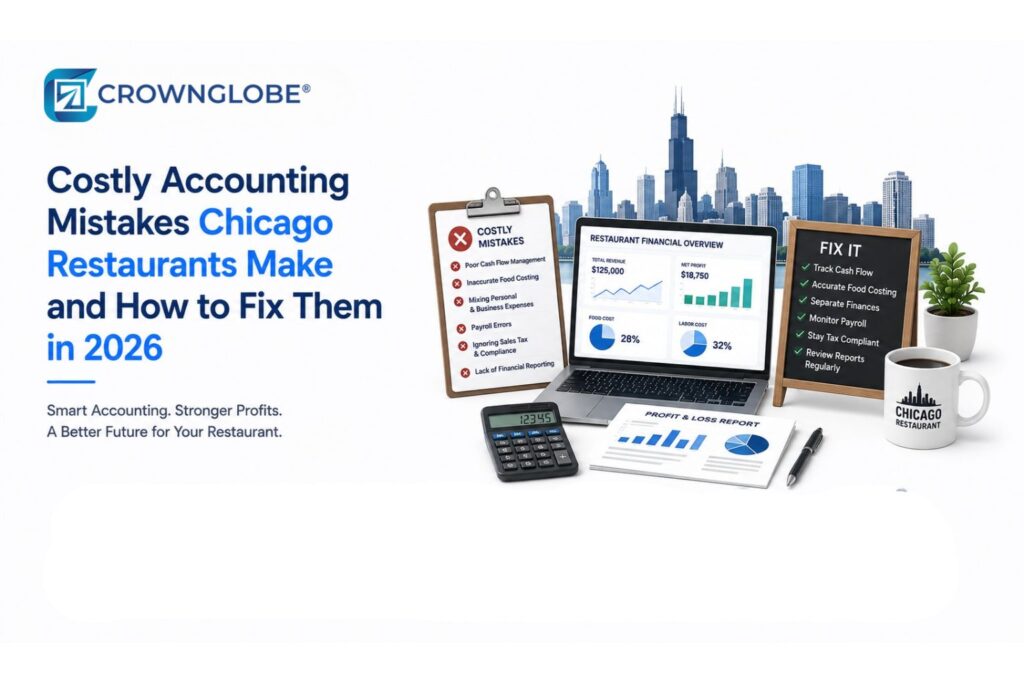
Chicago restaurants lose thousands of dollars each year due to accounting mistakes involving sales tax mapping, payroll, inventory tracking, tip reporting, deductions, and cash flow management. This 2026 guide explains the most expensive errors and how to eliminate them with stronger financial systems.
Chicago restaurants commonly make costly accounting mistakes such as incorrect sales tax mapping, improper tip reporting, poor inventory controls, inaccurate payroll, missing deductions, and failing to reconcile delivery app payouts. Fixing these financial issues dramatically improves cash flow and profitability.
Introduction
Chicago’s restaurant scene is one of the most competitive in the country from West Loop fine dining to Wicker Park cafés, Lincoln Park brunch spots, South Side takeout, and bustling River North bars.
But behind the creativity and customer experience lies a massive operational truth:
In 2026, restaurant margins are tighter than ever due to:
This guide breaks down the biggest accounting mistakes Chicago restaurants make and how to fix them before they destroy profitability.
Chicago’s layered sales tax structure is the most common cause of financial loss.
Restaurants must account for:
- Incorrect mapping leads to overpayment, underpayment, penalties, and IDOR audits.
Restaurants lose money through:
- Small improvements in inventory control save Chicago restaurants thousands per month.
Restaurants must handle:
- This reduces payroll taxes and avoids IRS audits.
Restaurants rely on:
- Missing revenue, overstated sales, mismatched tax reporting.
- This ensures revenue is correct and tax filings are accurate.
Chicago restaurants face:
- Proper payroll reduces tax risk and labor disputes.
- This is one of the biggest issues in Chicago restaurants.
Examples:
- Clean books = better profitability.
Restaurants often miss:
- Missed deductions increase the restaurant’s tax burden unnecessarily.
- Chicago restaurants cannot operate blindly.
Quarterly or annual financial reviews are too slow for:
- This is essential for survival.
Restaurants face:
- Cash flow visibility saves restaurants from failure.
This leads to:
- Incorrect sales tax mapping and poor payroll compliance.
- Weekly or monthly never quarterly or annually.
- Toast, Restaurant365, QuickBooks Online, and Lightspeed.
- Yes, to avoid penalties and keep cash flow stable.
- Anywhere from $10,000 to over $100,000 depending on size and complexity.
Most Chicago restaurants lose money because of accounting problems not because of bad food or slow sales.
- Rising labor costs
- High rent
- Complex sales tax categories
- Delivery app fees
- Fluctuating food costs
- High turnover
- Stricter compliance enforcement
1. Incorrect Chicago Sales Tax Mapping (Top Restaurant Mistake)
- IL state tax
- Cook County tax
- Chicago city tax
- Restaurant tax
- Soft drink tax
- Liquor tax rules
- Delivery platform tax reporting
Common mistakes include
- POS not mapped correctly for dine-in vs takeout
- Alcohol incorrectly taxed
- Soft drink tax misapplied
- Delivery apps creating mismatched reporting
- Double taxation on certain items
- Tips or service charges incorrectly categorized
Financial Impact
Fix
- Conduct quarterly POS tax audits
- Reconcile POS vs delivery app payouts
- Use integrated accounting systems with tax automation
2. Poor Inventory Tracking Creates Invisible Losses
- Shrinkage
- Waste
- Over-portioning
- Theft
- Vendor invoicing errors
- Spoilage
- When inventory isn’t tracked properly, cost of goods sold (COGS) becomes inaccurate.
Symptoms of inventory issues
- Food cost swings
- Cash flow shortages
- Confusing profit statements
- Missing vendor invoices
- High variance between theoretical vs actual food cost
Fix
- Weekly inventory counts
- Vendor invoice scanning
- Integration with Restaurant365, Toast, Square, or Lightspeed
- Track variance by category: food, liquor, beer, wine
3. Improper Tip Reporting Leads to IRS Penalties
- Direct tips
- Indirect tips
- Tip pooling
- Service charges
- Credit card tips
- Cash tips
- Auto-gratuity
Common errors
- Not separating tips from wages
- Incorrectly applying service charges
- Misreporting pooled tips
- Not calculating employer FICA tip credit
- Delivery driver tips miscategorized
Fix
- Use payroll systems with Chicago-specific tip features
- Maintain accurate daily tip logs
- Ensure compliance with IRS Form 8027 (if applicable)
- Apply the FICA tip credit correctly
4. Delivery Platform Reconciliation Is Often Completely Missing
- DoorDash
- UberEats
- Grubhub
- Postmates
- Toast Delivery Services
But most fail to reconcile:
- Commissions
- Refunds
- Chargebacks
- Fees
- Tax collected
- Promotions
- Deposits
Result
Fix
- Download and reconcile actual payout reports
- Match deposits to orders
- Track commissions separately
- Integrate delivery platforms with accounting
5. Inaccurate Payroll Causes Massive Financial Leaks
- High turnover
- Multiple pay rates
- Tips
- Overtime
- Shift differentials
- Split shifts
- Minor labor laws
- Multi-location compliance
Payroll mistakes include
- Wrong overtime calculations
- Incorrect tip credit application
- Failing to track breaks
- Paying sous-chefs and cooks incorrectly
- Misclassification of tipped employees
- Automatic gratuity confusion
- Incorrect Paid Leave for All Workers Act compliance
Fix
- Use advanced payroll systems (Gusto, ADP NextGen, Toast Payroll)
- Track hours digitally
- Review payroll mapping monthly
- Conduct annual payroll audits
6. Owner Draws and Personal Expenses Mixed Into Business Books
- Groceries purchased for home
- Personal Uber trips
- Owner meals
- Household cleaning supplies
- Family expenses charged to the restaurant
Impact
- Overstated business expenses
- Incorrect profit
- Higher audit risk
- Messy financial statements
- Difficulty obtaining loans
Fix
- Separate personal and business accounts
- Track owner draws properly
- Reimburse only documented expenses
7. Missing Deductions Lower Profitability
- Depreciation
- Equipment purchases
- Repair costs
- Small wares
- Uniforms and linen
- Staff meals
- Training and certifications
- Marketing costs
- Janitorial expenses
- Delivery fees
- Merchant processor fees
Fix
- Maintain digital receipt management
- Categorize transactions correctly
- Use AI-enabled bookkeeping tools
8. No Monthly Financial Statements = No Profit Visibility
- Menu engineering
- Labor management
- Food cost control
- Pricing adjustments
- Vendor negotiation
- Cash flow planning
Monthly statements provide
- P&L
- Balance sheet
- Cash flow
- COGS breakdown
- Labor cost percentages
- Department-level reporting
9. Poor Cash Flow Management Threatens the Entire Business
- Daily vendor payments
- Rent
- Payroll every 1–2 weeks
- Utilities
- Equipment repairs
- Insurance
- Seasonal sales swings
- Without cash flow planning, restaurants experience:
Payroll shortages Vendor holds Emergency loans Declining profitability Forced closures
Fix
- Implement 13-week cash flow forecasts
- Schedule vendor payments strategically
- Align staffing with sales patterns
10. Chicago Restaurant Owners Skip Quarterly Tax Planning
- Underpayment penalties
- IRS notices
- IDOR interest charges
- Missed deductions
- Higher tax bills
Quarterly planning ensures:
- Accurate estimates
- Adjusted payroll withholding
- Strategic depreciation
- Strong documentation
- Better entity level planning
If You Read This
- “Why Chicago Businesses Struggle With Cash Flow”.
- “Why Clean Financial Reporting Prevents Cash Flow Crises”.
- “Best Accounting Software for Chicago Companies in 2026”.
- “Common Bookkeeping Errors Chicago Companies Should Avoid”.
- “IRS Enforcement Is Increasing What Chicago Business Owners Should Do”.